Trends Fade, Culture Compounds: Pankaj Chopra on the New Rules of Consumer Data
CFM - Pankaj Chopra
===
[00:00:00]
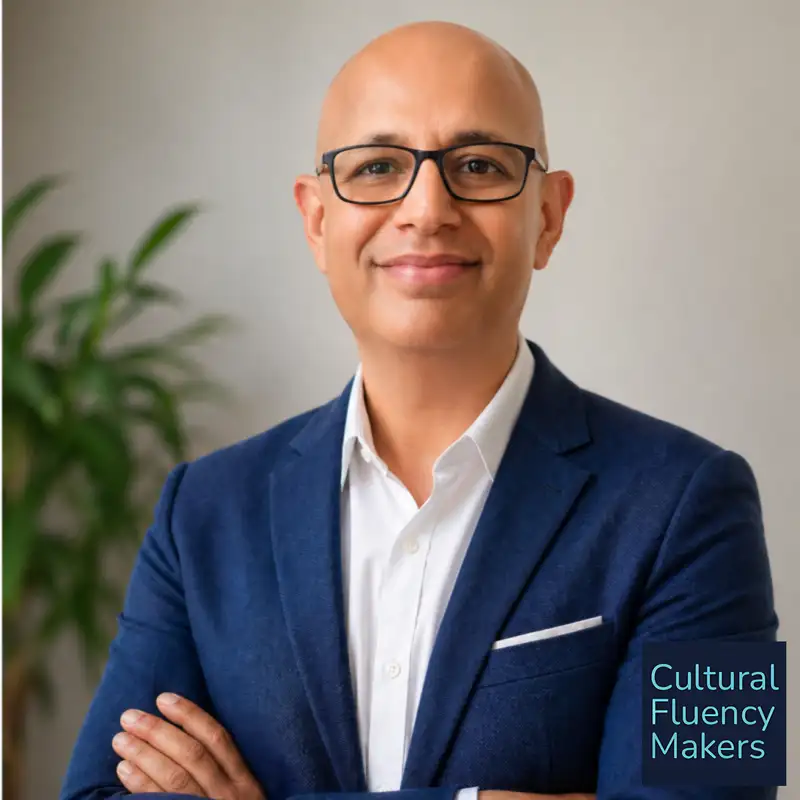
David Wellisch: I have been very much looking forward to this, uh, episode as I know that it'll be very dynamic and insightful. With me today [00:01:00] is a global data and AI leader who has driven transformation across some of the world's most recognized organizations. He is an award-winning analytics executive, recognized among the top 100 most influential data leaders by Data IQ for two consecutive years, and known for driving the adoption of AI, intelligent automation, and turning data into strategic business decisions, so important these days.
Over the course of his career, he has built and scaled enterprise analytics capability at companies like Procter & Gamble, Johnson & Johnson, and Mondelez, helping turn data into real business impact. Beyond the enterprise, he's also a sought-after speaker and educator, sharing his expertise on industry stages and in the classroom at Rutgers, Rutgers Business School.[00:02:00]
Today with me is the VP and head of data analytics and strategy at the Edgewell Personal Care. Pankaj Chopra, welcome to the show.
Pankaj Chopra: Thanks, David. Uh, thank you for having me
David Wellisch: Okay, let's do this. Um, let's, let's just, uh, start going, going deep. Um, Pankaj, as you well know, given your roles, uh, in so many great enterprises, this country has gone through a demographic landscape shift in the last, I don't-- you know, 10, 15, 20 years. It's a long time coming. Gi- given all that and given the shifts in the complexity of the consumer and the generational shifts, what, what do you see the role for cultural intelligence or cultural insights for consumer companies today?
Pankaj Chopra: It's a great question, David. So I think if you go back, uh, 15, 20 years, uh, as [00:03:00] marketeers or analytics professionals or data professionals, the whole Consumer landscape and marketing landscape was very linear, right? you have had a generally homogenous consumer. course, we did the segmentation and everything, but generally it was a homogenous consumer. uh, we were trying to delight that consumer, uh, with certain, I would say, base level, kind of one-size-fits-all solutions. Of course, we used to do a lot of improvisations and, you know, targeting. But in general, the consumer was, was very homogenous. What we started seeing is that over a period of time, a lot of strategies, both product development, communication, weren't really, really resonating with our consumer, and we realized that the single consumer [00:04:00] which we had in mind, example, if you're looking at beauty, anti-aging beauty, mind is, "Hey, somebody who's in their mid-30s or mid-40s looking for anti-aging solutions." got kind of totally dissipated because now you're talking of consumers who are coming from different cultural context. it could be a context where skincare is the key driver for my life skincare is an important driver. Uh, so with... And this is one example. So what we found that going forward, the whole, the whole fabric of consumer needs becoming very diverse. So different consumers through their cultural context were wanting different benefits from the same category. And I can, you know, talk about beauty as one example, and we can talk about other categories as well. beauty, for example, if you were-- 20 years ago, it was all about the, the beauty standard was [00:05:00] very consistent, and the benefits which we needed it to drive from a beauty products were also very consistent as, you know, young skin, acne, anti-aging. And... But now we found that even in anti-aging, there's a set of consumers who's asking for plain anti-aging for a normal or a dry skin.
David Wellisch: Yeah
Pankaj Chopra: Whereas there's another consumer who wants anti-aging benefits to enhance their already excellent skin, which is oily. And the whole product proposition, communication, kind of, you know, uh, had to be segmented.
So I think that's a big shift, and that's getting, I think, more and more complex because this is all around the cultural context. But you also have a cultural context by generation. So the gen-- when we talk about Gen X, Gen Y, Gen Z, difference between the new generation and the previous generation is much larger than what we used to see in the [00:06:00] past
David Wellisch: That's great. So complexity at the center, preferences, generational shifts, diversity at large, um, and yet more important than ever to get right. Um,
Pankaj Chopra: Haseeb
David Wellisch: what, what is hard, Pankaj? What, what is hard about this?
Pankaj Chopra: I think there are a couple of things which are hard. Now, if you are a Fortune 50 company, you've lived your way in a certain way. So the first thing which is very hard is to really accept and even observe and acknowledge that the landscape has changed. if you do-- if you've been doing something for the last 20 years, you might kind of be able to make small changes, but it's very hard for people, especially who've grown in the system and are leading these organizations, to go and have a paradigm shift.
It's a [00:07:00] very different discussion if you're a startup, and we can talk about that later. But for conventional blue-chip companies, it becomes very hard. So that's the first thing. The second thing is because of this complexity, the whole, you know, whole process of looking at simplistically your consumer, talking to your consumers, understanding what they're looking for, up with a need gap, and coming up with a recipe as a solution is not simplistic because as you said, there's so much data and complexity. So a normal human mind cannot process hundred different segments with hundreds of nuances, that is where the role of data technology and AI
comes in. So what you find is that, again, once again, people who've grown through a very traditional CPG environment are unable to get-- become fully data native or AI
David Wellisch: Yeah
Pankaj Chopra: and that becomes a barrier as well.
And there are a few other barriers, but I think pretty [00:08:00] much a barrier of acceptance and change and willingness to change and the energy for change, and there's a barrier to use the new tools which will actually help you to go get those insights in this new
David Wellisch: I love that. so Pankaj, I, I've had the privilege of moderating roundtables and, uh, having these types of conversations. Obviously, as the founder of Collage, we've served hundreds and hundreds of brands. Um, and it's interesting when I ask the question, "So how important is cultural relevance for your brand and to win hearts and minds of consumers?"
The answer is always, "Oh my gosh, it's front and center." Great. Uh, for you, what, what is cultural relevant? Like, what is cultural relevance, and how does a brand become it?
Pankaj Chopra: in some ways it's very similar. It's a eternal truth, and I'll talk about it, and some ways it's different. So one thing which hasn't changed is the whole [00:09:00] philosophy of is boss, right? So our job as CPG marketeers is to serve our consumers, delight them, help them to kind of, you know, fulfill and bridge their need gap. So that hasn't changed. But the relevance of how we access the ne- those need gaps and serve our consumer changed significantly. And that's not-- And I, I'm not talking about, you know, comms or I'm not talking about, you know, proposition, I'm talking about the whole product experience, your service around the product, and then how do you kind of retain consumers and bring them back to repurchase your product. I think that has changed a lot. So there are two parts of it, and that's the dichotomy which as marketeers or as insights professionals or as data leaders, we need to be very mindful of
David Wellisch: Y- fascinating. Um, [00:10:00] you, you have often, Pankaj, described data, and, and you're doing it now, as the lifeblood of an organization. And I, I, I could not agree with you more, especially in the world of AI. Um, in the context of cultural relevance, how, how do you move this barrier, this legacy organization from seeing data, if anything, as a backward-looking report to seeing it as a living pulse of where culture is moving?
Pankaj Chopra: I think there's a realization which is happening in companies. So what is happening is that unlike in the past, you know, obviously there are few datas-- we, we used to have few data streams, right? Once you launch the product, you'll probably have some structured data coming in. You can speak with consumers. The challenge with the market is are now facing is that they are, because of a very complex consumer environment and a communication environment, the-- you're getting data from a [00:11:00] lot of discrete channels. So you can have, you know, social people talking socially. can have people reviewing products, which is ratings and reviews.
You could have somebody who is talking, who's searching for something, which is very different to what you talk on a social network, right? you suddenly start seeing that you have multiple sources of data, all of these sources of data have a different user experience, different, you know, there's no SSO, right?
There's a different user experience, there's a different vendor, and they tell a different story.
David Wellisch: Hmm
Pankaj Chopra: And the challenge sometimes is the stories contradict. So what you, what people talk on may not be what people search on Google or they search on an LLM. So the challenge now is that with so many multiple data sources, how does a human mind really make sense of it? And I think that's where the context of data and how do we curate that data becomes very, very different. And that's where, [00:12:00] you know, the whole area of machine learning and AI comes in, and you talk about sentiment analysis, topic modeling. But that's a whole new world, which is very, very critical as you kind of talk about these new data sources.
David Wellisch: It seems like, uh, analytics become center stage, right? Like meaning you've got the d- uh, as data sources, uh, explode, then understanding signal, understanding what's important, what's not important, how to get to the source of truth, all of that is, uh, it, it becomes so critical for an organization
Pankaj Chopra: Exactly. So, you know, I remember 15 years ago, even 10 years ago, I was in a global role, and whenever we wanted to meet consumers, we'll get on a plane. You go to-- So for example, if you wanted to kind of launch something in China, you'll get on a plane, spend a day, kill yourself with jet lag, meet 15 consumers, you come back and you design something, right? And that was such a [00:13:00] simple thing. Now, you can definitely go there. There's always merit in meeting consumers. Absolutely. that itself, meeting 15 consumers will never tell you what the consumer is looking for. And that is why your muscle and capability and ability to manage leverage data with real human interaction and bring it together in a story, that becomes a critical driver, and that's how the world is changing
David Wellisch: Great. Um, you, you have often said that the challenge is not getting more data, but understanding the business context. When you look at diverse segments such as a Gen Z generation or a US con- US Hispanic consumer segment, what is, um, one cultural truth that you found that the data alone couldn't tell you, but the human insight did?
Pankaj Chopra: So we were, uh, we were working, [00:14:00] this was many years ago. I was still in California at that time. And, uh, we were trying to win with the Hispanic consumer. And, you know, California is a s- is a very highly, I would say, evolved, uh, has a very high e-evolution of the Hispanic consumer, right? And we somehow felt we were not winning. And, uh, know, we were looking at beauty, and we said, "Hey, you know, why don't we talk to Hispanic consumers and offer them the beautiful world of beauty care?" So there was a lot of work which was done, and we met consumers, and we said, "Hey, you know what? We actually are here to help you and serve you. Uh, these are some of your benefits which you need from your products because this is how you were brought up. And culturally, you're close to..." And I'm not giving details for confidentiality. "You're very close to what you're looking for, and we are here to offer you from through our brands." [00:15:00] So it was very revealing, and I still remember sitting in that house with that lady, and she said, "Listen, I am very proud of my heritage."
And, you know, as Hispanics, Hispanics are much more beauty conscious. They spend, they over-index on beauty spend. the skin, uh, the skin, uh, care regimen is much more evolved, and the quality of skin is also much more, I would say, it, it glows much more, right? So they're very proud of it. But she said, "Listen, I know exactly how I, I was brought up culturally, and I know exactly what to do. not what I want you to give me. What I want you to give me is what you can offer outside my cultural context, outside my upbringing, that I can actually have a combination of my heritage and what my mom told me and the kitchen logic which works so well, and the technology which you can give me, and I can actually get better." That was such a revealing thing. And you know, I had a, I had a Hispanic, [00:16:00] uh, boss at that time. I said, "Listen, I can't believe what I heard. You're trying to give somebody that she already has, and she understands that even better than us. What she's asking from you is to help her get to what you are offering then help her to combine with her existing regimen."
So that was a massive opener. And I still remember that was a mother-daughter in LA, and we went to their house, and they were looking at us so incredulously that, "Guys, why do you want to give me what I already have? Why don't you tell me what you can give me?" So this was like one of my-- And this was around, uh, David, around 15 years ago, 12, 13 years ago.
But that shows you the power of talking to consumers and starting looking at insights and looking at how do you delight them.
David Wellisch: I, gosh, I l- I really love that. I, you know, it's, um, it reminds me of, um, looking at commercials where you know that the kernel of insight is at the [00:17:00] center. Like they unearthed something so powerful that sure follows a good execution, but the execution is so powerful because it was grounded on an incredibly powerful insight that was discovered through the process, which is exactly, you know, I'm Hispanic, so I, I understand exactly what you're, you know, what you're saying, and it's really powerful.
We will talk in a little bit about synthetic audiences, and I think that's the question is could you ever get to something as powerful as what, as the story that you just shared th- you know, through a synthetic lens? We'll, we'll, we'll, we'll get there, but thank you for sharing. That was a incredibly insightful example.
Um, you, you have managed brands that are deeply personal. You, you talked about beauty, about shaving, sun care, feminine hygiene. how do companies use analytics, Pankaj, to distinguish between what may [00:18:00] be a passing trend, to a, fundamental cultural shift in how people view self-care?
Pankaj Chopra: It's a great question, David, and I think many times really we get it right, many times you get it wrong. So to me, a trend is something which kind of comes and goes. It impacts a few people, and, uh, there is more talk versus adoption. So you talk-- There's more, there's more discussion on the trend versus real behavior change, it comes and goes.
So, absolutely, like we need to kind of leverage trends, and I'll talk to that, talk about it. me, a cultural shift is more fundamental, which is, first of all, it kind of cuts across, across cultures and geographies and, um, segments, and actually [00:19:00] behavior. So I'll give you two examples which come to my mind.
So when I was working on oral care, we had this whole thing on charcoal toothpaste, and everybody wanted charcoal toothpaste. It was a trend, right? There were a couple of them which were launched. Some of them did well. We made some money. People made money, which is totally fine. We have to go with the trend, but it's a short-lived thing.
I don't find charcoal toothpaste on the shelves anymore.
David Wellisch: did you know that then? I mean, at that time, right? Like, you... It was unclear
Pankaj Chopra: It was unclear. was unclear. And so David, you're hitting a really good point If you miss a trend, you will lose some business. But if you misjudge a trend to be a cultural shift and then start rewiring your entire ecosystem around that trend, you have a bigger problem, right? not saying we should miss a trend, not understanding that the, uh, recla- uh, [00:20:00] wrongly classifying a trend as a cultural shift becomes a big problem, right? the best thing is, and I'll give you some example. For example, matcha, right? Uh, I feel is a trend, right? We see matcha-- You go to New York City, every other store has
David Wellisch: Yeah
Pankaj Chopra: It has a lot of health benefits, there's no doubt about it. So the trend I feel is matcha, it feels like a trend, but it is deeply linked to a health benefit. So that's what we need to notice. So if matcha continues and the linkage with the health benefit on anti-oxidation and everything kind of becomes solidified, and then people start drinking matcha because they feel it's healthier, starts becoming a cultural
David Wellisch: Yeah
Pankaj Chopra: So as marketeers, and this is where data comes in, we have to be very, very mindful that something which starts as a trend and seems like a trend, is it waning away or is it getting actually embedded as a cultural [00:21:00] shift? And if matcha actually become the next elixir, right? And this is where you need to have...
I love matcha. I drink it every day because I truly believe in the benefits. But if matcha is really something which we feel is going to really change behavior, then becomes a wellness benefit, and that's a cultural shift. I can say then that basically says, then we start using predictive analytics and say, "Guys, is the penetration of matcha in some form in the next ten years?" And then if that's going to change, how do we be ready for that matcha revolution, which is a cultural shift? it's a, it's a, it's a slip-- it's a tricky one, but that's where, you know, early signals and understanding how consumers are interacting with that trend very critical
David Wellisch: I mean, the, that's great. The, the other side of that is if health and wellness is what's driving the matcha trend, then there are also other opportunities beyond matcha [00:22:00] that support that big, that bigger cultural shift. Uh, you know, the, the other one that comes to mind obviously with all of our food, uh, companies is protein.
I mean, n- now it's like, you know, it's in the pillow.
Pankaj Chopra: Yes.
David Wellisch: And the,
Pankaj Chopra: Yes
David Wellisch: the question is w- like what happened? What, you know, what and, and, and what drove it? And, and what was the thing that began to... Right? And, and, and anyways, um, but it's, you know, it's, it's, um, it's fascinating. So, um, I'm glad that it took us about 22 minutes to begin the AI conversation.
We didn't start, you know, we didn't, we didn't start there. Um, we, we have seen research suggesting that while consumers find AI helpful, and gosh, every day I think the path to purchase, I think, uh, you know, maybe is more, more prominent, uh, with the interactions of [00:23:00] LLMs, they still cross-verify recommendations on either Reddit-like or, or obviously friends.
Um, how, how are you using AI to enhance that rather than replace that human trust and emotional resonance?
Pankaj Chopra: So there are two things, uh, uh, I think there are two things happening simultaneously. One is, if you are solely focusing on an agent which is very data s-sparse or is built on public data only, then the level of confidence on that could be very, very minimal. Uh, and you know, we can talk about AI, and that's when you find people that, hey, you know, I see something from an LLM, but it doesn't feel-- it doesn't pass my red-- pass the red face test. I check with certain other kind of, you know, or Twitter or, you know, talk to [00:24:00] friends or whatever, right? So one option there is what we're trying to do is how do we make sure that your agent has a lot of robust data streams, something we spoke earlier as well, right? So how do we make sure that it comes with enough data streams and a semantic layer which really helps us come up with the right insight?
Now, as consumers and users, they start using it you know, they feel confident, and it goes to the gut, uh, they feel more confident. So that is one part of it. The second part of it is that I think it's-- there's nothing wrong u-using an alternative source, and that's where supervised learning comes in, right? If you feel that your agent or your model or your LLM is not really giving you something which makes sense, and you go to an alternative source, and you check it and there's a contradiction, then the whole [00:25:00] thing of the human in the loop comes in and where you say, hey, guys. You go back and train your engine and say, hey, uh, if, if your LLM is saying, going back to a previous example, matcha is not good, have enough proof it is good, you maybe feed it some research studies and train the engine to say, hey, principally what we believe is that matcha is good. And then as you kind of do unsupervised learning through the engine, that gets integrated. So I think it's a good thing. One is let's pl- let's plan to build something which doesn't have this dichotomy, let's also keep, you know, eh, enhancing our engine as a part of this whole AI journey
David Wellisch: That's, um, that's great. You know, as a cultural intelligence company sitting on enormous proprietary data, um, that is our perspective. The, the, the nuance becomes even more valuable because of what the machine can do if fed the right [00:26:00] depth and the right cultural nuance. Um, let, let's talk about synthetic for a second.
You know, I-- it's been very interesting. I, um, I've been doing these podcasts for, I don't know, a year and a half or, or two years, and I have seen, I have seen a massive shift in acceptance at least to experiment, w- at least to experiment with synthetic. When I began, you know, um, or even a year ago, people were...
The reaction was, "No, no, no. Like, we're all about deeply understanding consumers. There's no way that the machine can give us that." What... And that's shifted. What, where are you on it, Pankaj?
Pankaj Chopra: See, we are all experimenting. Uh, and I talk to my peers, you know, obviously, and we talk about synthetic. And synthetic, we've been working on synthetic for the last two and a half, two, two and a half, three years. Synthetic is [00:27:00] helpful in some use cases like forecasting, where you want to enhance your predictive modeling, where you want to kind of, uh, refine your scenarios based on robust statistical data.
So that's where synthetic becomes helpful because it gives you the granularity, it helps you to kind of peel the onion a little bit uh, helps you to make the tool a little more robust Synthetic becomes a bigger challenge when you have a lot of more interpretation that is needed, uh, for the data. So for example, if you say, "Ankit, can you start using synthetic data for consumer trends?" I would start getting very worried because you know how it works. Like synthetic data is eventually generated.
It's synthetic for a reason. That's what it is,
David Wellisch: That, that's right
Pankaj Chopra: I would not personally at this stage, and I haven't seen any successful use case where synthetic data has worked in a little more ambiguous [00:28:00] environment. So... And even when I talk about volume forecasting, you need synthetic data and parallel path your current predictive models so that your quality of synthetic data improves as you train that
David Wellisch: Yeah
Pankaj Chopra: data generation. then once you feel that, hey, your deltas and your, your errors are minimized or zero or almost zero, then you can go on synthetic data. But challenge, David, is that, you know, it's nice to talk about synthetic data, right? But if you make a business blunder because your synthetic data is not giving you the right signal, it could cost you millions of dollars.
So as a responsible AI leader, I would be very careful on synthetic data. Experimentation is great. I love it. It's a lot of fun. But would only rely only on synthetic data when I have proof for a fairly long time the data gives me the right
David Wellisch: Did the right
Pankaj Chopra: and is guiding me in the right direction. So [00:29:00] we are in a journey
David Wellisch: So, you know, it, it's interesting in the, um, research technology, the ResTech arena, smart money is pouring millions and millions of dollars in synthetic players. Are you, are you a... Wi- with one of those crazy valuations that, you know... Are you contra- are you a contrarian in this? Like, do you think that those pan out over the long run?
Pankaj Chopra: See, synthetic data eventually will
David Wellisch: Yeah
Pankaj Chopra: Uh, there's no doubt. It's just that... that it'll pan out for a few reasons. As I said, you know, if it is initially use case specific, there are certain domains where synthetic data is more relevant. It'll pan out for companies who are able to use proprietary synthetic
David Wellisch: Yes
Pankaj Chopra: and integrate it in the system. But I'm not sure that in the next four s- so long [00:30:00] term, probably after 50 years it'll all pan out, right? if you're talking three
David Wellisch: Yeah.
Pankaj Chopra: I'm not sure of the synthetic data providers will be able to drive value. Because as practitioners, still haven't seen the proof in the pudding to the extent where we can say, "Hey guys, we're all in." We are not all in yet. We are still working on it. So if you have a three-year horizon, and if you're invested heavily in these stocks, David, not bet my life
David Wellisch: Yeah.
Pankaj Chopra: If you have a 50-year horizon, I'll go with it.
David Wellisch: Uh, that is, that is great. Uh, that's a-- It's an important topic in our, in our space. Um, what, what about the role of AI in creative, creative optimization from an advertising standpoint?
Pankaj Chopra: it has a very strong role in creative optimization, right? I think the word optimization is critical. So if you have the right insight, you're trying to [00:31:00] bring to life the con- exact need gap or exact proposition which the consumer is looking for, and if there is a need and a desire for what you're offering, and if you're able to communicate in a way which the consumer rings with, that all-- that's the starting point. Now, once you have that in today's environment, you have so many creative executions, right? You have different channel, then you have a bumper, you have a t- three second, five second, 10 seconds. That's where I feel AI is very powerful because once the st- once the guardrails have been set up and the foundation of your creative strategy and your comms are there, picking up the most impactful ta-- most impactful points in your comms and modifying it a little bit is very impactful. fact, you can even go a step further. You can have [00:32:00] hundreds and hundreds of out- creative options. You can also have an engine which can validate them in real-time and say, "Hey," uh, and that's a, that's a great use case for AI because then you can validate a few good ones. You can plow back the learnings, which is where AI comes in, and then you can say every other iteration and optimization, which is a critical word here, is in line with the learning which the engine has learned over a period of time.
So I think it's a great thing. a lot of companies and some of the companies I've worked in, we are using it very effectively and, uh, but that does not replace deep consumer insight and the whole area of connecting with consumers, the empathy. That doesn't replace that. But for optimization, absolutely
David Wellisch: I, I'm getting, I'm, I'm getting a very clear, uh, philosophical point of view from you. Uh, it, it's, it's coming clearly and, and I think it's, uh, I think it's [00:33:00] to be taken very seriously because at the end of the day, I mean, that's where it's at, the, the, the deep consumer understanding. Um, so Pankaj, let's go a little personal for our last couple of minutes, um, which is what, what inspires you?
What motivates you to do what you do every day?
Pankaj Chopra: I want to get better. I want to do something different which impacts the business in a better way, faster, quicker, better, higher ROI, scrappier. and, and David, that's what led me into this whole area of ins- analytics. Because what I realized is that, you know, early on in my journey that I saw some excellent marketeers, and I started in marketing, right? Excellent marketeers are using some very poor data to make decisions, and then there's some excellent data which is lying around which nobody uses, and there's a [00:34:00] gap. And for a very long time, I've tried to see, hey, how can we kind of close this gap from data and analytics insights and consumer comms, right?
How do you really bring that to life? So that kind of started my journey into this whole exciting field of... There was no AI at that time, right? We still used to do a little bit of machine learning,
David Wellisch: Yes. Yes
Pankaj Chopra: And I found that with advent of technology and with everything which is happening around us, which I'm not gonna repeat because we all know what's happening, you can actually re-engineer yourself and your organization Almost every month or every year and get better. And that what, you know, wakes me up in the morning, helps me to come, you know, enables me to come to work because I really want to change. I like changing things for the better. And if you see my history of my career, [00:35:00] I started in marketing, went into insights, then got into analytics, then got into machine learning, AI. I started teaching AI. So I just love, you know, driving new thinking and transformation in organizations which impact the business and which provide clear return on investment
David Wellisch: It's fanta- I mean, it's so, uh, so beautifully, beautifully said, and it aligns so nicely, um, with what's happening in our world. It almost seemed like you knew exactly where things were going, and you positioned yourself exactly for this moment. Um, huh, and, uh, but innovation seems the theme. Innovation, you know, broadly defined.
Um, in, in the last question of the episode, which is geared towards our younger audience, but I think in many ways is in need of so much wisdom, career wisdom. I- if you, and I love this question, if you could travel back in time [00:36:00] and give your 20-year-old self advice, wh- what would that be?
Pankaj Chopra: See, I grew up as an... I-- My, my, my undergrad degree was in engineering, and then even after an MBA, you know, I was very data-focused. I have been very data-focused. Uh, I think somewhere in mid-career I realized that storytelling is at the heart of everything we do. And honestly, I was-- I don't think I was a good storyteller early career, right?
And, and I said: You know, I am great in math, you know, I'm an engineer. I-- and I came into marketing. I can read data like nobody else, and that's my, my superpower. I think over the years I realized that that's talking to yourself, right? It doesn't matter what you know. What's very critical is that how do you bring that, simplify it, communicate it, [00:37:00] influence, and then make sure you drive change. So then I started focusing my, my on how do you tell a story versus how nice a, how nice a model you can create. So I teach at Rutgers, as you know, and I tell my students that guys, end of the day, class in that is, "Give me an elevator pitch of whom you are for 30 seconds." So very early on, if once you get into high school, I think we should teach our selves, our kids, tell stories because, see, this AI is all gonna get democratized. I can tell you, David, my prediction is in three to five years, buying an agent or getting the LLM will be done by procurement because it'll all be there, right? It's exactly what happened to Where we come in is how can you really, really tell the right story. So I would ask [00:38:00] all young people to the, all the good stuff: critical thinking, thinking, storytelling, engaging, all the soft skills which we sometimes, especially as data and analytics professionals, certainly as tech people, we basically ignore and sometimes we don't, we don't even want to go there. is gonna be the future
David Wellisch: Gosh, I love that. I mean, what a, um, you, you have shared gold. I'll tell you this, uh, 15-second story before we end, which is when my kids were young, uh, at some point they said, "You know, we, we wanna have a lemonade stand," like, like many do. And I got so excited because as you know, there's so much that you can teach about business.
So anyway, I said, "Wait, let me build this model and, and, and help you understand all the..." So I took time, I built the whole model, and when I, uh, finally shared the model, you know what the answer back was? Um, "We don't wanna do a lemowade- lemonade [00:39:00] stand anymore." So anyways, the point is stories and storytelling, I couldn't agree with you more.
It is, it is-- I mean, it's such a fantastic piece of advice and such a, such a great way of ending our episode together. So Pankaj, um, so, so, uh, grateful, uh, to you. Thank you for sharing of your incredible journey, your perspectives that I know will be very useful to the industry at large
Pankaj Chopra: David, thank you so much. Uh, really enjoyed. I think, um, thank you for the, for your time and, uh, you know, we'll, we'll talk more one
David Wellisch: Ye- yes. Thank, thank you. And thank you everybody. This was another exciting episode of Cultural Fluency Makers. See you next time
[00:40:00]
Creators and Guests