Stop Designing for One Market: Global Marketing with Natalie Wills - Cultural Fluency Makers
[00:00:00] Welcome to Cultural Fluency Makers. I'm your host, David Weis. Each week we welcome leaders to share how they stay ahead of the ever-changing consumer landscape with today's cultural transformation. Top brands need to understand diverse consumer segments from. Gen Z, Hispanic and LGBTQ plus to gamers, wine enthusiasts, and basketball fanatics in Iowa.
Their marketing strategies require them to keep the pulse on their consumers, but also their brand in the category to continue to grow. Revenue for the long term cultural fluency Makers is sponsored by Collage Group, the only cultural intelligence engine that provides brand and consumer insights on the why.
That drives consumer behavior and purchase decisions. Let's get started.
david-wellisch_36_02-27-2026_163657: ~So it's Friday afternoon and ~
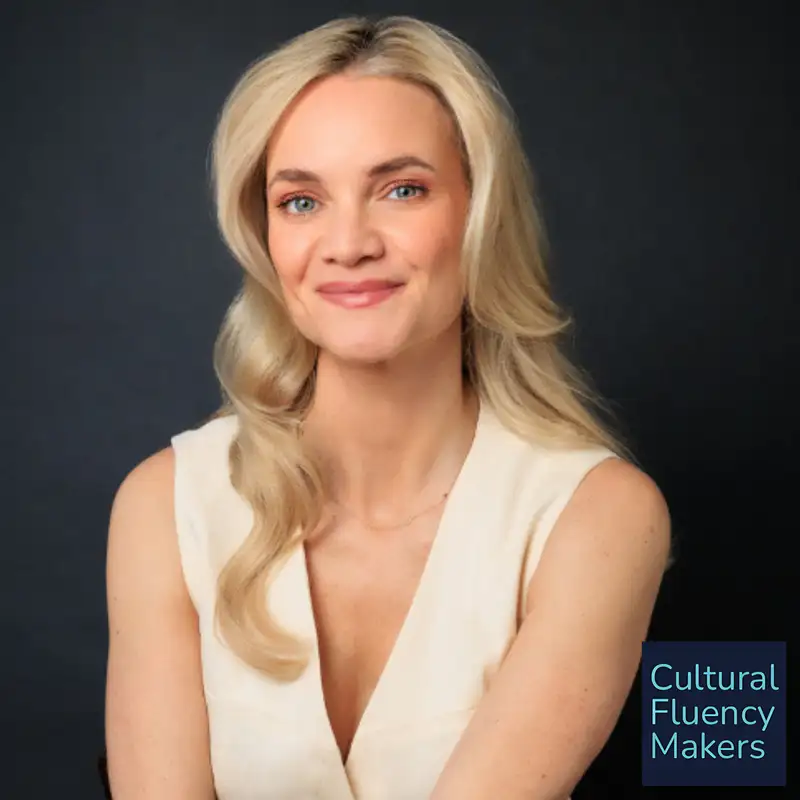
David: I am so excited about today's episode, just because of the person that I'll be speaking with, but this is directly from Amsterdam. [00:01:00] Um, so with me today is a global marketing leader known for turning cultural insight into campaigns that capture attention the world. Over the course of her career, she has built and led international teams, high-impact partnerships across industries, and helped shape some of the most recognizable brand moments in travel marketing. Her work blends creativity, storytelling, and data-driven strategy to build brands that resonate across cultures and channels. Along the way, she's earned industry recognition as a Gold Stevie Award winner and the Most Innovative Woman of the Year in advertising, marketing, and public relations. She's the SVP of Marketing and Creative at Expedia Group. Wills, it is so great to have you
Natalie: Wow. Thank you for such a wonderful introduction, David. Thank you. Great
David: let's do it. So, [00:02:00] um, so Natalie, your father was a human rights lawyer who represented Nelson Mandela. H-how did growing up in a household centered on justice and human rights shape your perspective the role that brands should play in social change?
Such a relevant theme these days.
Natalie: Yeah, I mean, I think, um-- I mean, what a great question to ask and, um, super proud of, um, of the upbringing that I've had because, um, you know what? Actually, when, when I was growing up, I didn't think it was anything unusual because we just grew up in a household that was, you know, very inclusive and, um, backed by a lot of values and principles around, um, inclusivity and fairness and, um, yeah, how diversity makes us better.
And, um, yeah, so it was actually quite interesting, especially like when I first started, um, m- doing an international marketing role, um, it was very [00:03:00] interesting to discover that that wasn't really the norm everywhere. Um, so I think probably the, the first thing that comes to mind is it really-- that upbringing really helps me shape my team because I s- do s- like 100% wholeheartedly believe that, um, having like amazing diverse teams, um, and people re- um, representing different cultures and people representing their, their countries is so important for us to help get the work right.
Um, but also it like fosters like a deep understanding about like why certain people are very passionate about things because they obviously come from such different backgrounds and challenges and et cetera. So I would say it's, it's probably helped me be a more, um, insight-driven marketeer because, um, it's just not my opinion in terms of what we do, but it's really like I want the brands to be rooted in consumer insight.
I wanna understand local cultures where the brands show up. [00:04:00] Um, you know, you can't just do a campaign in the US and expect it to work in Nigeria, you know. Um, and you also can't expect your team all to work the same way. Um, so I think probably just really helped to broaden my mind, um, and to allow me to appreciate different perspectives and opinions.
David: Which is, which is, um, I think in the role that you play, it, it's so critical. Uh, you know, like, uh, um, like you, I'm also an immigrant to this country. You know, I was born in Ecuador, but you were born in Zimbabwe.
Natalie: Yeah.
David: You were raised in South Africa. You've built your career across cities like London, Ber- Berlin, and Amsterdam. How has that, uh, shaped, uh, the way that you think about storytelling, about communication, and really about connecting with audiences around the world?
Natalie: Totally. And I think, you know what? I-- once again, I'm so thankful for all of these experiences because, [00:05:00] like, that's actually why I've landed in travel because I do feel that travel is just such an incredible category to work in. Um, you know, the fact that I've been able to travel and, um, explore different career paths, et cetera, has made me such a much stronger marketeer because if you're actually, like, living and breathing the society, you, you, you, you, you have to become more understanding.
You have to sort of appreciate different cultures. You have to understand consumers in a different way and, um, I think it just has propelled me forward, um, yeah, am-amazingly. But I would say in terms of how it's helped shape brands, I would say, um, I've always really worked in global roles and, um, something that's been always a big kind of bugbear of mine is that, like, a lot of the time with brands you design for your lead markets, whether that's the US or the UK or, or, or somewhere probably in Western Europe.
And then, um, all [00:06:00] of the other countries around the world just basically get Some form of that if they're lucky. So, um, I'm a big believer in, um, if you're gonna do marketing, like let's do it properly and make sure that you're taking into consideration local insights. Um, you working out local nuances like where people actually even consume the media.
So even if you're taking somewhere like Japan, people are consuming more media on like Line and YouTube versus the traditional channels that we use, for example, in US, um, you know, more of the Metas and, um, TikTok, et cetera. So I just think it's, it's the multitude of different questions that you need to ask, ask yourself, which is how do you actually connect with consumers locally to basically tell a rich story that feels that it's gonna resonate with them versus something that they will just scroll past in a hurry?
So, um, yes, I think the reason that I've probably been in global marketing for so long is because I feel that [00:07:00] it's so diverse. There's so many markets, there's so many consumers you speak to all the time. Um, and it's an area that I think you, you can make some significant change and do really well with those changes.
David: That's great. Thank you. I- if we, if we travel to the US... Welcome.
Natalie: Thank you. I spend a lot of time there, let me tell you. Um, I'm basically half American here.
David: I know you do. Are, are you, um...
So, gosh, this place has changed demographically significantly in the last 10, 15, you know, 20 years. Um, g- given such shift, you know, demographic where diverse, really diverse audiences are driving the growth of so many categories and, and definitely play a big role in travel as well, what do you see, Natalie, the role for cultural intelligence or cultural insights for consumer companies like [00:08:00] Expedia?
Natalie: Yeah. Wow. I, um, first of all, I think, um, that the US is so big, it's mind-blowing, right? So there's just so many cultures there. There's, from state to state, there's, I mean- It, it, it really, it really is such a huge market and I always think, my goodness, um, like from a government perspective, like governments of the Netherlands are so lucky because it's just such a small amount of people that they have to basically convince, whereas the US is so big and it's just a melting pot of different, um, beliefs, cultures, uh, everything.
Um, so I think it's-- And we also know it's a very expensive market for br- market for brands to succeed in because, um, because of, of its, um, you know, scale and, you know, the ability to reach so many consumers, you, you pay to reach them. So of all the markets in the world, it's the most expensive from a media [00:09:00] perspective.
Um, so I think with, with all of that said, I think the US, um, if, if you are gonna have a strategy to like go into the US, you really need to seriously think about it. This is, this is gonna be a, a long-term, probably pretty expensive strategy. But, um, from a consumer insight perspective, I think that the US has so many amazing subcultures and, um, I think one-- just simply like if we think of it as like a whole lot of different countries together, there's just so many subcultures that you can market to.
So even now, like coming up to the football World Cup, you can think like in the US there's, um, huge support for every single one of those teams that's, that's living in the US and there's an ability to like market and target specific subcultures. So, um, something that we've recently done is, um, we've partnered with, um, uh, with, with the, um, [00:10:00] football, with the football league, Liga MX, which is,
David: Yeah.
Natalie: of, I'm sure as you know, from being being Latin American.
Um, and this transcends the US because there's so many, um, Latin American consumers in, um, in the US. So I feel like it's very much about subculture marketing in the US. Obviously, there's still a big need to do some premium, um, advertising on, on linear TV. But I think where we have, um, really like gone deep is like how do we target different consumers and different needs with different creative in a whole lot of different channels.
So it, it doesn't make the effort any easier, but, um, I think there's no point in just putting a matching luggage approach of your creative to the whole of the US because it's too big for one thing to work.
David: no, uh, for, for sure it, it's, um, um... You know, mo- most people say, gosh, cultural insights, given what you just described, uh, [00:11:00] are really important, you know, in order to really go deep understanding consumer, which ultimately means that marketing resonates, right? Like, uh, at least you're, you're-- you've got half the, the equation right. my my question with that is what's hard? Like, what, what is hard about getting sort of cultural intelligence right or cultural insights right, and even cultural relevance right? What's hard?
Natalie: Well, there's, there's probably a lot of hard things about that because, um, well, first of all, I'll take it from a very functional perspective is, um, it's quite hard to-- U- unless you have like a very strong partner in helping you to acquire those insights or you have a great internal team that's really focused on like digging deep into the research.
Um, you know, I, I suppose maybe some people are pretty limited in terms of the information that they can get hold of. Maybe within the age of, um, [00:12:00] ChatGPT and Claude, this will probably become a bit easier. Um, but then I think obviously like often there's like a, a budgetary concern because it's very difficult to make like different, um, creative, different messaging for multiple different cultures.
So the easier way is to do something which is more generic that, um, you know, maybe appeals to the masses but doesn't really, um, talk to each subculture. So I think that's probably where like an incredible media plan comes in because, um, as with a lot of brands, I think we see such success in working with amazing content creators that we know for, for a fact that most people trust people versus brands.
So if we can sort of work with a whole lot of like really influential content creators and give them a very loose brief to try and explain to their culture in terms of how our product can be useful to [00:13:00] them, then I think that's a more compelling thing than having a, you know, an advertisement perhaps in, in many situations.
So I think you need to think about the diversity of the channel mix, um, the creative, and then also the richness of the consumer insight that you basically take into the initial brief, um, to make those decisions on creative and media.
David: Th- thank you. So let's, let's, uh, switch to branding a little bit. And you, uh, Natalie, you oversee, uh, an umbrella of brands. And so from a brand perspective, gosh, h- how do you balance both? How do you maintain the unique soul of brands like Vrbo or, or Hotels.com while leveraging synergies for scale at the same time? I'm sure not an easy-
Balancing that.
Natalie: No. It's, um, it's not easy. But what does make it easy is that we do have three very unique consumer brands. So we have [00:14:00] Expedia, which is obviously very well known in the US, and it's kind of your one-stop shop for all your travel needs. So if you are looking to book more than one item or just one, um, it has it all.
And then you have Hotels.com, which is a pure play where we are literally just-- we have-- we are the hotel experts. We sell, um, the best deals on hotels, and you get amazing rewards and, um, the, the type of consumer that uses that, uh, that brand tends to be looking for something that is maybe on more short term, um, so maybe not such a long trip.
And then obviously we have Vrbo, which is our vacation rental site, which, um, has a beautiful, beautiful supply of, um, incredible vacation homes in, in multitude of different cities around the world. So they are very different in terms of what they offer. I think one of the amazing parts of my job has really been bringing to life, like their uniqueness and bringing to life the things that they [00:15:00] offer to consumers.
Because I think your brand is really nothing unless you have some kind of, you know, foundation to back it up. So I can put all I want into marketing, but if I have nothing really interesting to say to customers in terms of why they should use our brands, then it just kind of blurs into sort of matching travel category advertising.
So what I've been very fortunate to do is really pushing each of the brand teams to work out, like, how do we talk about these incredible product benefits that we have in an easy and simple way to all of our consumers around the world, so they can understand very easily, like why I would choose Expedia over any other OTA.
Um, and sorry, OTA is something-- We use so many acronyms in this place, but OTA stands for Online Travel Agent. So just in case, like people are listening like, "What is she talking about?" Um, but yeah, it's been, it's been so wonderful to like basically really like dig deep into the insights, like work out what, um, [00:16:00] what products and, um, you know, messages resonate with each of the different target demographics of each of the brands.
So even though we, we have scale in terms of, um, many of the teams like service all three brands, we have a lot of uniqueness in terms of identifying like what each brand stands for, the key things that we are going after in each, um, market, and the whole company is aligned to those, those key principles.
David: I'm visualizing a big map and a big matrix. Uh, brands, geographies,
Natalie: I was that organized.
David: so, you know, I, I was at this, uh, at the conference, at the Possible Conference in
Natalie: Yes. Okay.
David: Yeah a couple of weeks ago. I don't think there was-- can't remember how many sessions were there that where AI was not front and
center. and so let's, let's get into it a little bit. Uh, your research shows that travelers are actually [00:17:00] skeptical of a fully AI-generated sort
of landscape.
Natalie: Are
David: H-how do you balance, again, this efficiency of AI with a human touch
Natalie: you talking about
David: travelers clearly still
Natalie: more from a creative sense, or are you talking about just in general from, um, our tr- research that we recently did?
David: The research, which I think leads to creative, but yeah,
Natalie: Yeah.
David: The
Natalie: Okay.
David: that you, that you guys just did, yeah.
Natalie: No, I mean, I think that-- I mean, and all of us are consumers, so I mean, I think all of us obviously experience these same doubts and things every day. So I think whilst everybody understands that AI can help them with efficiencies, there still comes a time when you are, um, when you're having maybe an issue with your travel or you, you just wanna speak to a person, and that's when it's important to have a human in the loop because there's nothing more frustrating than getting on a phone and then it's basically like [00:18:00] you keep on talking to a, a robot.
So I think there's definitely times where we know, travel is such a big, commitment to a lot of people. Many people don't have, many holidays a year. obviously travel has got, pretty expensive. there's a lot of issues going on in the world that, make people a bit more nervous to travel.
And so they need to actually understand that they're booking their travel with a brand that they can trust, like a brand that actually has their back. So if something goes wrong, there's gonna be a solution to help them. And I think within that journey, there still is human in the loop because, you know, some people, if they're having a bad trip, they need to speak to someone.
Um, and then as it-- when it gets to more creative, what we've seen, and I'm, I'm sure you saw, but there was a Super Bowl campaign that was made like 100% from AI this year,
David: Yeah
Natalie: um, consumers really didn't like it. And, [00:19:00] um, I think there's also just a, a lot of AI content being created, and I, um, I'm not saying that it's bad because I think that obviously that's the way of the world.
There is gonna be a lot of content created with AI, but, um, I still do think that you need the brilliant creative minds Setting the creative strategy, coming up with the creative idea, like digging deep into the research and insights and making sure that they, even if they're briefing AI to create the creative, that it's based on a very clear strategic brief that is still gonna resonate to customers.
'Cause there's no point in us putting creative out that customers are just gonna think, "Eh, well, you know, that didn't really appeal to me." Um, so I think from a, a brand perspective, and especially like I can talk to the creative element of it, we still see a really big need to have a lot of, um, strategy and brilliant creative minds in the loop.
And then AI is just an incredible opportunity for our [00:20:00] creatives because they can scale, they can, um, you know, they can make, um, sort of mood boards for a plethora of ideas in like one day, you know?
David: Yeah.
Natalie: And so I just feel it's, it's given them so much, um, s- like free, free headspace to really focus on like the strategy and the things that are really important.
Um, so I'm, I'm excited about the age of AI because I do think that it's already like helping us so much. Um, and I can see my creative teams like really getting so excited about how it's, it's helping them to focus on the bigger, more strategic items.
David: it's such an exciting time from an innovation perspective. And innovation is fun because you're, you know, you're discovering, you're exploring, you-- there's a creative energy that comes with that. Now, um, there's AI and then there's agentic marketing, which is obviously, you know, linked, but it's taking it to the next level. So w-with the rise of AI [00:21:00] agents, the consumer isn't necessarily a human anymore. Um, it, it, it might be an algorithm. H-how does your brand strategy change you're actually marketing to an AI travel assistant is making the decision for the human? Are you guys-- are you there yet? Are-- Is that part of the conversation?
Natalie: So yeah, I definitely think, I mean, we're, you know, one of the leading tech companies in the world, so it, it's definitely on our radar and, um, it's something that we're, we're, we're deeply interested in. Um, I can say that there's definitely projects that, um, that we're, um, you know, we have dedicated teams on that are looking at like how we basically market to agents.
So, um, I think even something as, you know, obviously like one of the things is like, um- Channels that weren't necessarily super important in the search era have like all of a sudden [00:22:00] come back. So, um, if you can think about like, where are a lot of the agents getting their information from? So they're getting like re- from review sites or, um, customer platforms where people write a lot of information.
So all of these things like Reddit and Quora and, um, you know, things like TripAdvisor, et cetera, are becoming so important because that's where a lot of the information is coming from. Um, so I think for every brand, um, it's, it's quite interesting because you are sort of looking at the channels and you're diversifying so much more, and it's a very different set of, of marketing channels that you need to look at versus, you know, traditional search.
Um, and it's a super interesting time and I, um, you know, I, I feel like we get told about one thing that's happening and it's super exciting, and then like 10 hours later something else has happened and it's changed. And so it's, it's, it's very, um, it's just completely moving. And I mean, even once again for my creative team, I mean, we use [00:23:00] one tool and then the next day there's a better tool.
And so I think there's also sort of an element we have to deal with of like fatigue because people just get updated on something and then it's like, okay, there's another tool. So, um, which is obviously great to work in a dynamic environment, but I, I also want my teams to be focused on, um, things that really help them versus spending a lot of energy on, on things that are, um, not necessarily a going concern.
David: think we're in this era of the next new shiny, shiny object, right? Totally. real and what's not. You know, I, I have the, Natalie, I have the honor of being able to have these discussions with great marketing leaders like yourself, also moderate many roundtables.
And, um, you know, we get to this question about cultural relevance. And, and you know, everybody agrees in order to, really in order to win consumers' hearts and minds, you gotta be cultural
relevant. Um, I wanted to ask [00:24:00] you, do you have a point of view on the, the role of synthetic audiences? You know, which is the ne- it's like the next new thing from an insights perspective.
Um, do-- are you using them? Do you believe in them? Do you-- what, what's your take? If cultural relevance is the North
Natalie: Yeah.
David: Can synthetic audiences get you there?
Natalie: From my side, I think it's helpful in terms of, um, maybe some of the more consistent research that you do all the time. So, um, it, it could be helpful in terms of scaling your brand track, for example. If, if you are able to get to a point where you actually, like, have a synthetic audience that actually, like, you feel really works.
But I personally feel like with research and insights, there's nothing better than being in a focus group and listening to what people say because, um, that's where you get, like, real gold for, um, [00:25:00] for campaigns. Like, I remember I was in a recent focus group where we were talking about, like, um, loyalty platforms, and one consumer said to me, like, " You know what?
The problem with all loyalty programs is it's just like homework. Like, all of you brands just expect us to do all the homework for you, and we don't wanna do math." And those type of comments are like, you would never get that from a synthetic audience. Well, at least not now. Um, and that's kind of marketing gold because that helps you unlock such an incredible insight and a creative idea that you can jump off.
You can be like, "Wow, that's-- Thank you for that." Um, so, so whilst I do think that there's ... I mean, I do think research and insights, there's obviously gonna be a huge amount of AI disruption because there's a lot of very laborious tasks in research and insights. You know, there's a lot of, like, cleaning of the data and,
David: Yeah.
Natalie: Where I think research and insights can go is, you know, having agents to help with all that cleaning of the data.
And then you have the brilliant minds that analyze the data and bring, um, bring those insights to life [00:26:00] for their teams.
David: You know, it, it's fascinating. You-- As Kolash, we're at the center of so many brands and in these conversations, and, um, there's such a spectrum. I mean, there are brands and people that are all in, and they've built, you know, hundreds of audience, of synthetic audiences, um, that represent the consumer, and then there are the ones that, um, that are more on the, you know, on the other side of it.
And I agree with you that ultimately these go-- You, you called it gold, right? Like these kernels of insights. When you, when you get to one you know, that can be the reason and the impetus for an entire campaign.
you know, but this will be a fascinating space to watch, and we're getting into some experimentation.
We're lucky because we- we're sitting on so much proprietary data of years and years that allows us to then experiment. Um,
Natalie: And I mean, you guys are at the forefront of this. I should be asking you this question.
David: Well, we, we... Again, what's fun is that we can actually
Natalie: Exactly
David: and co- and that's what [00:27:00] we're, we're gonna be doing. Um, and then we can also-- It'll be fascinating because you can create based on all of the data that you have already collected over years, which I would assume make... You know, I think it's a, I think it's an augmented synthetic. It,
Natalie: Yeah, I like that. I like that idea. So it's basic-- Because,
um, similar to sort of the creative lens, like often you need to build like a very good sort of strong 3D model of something before you can put it in an AI tool and get the best creative.
David: Gotcha.
Natalie: So I agree. It's probably like a little bit of a mixture of both, where, um, it's super helpful to have like the real rich data.
But I think that,
David: Exactly.
Natalie: That, that I think a lot of insights teams have is that, you know, by the time they're producing the quarterly report, like the data is kind of outdated. So it's, um, there's obviously a need there to have like more real-time [00:28:00] things. Um, and I think that definitely like AI and technology can super support there, um, whether that's through synthetic audiences or inputting the data and analyzing it more quickly or whatever it may be.
But, um, it's definitely ripe for, for AI to support in that area in a big way. Yeah.
David: Completely, completely agree. So Natalie, we're gonna move into, the last part of the show here, which is a little more personal. So, uh, question one is, what inspires you? What, what motivates you to do what you do every day? I know you travel a bunch and you're, you know, we just heard the description of brands, audiences, diversity.
I mean, there's, there's a lot. What inspires you?
Natalie: I have always been so inspired to just work on great, exciting, challenging things. And when I look back at my career, it's, it's never been a, um, a situation where I've been like, [00:29:00] "Oh, I chased the money," or I, you know, I-I've moved to all of these countries, which is obviously like a big sacrifice in many ways because moved away from family and friends.
But I've always just trusted my gut and said like, "That sounds like Freaking exciting and something that I can really, like, learn from at an ex-- like a really crazy, um, pace. And, um, so actually, like, I tell my team that the thing that inspires me is I am definitely a journey person. And what I mean by that is I kind of put people in two kind of categories with their career.
Like you're either a destination person or a journey person. I am a journey person. I need to be on the journey in a company. I'm totally fine with things like not being all perfect, but then you have incredible opportunity to grow and meet new people and work on incredible things. Versus a lot of people, that level of change and, um, disruption can perhaps be too much for them, and they would prefer to be in companies where [00:30:00] perhaps, you know, their things have been done before, they have more systems in place, um, and they feel more secure.
And that's totally fine. But I feel like I'm so inspired by getting into a company and seeing like, "Oh my gosh, what can I fix? What can I do? Um, how can I, you know, really like make sure I supercharge this brand?" So, um, I've-- that's kind of-- that has always inspired me in all of my career choices. But I'd say the other, like, thing that personally inspires me is I'm just, um, I, I really wanna show people that, um...
I mean, I'm just a girl from Zimbabwe who literally I came from a very normal background with, you know, very normal friends, very normal parents, and I've managed to do really great things because I've just trusted my gut and I've believed in myself. And I think there's, um, not a lot of people that talk about those stories, and I, I really feel that, [00:31:00] um, I'm really inspired by people, like, contacting me and asking me for help and, um, I'll try and do that in any way that I can, whether it's sort of opening my network to them or, um, supporting their growth in whatever way possible.
But, um, yeah, I, I, I feel very lucky to be, to be doing this amazing job and, um, to be living in this incredible country. So, um, uh, yeah, I'm just generally very optimistic.
David: I love the energy and I, This is a question that I ask every, every single guest, so it's really fascinating to hear. Um, but I've never heard the jour- you know, the journey and the destiny. I love that. I'm, I'm I mean, the
journey. And, you know, this last question is really geared towards our younger audience who, you know, I think with the advent of AI and so forth, there's so much in, in many ways wisdom needed, uh, for
Natalie: Yeah.
David: Figure everything out. So if you could travel back in time, I'm, I'm taking a little bit of minutes to, to so that you [00:32:00] get to the, to the
Natalie: Okay.
David: Time. I think we got there. Uh, give your 20-year-old self advice.
Natalie: Yeah. So I feel that that advice would be, you don't have to have everything figured out before you start living. Because I think so many people are like, "Well, you know, I need to do this degree," or, "I need to, like, do this internship and I need to do this," or, "I, I need to get fit and healthy," and blah, blah. I just think throw yourself in, live your life.
Opportunities will come past you in more ways than one and, um, just literally, like, get stuck in. I feel like you don't have to have everything worked out. Life is, you know, it's going back to the journey versus destination person, because I feel like if it was all worked out and wrapped up in a neat b-bow, it would never be so exciting.
So just get stuck in. Not everything's gonna work out, but most stuff does. [00:33:00] Um, and just start living. Like, I, I think that that's such a barrier for people just starting, you know? Um, it's always that... I mean, even entrepreneurs talk about it. It's just, just get stuck in, just start, and then you can go from there.
David: That was, that was, uh, 16 years for me, so I, uh, where we started the company. What a beautiful way of ending, uh, the Start living. I think that should be the title, start
living. Natalie, I, uh, so much, so much gratitude. Uh, thank you so much for a fantastic, um, episode where you've shared some kernels of gold.
And, uh, and just being so candid and, and, and honest, so really, really appreciate it.
Natalie: No problem. Thank you so much for having me, and I hope it was helpful.
David: Absolutely. And this has been another exciting episode of Cultural Fluency Makers. See you next time.
That's a wrap on another episode of Cultural Fluency Makers. Thank you for joining us. Please share your comments and what you would like to hear more [00:34:00] about. Be as specific as possible. For show notes and more, please visit cultural fluency makers.com. This show is proudly sponsored by Collage Group, unleashing the power of cultural intelligence to fuel brand growth.
Please follow Collage Group on LinkedIn and we'll see you next week.
Creators and Guests