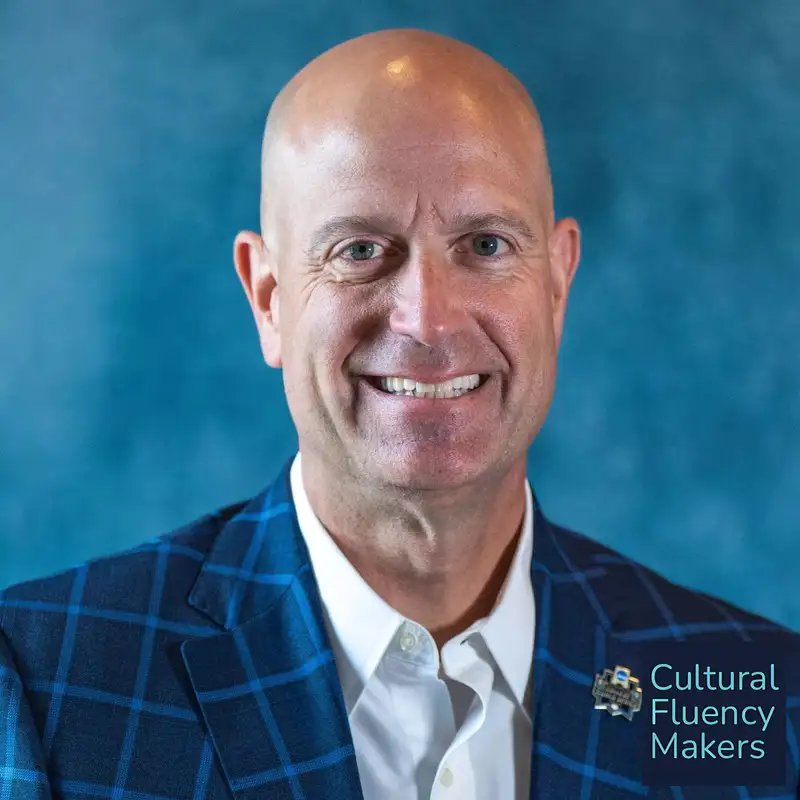
Legacy Reborn: Purpose, Trust, and Transformation with Keith Clark
CFM - Keith Clark
===
Intro: [00:00:00] Welcome to Cultural Fluency Makers. I'm your host, David Wellisch. Each week we welcome leaders to share how they stay ahead of the ever-changing consumer landscape with today's cultural transformation. Top brands need to understand diverse consumer segments from. Gen Z, Hispanic and LGBTQ plus to gamers, wine enthusiasts, and basketball fanatics in Iowa.
Their marketing strategies require them to keep the pulse on their consumers, but also their brand in the category to continue to grow. Revenue for the long term Cultural Fluency Makers is sponsored by Collage Group, the only cultural intelligence engine that provides brand and consumer insights on the why.
That drives consumer behavior and purchase decisions. Let's get started.
David Wellisch: On this Friday afternoon, I'm so excited for this episode and I know it's gonna be a very dynamic and, and, uh, really interesting conversation. [00:01:00] With me today is a marketing leader who knows how to build brands that last and how to evolve them for what's next. I've been looking forward to this discussion because his work sits at the intersection of storytelling strategy cultural relevance, and he has had a direct hand in shaping brands that people genuinely recognize and trust. He's a brand builder and a marketing strategist. He's someone who understands how to modernize legacy brands while honoring what made them iconic in the first place. He is the CMO of Mutual of Omaha. Keith Clark, welcome to the show.
Keith Clark: Thank you so much David. Thank you for having me. This is super fun. Uh, I love talking about marketing. I don't know if dynamic is an oversell for sure, but we'll have a good time.
David Wellisch: Alright, let's do this. Let's go, let's go deep. Uh, Keith, so we'll start with a little bit of combination of cultural intelligence and and brand heritage. [00:02:00] So have successfully revitalized Wild Kingdom Kingdom in just a few years. How do you balance the cultural safety of a legacy brand the need to be culturally relevant to the millennial audience?
G audience that did not grow up with Perkins.
Keith Clark: we talk about it's, it is about bridging. Uh, we have this amazing cultural relevance with people, probably 55 plus. Uh, those are the folks we hear about the most. You know, when we have focus groups, we always say the over and under is about 15 minutes before.
Folks of a certain age, they're talking about Marlon Perkins. So this massive, uh, spot in people's subconscious about Wild Kingdom, where, You know, we hear, oh, we used to eat on TV trays one day a week, and it was watching, uh, wild Kingdom, or I remember being able to have a Coke during Wild Kingdom, or just these, these crazy memories.
So this, this, um, connection [00:03:00] is so powerful with that generation. And what we also found in our research is. Protecting wild lands and wildlife is universal. And so while we don't have that cultural relevance with a younger generation, they are really connecting with our purpose. And so now our job is to reinforce it with those folks that remember it fondly from the sixties, seventies, and eighties, and then build that bridge to a younger generation that wanna believe in Purcha purpose that.
Uh, love the idea that insurance company is using their, uh, resources to do more than just, uh, You know, sell things to really protect the, the world around us because, uh, we wanna make life, You know, better, not just financially, but, but, You know, as we're going through, while you're, you're living going through life every day,
David Wellisch: Keith, what a platform. I, I mean, as, You know, purpose,
Keith Clark: It is everything.
David Wellisch: Right? Like Gen [00:04:00] Z and the newer generation. And I mean, it's, it's right on. So I think it's a, it's a super powerful platform. So when, when, when you, you talk about Mutual of
Keith Clark: Mm-hmm.
David Wellisch: Being a mutual company, which means that you're not really beholden to Wall
Keith Clark: Yep.
David Wellisch: Quarterly. How, how, how does that, I'll call it structural freedom.
Keith Clark: Yes.
David Wellisch: How does that structural freedom allow you to lead with, with a longer term perspective, maybe even, I don't know whether cultural empathy would be, would be sort of relevant or not than your publicly traded competitors?
Keith Clark: Yeah, I think it gives us the runway to build a foundation of trust. we don't have to push for the next quarter, the next, You know, the end of the fiscal year because we're, built to be here for next a hundred years. that's how we think about investments. That's how we think about, how we can satisfy our, promises that we're making to customers.
I [00:05:00] mean, we have 20 year, 30 year, lifetime policies, so we need to make sure we're making decisions and being here for the long run. so that means, You know, when we're delivering content, when we're talking about. Our company, we, are trying to build a foundation of trust and helping people understand that we're about protection and we're here, making good decisions for the long term.
so we're pricing it, right? Because we're owned by our customers, not Wall Street. And we make service decisions accordingly too, because, we're all in service of our policy owners.
David Wellisch: So you've talked about
Keith Clark: Yep.
David Wellisch: You've talked about trust, and we're just barely getting started, and those are such key, key pillars. How, You know, we, we, as You know, collage is a cultural intelligence
Keith Clark: Mm-hmm.
David Wellisch: And we know that trust. actually deteriorated significantly in, in most, from a consumer perspective in most [00:06:00] institutions.
Is that hard to build trust? Like what, what's like, how hard is it
Keith Clark: Oh,
David Wellisch: trust?
Keith Clark: It's really, really hard to build. It's very easy to lose. And so that's how, You know, we make sure that, You know, I, You know, I always, we talk about it as a team that. You know, we want to help people understand about life insurance, help people understand about the other insurance products we have, not necessarily to ensure they're buying our product, but they need it.
I mean, we believe that you need life insurance. You need to have a financial safety net. Um, it's a important part of anyone's financial plan and You know, it's something that I feel very passionate about. Having been a child of life insurance. And so, um, You know, we think about it. Hey, very benevolently, we're gonna give you content.
We're gonna educate you. We think we have the best product. It might not be the best for you, but you need this product. And I think that kind of point of view helps [00:07:00] build that trust, helps, uh, as we Go-to-market, You know, we're going to market with. Every expert we have in the building to help people make smarter decisions.
Uh, 'cause not every product is for everybody, but we know that some sort of protection, um, is super, super important. As you lay out your financial goals, uh, they all stop if, if the, uh, unthinkable happens and you pass away. And so having that level of protection is important. And so when you kinda start with that level of transparency and purpose and honesty.
The trust kind of comes along with it and then prove it over 117 years, You know, so and counting. And so you have that kind of mix and, You know, we steward it as much as we can because you can lose that trust, uh, very, very quickly. And so it's, it's something that's super precious to us.
David Wellisch: eloquently said, um, Keith Mo. Most people avoid thinking about mortality. No one likes to think about.
Keith Clark: [00:08:00] Mm-hmm.
David Wellisch: Uh.
Keith Clark: Mm-hmm. Yeah.
David Wellisch: Fear of death? To really empowerment through protection. How, how,
Keith Clark: It, it's so, so difficult because, because of that, You know, we're, You know, every study after study will tell you that, um, Americans in general are underinsured, uh, for that because the. The easy message is, oh, just put it in the market. Put it in the market. Put it in the market. Let it grow.
Um, and your 401k and investing and that sort of thing, you'll be fine. And it's just, You know, we try to really just talk about it pragmatically, You know, death and taxes. No one gets on live. [00:09:00] It, it is the circle of life. You, you name it. I mean, we all kind of intrinsically know we have to prepare for the future.
It's, it's giving people the tools and the vocabulary to talk about it in a way that's not as scary, You know? And that's, that's where we think about. You know, building plans, You know, preparing for the future, making sure you're providing, uh, when the worst happens. So just trying to give people a reason to think about it.
Not in the scary terms, but in, uh, You know, the, the hierarchy of needs of, uh, safety and security, not for you, but for your family and for the people that you leave behind. And it's easy to say for me, it is really, really hard to do. We've all got a lot of time in our hands. The product isn't made for it.
You know, if you get a life insurance product, you have to get blood, you have to give all the fluids. It takes a long time. And so there's a lot of barriers there. Um, but just, You know, grounding on the fact that [00:10:00] this, uh, thing that you do is for, not for yourself, but for others. And so if you can translate that as a, You know, a selfless act, then I think you're getting the consumer a lot closer to easily being able to make that decision.
David Wellisch: There, there's also, You know, it's interesting having, um, I was born in, in, in Latin
Keith Clark: Mm-hmm.
David Wellisch: Grew up in Ecuador. Uh, so I think life insurance is also cultural.
Keith Clark: Yes it is.
David Wellisch: know, there are societies that are, I don't know, they, they just live today
Keith Clark: Yep.
David Wellisch: And they live today and they don't think about the future. Uh, in, in many ways I think America is more of a planning society than than otherwise do. Do you have any insight into that as you think about like cultural segments or, yeah. I don't know whether you guys look into that or not.
Keith Clark: Yeah. You know, it is interesting that you say that because, um, we see it along cultural lines and socioeconomic lines, You know, um, if you are. [00:11:00] In a certain, You know, socioeconomic, uh, uh, situation where rising up and, and starting to improve your, your outlook. A lot of people look at life insurance and say, Hey, I, I've arrived, I've been able, I can afford this now, and I can prepare and, and, uh, do this level planning for my family where previous generations couldn't.
And so there is some of, we do see some of that in, in some, uh, parts of the country. We also, uh, see it where. When people are coming in from outside, hey, we don't have a family structure like you might have in Latin America, that, You know, multiple generations living together. Uh, people really watching out for their elders, and it's a different way of approaching senior care.
Um, And so that's driving some of those decisions. Um.
David Wellisch: That's
Keith Clark: And, and I mean, certain products are just really savvy and they provide, um, different streams of income tax [00:12:00] free. And I think, uh, there are certain populations out there that, that think about investing in money in a different context, in a much longer kind of, uh, horizon.
And then that, that kind of pops through. So I think. The socioeconomic part kind of dominates the, the research a ton. Um, but, but we do see it kind of popping up, especially for first generation in the us um, thinking about, Hey, I have life insurance. I've kind of arrived and I'm making it in in my new country.
David Wellisch: that's interesting. Yes. 'cause I, I, I, we've, we've done research and, and it is a specific cultural
Keith Clark: Yeah.
David Wellisch: Uh, sort of the planning trait. Um, let's talk about marketing a little bit. You, you've hit a 94% aided
Keith Clark: Yeah.
Yeah.
David Wellisch: in an era of infinite
Keith Clark: Mm-hmm.
David Wellisch: How are you shifting your strategy from being known,
Keith Clark: Yep.
David Wellisch: Is the
Keith Clark: Yes.
David Wellisch: To being chosen, uh, [00:13:00] by, consumer segments that may be more
Keith Clark: Mm-hmm.
David Wellisch: Of, again, traditional financial institutions. Also given the, the sort of idea of trust erosion
Keith Clark: Yes. Yeah, that is the the huge question, You know? 'cause a lot of brands are just. Spending to get on that radar, um, so that they're known. So when that decision comes at, they're top of mind. You know, as a mutual company, we don't, we kind of don't take that approach. We're thinking about it more in the terms of education and helping people, uh, learn about the benefits that we can provide them on top of marketing.
Uh, You know, our. Kind of trust attributes plus the products we sell to, to, You know, so when they have that need, it's like, oh, I know Mitro of Omaha. Oh, they sell these products. Okay. We get over that hump and we're doing it a lot with content. So we're seeing that content, especially really authentic content from experts inside the building, [00:14:00] not just one talking head, not just kinda generic AI content, but real content with a point of view, with, uh, expertise behind it.
Is really helping to educate consumers, helping bring them along in the journey. And it turns out it's helping our organic search, it's helping us pop in the large language model. So we really look at education as the foundation for, um, helping people arrive at that decision. So I, oh, I know you let me do a little research.
Holy cow. They seem to know what they're talking about. Uh, it seems priced right, so let's move forward. And, And so that helps too because a lot of our products are sold through a, a brokerage distribution. So a broker is talking about probably many different brands. Uh, And so when someone's doing their research, uh, we're kind of, uh, laying any fears about our brand, uh, highlighting our expertise, so it's a little easier for them to pull the trigger.
Um, when they have that, that, [00:15:00] um, purchase point. So you, you, You know, it's, it is the long game. Again, that content's gonna be out there forever. You know, it's our job to, You know, care and feed it and understand how, what's working, what's not working. Um, and we feel like that's gonna be more impactful in the long run than, You know.
College football, other big, big ways to advertise. And, um, we're seeing some really good results, um, that are super efficient and we feel like using our policy holders dollars, the most effective
David Wellisch: And you keep, You know, I, I, I keep hearing the, the, uh, transparency, authenticity, purpose, um, trust, um, even when you're talking about marketing people in the building versus maybe the influencers or the
Keith Clark: Yeah. I mean, we, we, You know, maybe not as polished, but the passion, the expertise is there. I'll take that any day over kind of an influencer or a, uh, someone [00:16:00] outside of the building, right? Because, uh, the folks that we're highlighting are building the products. They are the ones, You know, kind of.
Uh, really making it happen internally and for them to share their insights to people who are gonna buy one of their products, I think is, is really, really powerful. And it is just that idea of authenticity of, You know, someone being in the business, understanding the business, and wanting to share that with other people.
David Wellisch: It makes a lot of sense. It's a little counter Yeah. Like, 'cause you see the creator economy, You know, exploding. Uh, but it makes a lot of sense. Um, let, let's talk a little bit about ai,
that, You know, that little, those, those two letter words that are permeating everywhere. Uh, so you've described. Mutual of Omaha as a fast follower in
Keith Clark: Yep.
David Wellisch: Uh, with your team now deploying Gen AI for sales support and content, where, where do you draw the line between the [00:17:00] efficiency that AI generates and then this human touch that, that you've talked so much
Keith Clark: Mm-hmm. we're drawing the line of marketing very much at that, authentic level. So it's great to brainstorm, get some rough drafts. But you have to have the, the, the human crafting the message really kind of, um, uh, getting our, our unique point of view across and bringing some humanity to the, to the work.
'cause I think. As you look at the, copy and, the things that AI is doing, you start to, read it like, oh, that was totally ai. People wouldn't talk like that. they're not using those sort of words. They're not putting all that together. really using it as a jumpstart or, being able to explore ideas at scale, really try some things out.
That to me is the big, big, big benefit is you [00:18:00] can brainstorm a wide variety of things and just kind of look at different, ways in on a problem very, very quickly. But at the end of the day, it is just a starter. And then you have to have a human that kinda crafts the final. product so that we're staying on brand and we're staying on, tone and the messaging and all that sort of thing.
Now, the A is getting better all the time, so I, like, I could be changing my tune, but right now, uh, we've not been able to train an AI that is better than the work that some of our, our creative team's doing in conjunction with these experts.
David Wellisch: can you see a day where AI is generating the creative
Keith Clark: I hope not. because I'm, You know, old fashioned, I guess. I think having humans involved in this kinda messaging is super, super important. I think it can do a lot of great [00:19:00] things. it can help. People be more productive in lots of ways, but I really want to keep the soul of the creative work with people.
I think that's where we'll get the best output and where we'll get the best connection. because I'm not sure AI can connect at scale with people.
David Wellisch: well, especially given, once again, the pillars that you've talked
Keith Clark: Yeah.
David Wellisch: It, it almost, it's gonna be an interesting
Keith Clark: Mm-hmm.
David Wellisch: As AI evolves, um, in humanity and human connection. Is at the center. How do these things interact? So we'll probably, and things are moving so quickly that we'll probably have a great conversation in
Keith Clark: Yeah. Yeah. And You know, I, I wouldn't be surprised if we see a place where. Hey, we go all in AI and um, we're getting super efficient. Everyone's happy, but we're not selling anything. Everything sounds the same. It's all vanilla, and then you have a breakout. People are like, oh, we're doing it old fashioned.
We're doing it by hand, and we're [00:20:00] getting great results. And so. Um, likely, I imagine there'll be some sort of bell curve around, Hey, we're doing a lot of it, and then it, You know, just loses its
David Wellisch: Yeah.
Keith Clark: Impactfulness and then it'll start coming down and even out to a place where it just makes sense.
David Wellisch: You've spent 17 years on the agency
Keith Clark: Yep.
David Wellisch: Before going in-house. Keith, what's the one thing that that agency partners consistently get wrong about cultural
Keith Clark: Mm-hmm.
David Wellisch: That you only realize once? went on the other
Keith Clark: Yeah.
David Wellisch: Uh, and became a CMO.
Keith Clark: You know, I think, um, I think agencies are amazing. They play such an important part of the creative process because they bring a different point of view. Um, but I think some agencies. Uh, miss the internal knowledge and, and, and being able to kind of tap into what, um, the, the, the work that we've done, [00:21:00] all the research, uh, You know, there's no way an agency can intimately know, um, all the insights that we've gleaned over, You know, decades, right?
And, and, uh, from all those years of new business pitches, you try really hard, but it's impossible until you really get into the work. And I think sometimes, uh, agencies will discount the learning from an internal organization and discount some of the, the thinking because they feel like they have to recreate it all.
And if they don't recreate it in their own language, then their creative team won't get it. Then that, that creates a lot more, uh, potential friction points between get selling creative or selling, You know, their ideas. Uh, because now you've changed language, you've, you've articulated in different ways and it leaves room for gaps.
So my, my suggestion to agencies would, would be. Don't be, uh, super afraid to [00:22:00] draft on what your client has done, uh, from an insight from, You know, excuse me, some of the, the product learning, but then bring your point of view in and, And so it's more of a partnership, um, because the ta-da level of creative.
Rarely works well, especially in a highly regulated industry because just it's so, so hard to, uh, get creative's head around all the rules and everything we have to do. So a tighter partnership that is iterative in nature, I think is more beneficial, like I said, especially in, in financial services.
David Wellisch: That, that's, that's a, that's great advice. I, I assume that part of the tension comes from the need to impress,
Keith Clark: Oh yeah, I think it's, it's. Don't always try to be a creative, a creative partner. You need to be a business partner. You know, if you're just on the creative side, um, I think you lose some of the depth of being a business partner, um, because that's where I've seen [00:23:00] really amazing thing happen when you have true partnership.
Like I think about some of the. Clients I've, I've been able to work with like the US Navy, You know, we've, I felt like we had a true partnership with our Navy clients and we created amazing work because of that. Um, and with USAA same kind of thing, You know, we really dug in and understood the shared history and, and the, um, You know, the importance of the association.
And we are able to do really groundbreaking work for them. Uh, because we, it, it was a, I felt like it was a true partnership. We had great clients, we had great ideas. We really moved the business forward and creative was great too, don't get me wrong, but it started out as the understanding the business and really being connected there, and then the creative comes out of that.
David Wellisch: Yeah, that, that, that's great. This is our last, uh, business question for the. You know, for the session, which is, uh, Keith, the company's building a new, new Yes. in downtown Omaha. what is [00:24:00] the cultural signal that you're trying to send to your employees in the industry with this physical, uh, investment and signal?
Keith Clark: Yep. Uh, great, great question. You know, and I hear it all the time around town, um, You know, it is a nod to. Making sure that when we are coming together as employees, we have the best possible facilities. We have facilities that, um, encourage, collaboration, encourage us, uh, to come together, to really innovate, but also fantastic spaces to do work.
You know, it is built really around the idea that the work is happening. Um. Uh, in areas of great light. So you we're, it's an open floor plan with offices in the middle, which is pretty unique. So all the openness is out towards the windows, And so you get this great free flowing light coming through and it's just very e [00:25:00] energizing and it's meant to, uh, encourage people to move around, to sit in different places, to collaborate with different people.
But we've also built it, the footprint couldn't hold all of our employees. If everyone wanted to come to work tomorrow. So we embrace hybrid work because we know that, uh, that helps people's work life balance. And when people have great work-life balance, they can really bring the best to our policy owners, to our, to, You know, our other associates.
And so, um, uh, You know, from my point of view, it's like, hey, we're gonna give you the best possible place to come together when business calls for that. And if it calls for you, just putting your head down and getting work done, it's gonna be a whole lot better in your basement. It's gonna be a whole lot better than, You know, the guest bedroom of great light, great facilities.
Um, and you'll wanna come down there and, and be a part of something that's amazing. Um, the, the Omaha, the downtown, the [00:26:00] urban core is just exploding. You know, we have great parks, we have great facilities, amazing restaurants, so. It is really a nod to investing in our employees and, um, giving them a place they can be proud of and a place they want to come to.
David Wellisch: That's great. It's interesting that you guys are making the investment and at the same time, not forcing. You know, the five day a Mm-hmm. deal, which I, I think in the long run, it's, uh, I think it's powerful.
Keith Clark: I mean, because people don't operate that way anymore. And, and
David Wellisch: Yeah.
Keith Clark: Get me wrong, I would love it. I come in every day because I let I choose to do that. Um, now I'm an empty nester. I live close to the office. I would love to see more people in, but I also really, really appreciate the work product everyone's doing.
And it's not predicated on me looking over their shoulder and seeing if they're working. It's predicated on their pride for their work, their pride for the company, their partnership with, uh, other associates. So, You know, I try to keep that in mind too. [00:27:00] Um, that yes, I'd love to see everyone, but I don't need to see everyone to get their best work.
David Wellisch: Yeah. No, that's fantastic. Great. So, uh, Keith, two, two. Uh, let's move more on the personal
Keith Clark: Okay.
And two, two quick questions before we, before we wrap. Um, what inspires you? What, what motivates you every day to do what you do?
Keith Clark: because I'm a child of life insurance, it really gets me fired up to know that we're protecting people, we're protecting more families. If, if I can help. You know, more people, uh, um, avoid financial calamity because of our products. That really, really makes me excited, You know, because not many people can say that.
Not many people can say. I work in a company that's protecting millions of people, and that's what gets me up in the morning. That's what helps push forward. And, and, You know, I think about the Wild Kingdom work. We're [00:28:00] extending that to the world around us, right? We're giving a microphone to all those people out there, saving species, saving environments, really doing a great job.
And, and, uh, all of that gives me a huge sense of pride. And there aren't many companies where you can do this kinda work and feel this good when you go home.
David Wellisch: I, I can feel the purpose. I can feel your purpose. I mean, it's, it's, uh, palpable and, uh, so many people look for, for, for
Keith Clark: Yeah. I mean,
David Wellisch: know,
Keith Clark: you do what you love and you don't work a day in your life. Right. And it's so true.
David Wellisch: there go. all right. And for a younger audience who I think needs, uh, I, I think they, they need professional advice so
Keith Clark: Mm-hmm.
David Wellisch: Um, if you could travel back in time and give your 20-year-old, uh, self advice, what, what would that be?
Keith Clark: I think I talked about work-life balance. Really understand what that means. Uh, I [00:29:00] think especially in agency land, uh, people lose sight of that because it's about billing, it's about getting more work done. Um, and I certainly did in my thirties when I had a young family. So I think it would be really know what work, like balances and focus.
Uh, health and fitness more, You know, uh, it took me a little bit longer to recognize I feel better when I work out and don't eat and drink, like, uh, not supposed to. Um, and that's really hard to, to, uh, for people to get their head around until they're in that spot. But, uh, those would be the two things that I think I'd just, Hey, you're gonna work hard.
That's great. But You know, there's a part of you outside of work that you need to take care of. And when you do that, just the whole self is more productive and you have better ideas and better thinking.
David Wellisch: it's not the work your ass off at in your, in your twenties because in your forties and fifties you don't wanna, it's try to. Be more balanced throughout the
Keith Clark: Yeah, I think [00:30:00] it's work your ass off, but also, You know, be focused in what you're doing. So. There's still boundaries, right? And, and don't be the guy that is, You know, billing the most hours every year. That's like the, You know, the dummy award, right? It's like, get your work done and, and, uh, be intentional with the work, and then be intentional with the after work.
David Wellisch: Uh, so much gratitude, so much appreciation. Thank you
Keith Clark: Oh, thank you.
David Wellisch: This. This, this Friday afternoon with us. Uh, it's been fantastic
Keith Clark: Excellent. Well, thank you David. I appreciate the opportunity to chat, love talking about marketing. It's super fun. Certainly, uh, You know, something that I, You know, I do all the time, so thank you for giving me this opportunity.
David Wellisch: Fantastic. This has been another exciting episode of Cultural Fluency Makers. See you next time.
Keith Clark: All right. See you.
That's a wrap on another episode of Cultural Fluency Makers. Thank you for joining us. Please share your comments and what you would like to hear more about. Be [00:31:00] as specific as possible. For show notes and more, please visit cultural fluency makers.com. This show is proudly sponsored by Collage Group, unleashing the power of cultural intelligence to fuel brand growth.
Please follow Collage Group on LinkedIn and we'll see you next week.
Creators and Guests