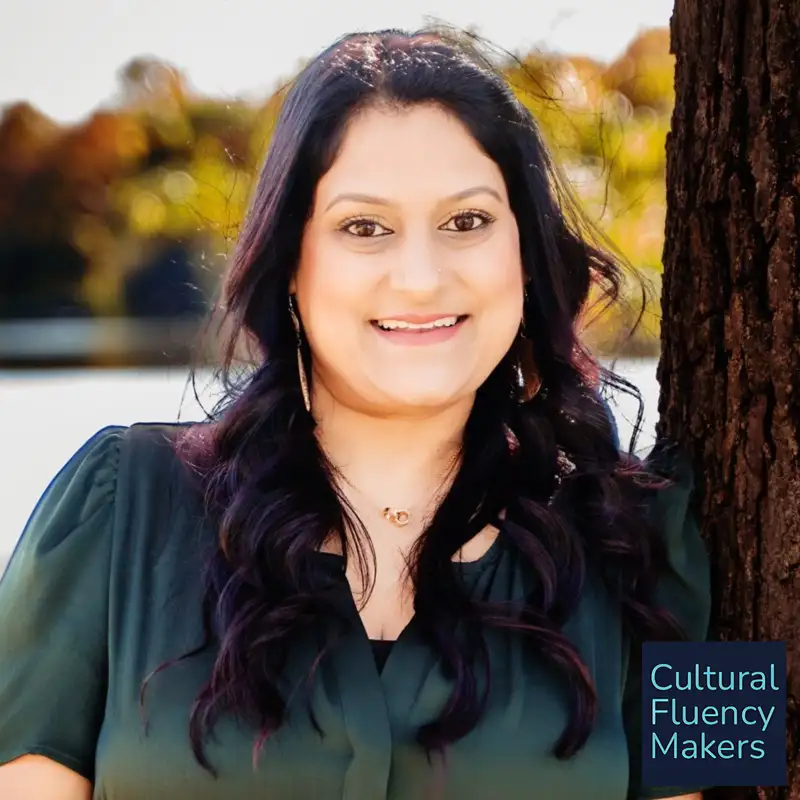
How to Spot a Cultural Shift Before Everyone Else with Lipton’s Reshma Dhati
CFM - Reshma Dahti
===
[00:00:00]
David: So I am, uh, very excited about this morning's, uh, episode. with me today is a thoughtful consumer-first marketing leader [00:01:00] helping shape the future of culturally relevant brand storytelling in the beverage industry. She is a brand strategist and consumer insights expert who has built impactful marketing programs centered around authentic consumer engagement and modern brand growth.
Throughout her career, she has worked across nationally recognized consumer brands like PepsiCo and Unilever. She's known for her work in brand marketing, shopper engagement, and driving innovative consumer experiences for globally recognized products. With me, I've got a VP of marketing for North America at Lipton Teas and Infusion, Reshma Daty.
Welcome to the show. It's great to have you
Reshma: Thank you so much, David. It's wonderful to be here
David: All right, let's do this, uh, Reshma. So I always start, um, these shows in the, in the same way, which is this country, [00:02:00] the US, has changed dramatically in the last, you know, 10, 15 years. Um, the question for you is: What do you see as the role for cultural intelligence and cultural insights for consumer companies like Lipton Tea?
Reshma: Yeah, no, you're, you're absolutely correct, right? The reality is, is that traditional concept of gen mass or gen m- market really no longer exists. Over the course of the last 20 years or throughout my career, um, this idea of a one size fits all consumer or strategy has really gone out the window. And so for a legacy brand like Lipton, who's been around for 130 years, cultural intelligence is really, um, isn't niche marketing or a box to check.
It's really the foundational baseline for our brand strategy and our growth. the cool thing is, is that tea is inherently cultural. It carries deep, distinct ritualistic meanings across different communities, whether that's the Southern sweet tea ritual, whether you're [00:03:00] looking for that functional herbal wellness or the chai rituals that I grew up around. Cultural intelligence really allows us to move past that one size fits all kind of approach and really understand how different groups interact with our brands so we can innovate and create pr- campaigns meaningfully for them.
David: That's great. And Rich, I, I, I think most folks that I talk to, uh, start in a similar place, which is, gosh, it is a North Star. We must get it right. What's hard? What, what is hard about this? What are the challenges to getting this right?
Reshma: Yeah, I mean, I think in today's day and age, the toughest part is really keeping it real and avoiding those token gestures because they're easily known, right? Putting diverse actors in an ad is, is easy and, and any brand can really do that. But actually weaving insights into how you design and manufacture, whether it's a product or a campaign, that's really a whole different animal. And I think what I'm feeling now more than ever is this massive gap between [00:04:00] how fast culture moves versus how long corporate innovation takes. changes in a split second on social media, but traditional timelines take years. So my daily battle is really how can we spot a trend, trend, something that's here for longer than a social media blip, validate it with data, and then get it into stores bet- before that window completely shuts or before someone beats us to the punch
David: And, and how are you currently doing-- how do you identify that trend and how do you know whether it's fad, a real trend, et cetera?
Reshma: Yeah, no, I mean, I think it's a lot of, it's a lot of social listening. It's a lot of looking deeper than the layers of the data that you just see. I think it's a lot... It's, it's, you know, actually speaking to the consumers out there and seeing what are the challenges that they're facing in their lives, and how is it that our brand or our product or something that we deliver can make their lives easier. Um, and I think it's looking at passive fad and looking at those [00:05:00] macro shifts and realizing where you wanna put your resources behind.
David: You know, it's interesting, we at Collage, we always start with cultural, with, with cultural traits and attitudes, right? Like, which is if we deeply understand consumers, we can then connect the dots of why is a trend potentially a trend and how far will it go? Um, you know, like the, the, the protein craze, right?
Like, what's driving it? What's happening? Why? Um, 'cause that I think is gives us a little bit of predictive power of,
Reshma: Totally
David: you know, is this longstanding or not.
Reshma: Absolutely
David: so cultural relevance, um, it is a term that so many CMOs, again, y- you know, when they talk about it and when I ask the question, "How important is it to be culturally relevant to win hearts and minds of consumers today?"
And everybody goes, "It is essential." Like, I ... You, you can't, uh, win if you're [00:06:00] not culturally relevant. Reshma, h- how do you define cultural relevance? In Collage's terms we called it cultural fluency. H- how do you define it? What is it? Um, and how does a brand become it?
Reshma: Yeah, no. And I think that changing the verbiage of cultural relevancy to cultural fluency, to me, that's, really important, right? Because I think there's a difference between just being relevant and being truly fluent. relevancy can sometimes be reactive, right? It's like seeing a trend take off on social media and then trying to hitch your, brand's wagon to it, which sometimes is okay, but that can't be what you do all the time, right?
And so cultural fluency to me is really living and breathing it. It's knowing the unwritten rules, the values, the vibe of the community so deeply that when your brand shows up, it feels completely natural and it's earned, right? It's incredibly authentic. And, and to be [00:07:00] honest, you can't read your way through cultural fluency through a PowerPoint deck or even a trend report that helps you peel some layers of the onions, but definitely not all of them. You really have to pair your data with real empathy, and that really means talking to people who actually live those perspectives, maybe going as far as hiring those people, keeping your ear to the ground with those grassroots creators because they're the ones that are out there day in, day out, you know, attacking those, those cultural fluency moments, and being really brave enough to let consumers guide the story rather than pushing that corporate agenda.
And I think that's the hardest part is seeing how your brands are talking about-- how consumers are talking about your brands and being able to embrace that rather than trying to say, "Oh, but they didn't get this talk track right," or, "They didn't say this thing," right? It's, it's really meeting them where they are, and that to me is incredibly important.
David: I'm sure scary to, to, to give control, right? Like we love to be in control
Reshma: We love to be in control and, and, [00:08:00] and for so long we've always sort of felt like we've been in control, right? And now that control has been taken away from us to some extent, and it's, it's... But it's also liberating to see that you have other people out there talking about your brands.
You're getting user-generated content. You know, you're getting that authentic engagement, and it's knowing how to harness that, that I think that's super exciting and, and important.
David: So I got the how you become it, and, and so much of it is listening and being i- you know, in it with consumers and creators. W- what's the definition for you again, it?
Reshma: to a trend, it's living and breathing it. Having, you know, being your brand fitting there naturally and earned
David: So being in the, in the conversations.
Reshma: Absolutely
David: Being, being, being in the conversations. Uh, that's great. Um, so Reshma, you have an incredible track record of managing brands that sit right at the center of social connection. You have moved from the world of spirits [00:09:00] with Absolut and Malibu, which define the nightlife and celebration of culture, to Lipton, a brand that anchors daily wellness, comfort, and morning rituals.
What is the common cultural thread you have found that ultimately connects how consumers interact with a brand of alcohol versus a brand of tea?
Reshma: Yeah. I mean, on paper it's like a really interesting pivot, right? To go from spirits to tea. And you wouldn't really think that there's, you know, much overlap between, between both those categories. But what I've found is that there really is. At their core, they share the same exact sort of human DNA, right?
They're both anchors for connection and ritual. So if you think about it, whether you're pouring an Absolut cocktail at a big celebration or brewing a hot cup of Lipton tea to kickstart a quiet morning, both of those moments are really completely driven by how you wanna feel right then. So they're both social and personal catalyst brands. One helps, you know, wind you down and connect [00:10:00] outwardly with potentially a crowd or your group of friends, and the other one helps center you before you take on the day. And so to me it's, you know, my playbook at the end of the day doesn't really change based on the liquid in the bottle or the bag, but my job is always to look past, you know, the product itself and find that real emotional heartbeat of that daily ritual. And what is it that, what is it that the consumer needs at that moment, and how can we deliver it for them exactly how they want it and exactly how they need it? And then how do you figure out how to make your brand part of that natural conversation and that, that brand that they think of when they're seeking that need?
David: That's fascinating. So from a playbook perspective, it seems like the process doesn't really change that much. Is that fair? Like meaning you gotta understand consumers, you gotta understand exactly what the need is and, and who you are and what you deliver, and then how they buy and the channels. Um, are there big differences
Reshma: [00:11:00] Yeah, I mean, there's, there's definitely nuances, right? I mean, I think, you know, in the world of tea, you have your, your big, you know, your big mass grocers and those type of opportunities, right? That you know you have to win with, whether it's your Target, your Walmart, your Kroger's of the world. Now Amazon, right?
And Amazon tea is a over a billion-dollar category. It's completely changing the way that we're thinking about things because much like social media is where you can spot a trend, you can actually spot a trend now in e-com as well because the buying power is so fast, you're not limited by shelf space. Um, so you can see what's happening, what, what brands are growing, and then you can take cues from there as well. Um, whereas in the spirit side, right, there's a three-tier system distributor model, right? So, you know, I always say, well, we like to say that we're a consumer first company. In the spirits world, you have the brand, then you have your sales team, then you have the distributors, then you have the retailer, then you have the consumer, right?
So you
David: Yes.
Reshma: Layers that you need to tell your story and get [00:12:00] people to be believing in your story and convinced before your product actually reaches a consumer. So, you know, the go-to-market strategy does have its nuances for sure, but I think the overall playbook, as you outlined earlier, doesn't really change depend- doesn't really change because of a spirit or a, a teabag or a tea product.
It's really based on knowing the moments and occasions of consumption and how your brand plays a role in those.
David: That, that's great. It, it is true that the distribution channel has a massive-- There's a massive difference. Is there
Reshma: massive
David: there any potential for a, uh, spirits-infused tea?
Reshma: I mean, they're out there already. There are brands that are doing it, right? There's, uh, Fifco has a Lipton hard tea. There's, uh, you know, other brands out there are doing it. So no, definitely there are. I mean, I think that's where the beauty is... That's where the, the world is changing, right? They, they don't wanna give something up, but they wanna add something to it, right?
The more, the more is more culture, as I call it, is, is here, right? We want every moment of [00:13:00] consumption to give us as much as it possibly can. And so whether that's I'm having, you know, a vodka and I want some tea benefit to it as well, um, that's, that's kind of how people are looking at it
David: Super. Um, so at Absolute, you mastered the art of cultural collision, whether that was launching an espresso martini perfume or partnering with the film "Wicked" to celebrate inclusion. Now, at Lipton, a legacy brand with massive global awareness, how do you approach keeping a, a household staple, staple highly relevant to Gen Z and Alpha, and how do you create those drop culture moments for a tea brand?
Reshma: Yeah. I mean, at Absolute we really leaned into these big cultural collision moments, as I like to call them, right? Like the Espresso Martini perfume, as you mentioned, or even our Espresso Martini partnership with Sabrina Carpenter, because spirits just naturally [00:14:00] thrive on those high energy, high visibility type of moments. But I think for legacy brands like Lipton and Tazo, you create drop culture moments by flipping the script on what people may expect, right? So Gen Z and Alpha, they already don't want traditional corporate ads, and if you're putting them out, they're likely not watching them. Uh, and they don't look at tea the way their parents did. And so to really capture their attention, um, we have to look as what I like to say, look outside of the teabag, right? We-- And we did that by launching things that really break the mold. So like our brand new Tazo pr- protein powders, we're taking Tazo's bold signature taste and really blending it with that functional wellness that consumers are looking for and that convenience all in one modern, easy to make at home format. And so when you drop unexpected product that answers a real everyday lifestyle need, you instantaneously sort of grab the attention of that younger generation, kind of without losing the heart of what made that brand a household staple to [00:15:00] begin with.
David: That is great. How, how is that product doing? The, the pro- what a great combo
Reshma: What a great combo and, and, and truly something that tastes incredibly delicious while still delivering 20 grams of protein. Um, it's really taking that, you know, cafe-style trend that you're seeing everywhere at Starbucks, Dunkin', et cetera, and now putting it in a product that you can make at home and customize it the way that you want it, right?
Which, uh, without, you know, the seven or eight dollar price tag that some of these, uh, these, you know, brick-and-mortar cafes, uh, charge. And so I think it's, it's really awesome. I mean, time is, time is to tell, right? It just, it just launched, uh, in retail as we speak. Um, so we, uh, we still have yet to see how it's gonna do, but all the early signs, everyone who's tasted it, everyone who's seen it, there's been nothing but incredibly positive remarks for how, how well it tastes, how much it tastes like a latte, how much it doesn't have that kind of heaviness or cr-
David: Yeah
Reshma: kind of, you know, thickness that you expect from a protein beverage.
We, we really worked hard [00:16:00] to really ensure that we were really delivering on what, you know, Tazo is known for by s- but still giving you that 20 grams of protein, which is super exciting.
David: I am a tea drinker. I'm a Tazo, uh, tea drinker. I will purchase this product, and I will email you and, and,
Reshma: I can't
David: yeah, and, and let you know how, uh, h-how it goes.
Reshma: Yes
David: talked about trends and, and how, you know, this is such a great example, right? I mean, this is a great example, and we work with so many beverage companies and food companies, and obviously protein is, you know, so much at the center.
GLP-1 is a... You know, there's so many things sort of happening and, and these are, uh, trends. There's a fine line between a brand chasing a fleeting internet trend and a brand exhibiting true cultural intelligence. When you're looking at consumer insights, how do you separate a temporary fad from a macro, macro cultural shift that [00:17:00] Tazo actually needs to act on?
I know this is a great example
Reshma: Yeah, and I mean, honestly, this is one of the most important question, questions to me right now because it really is what's going to make the brands that grow stand out from the brands that don't, candidly. you know, a fad is just a flash in the pan, right? It's a viral TikTok sound, a quick meme, something that's here today, gone tomorrow. if you try to build a three-year product pipeline around a fad, you're really never gonna win. And to me, the biggest problem is you're gonna exhaust your resources by doing that, right? And, and we live in a world with finite resources, and so you really need to make sure that what you're putting your resources behind is something that's really here. And so a macro shift, right, is a deep fundamental change in how people are actually living their lives and what they value. And so for us, we really tell the difference by really digging past just the surface numbers and data and looking at the real everyday human frustrations, right? And that means getting out there, talking to consumers. [00:18:00] It really means understanding how people are consuming products both in and out of your category, right? To understand if that trend is something that's a fad or if it's a trend that's here to stay. Protein is a great one. You know, I think, you know, fiber is potentially the next one out there that's going.
I think we see, you know, beauty trends like collagen, you see trend... You know, a l- a lot of functional wellness trends are where people are really going. Um, and so when we were looking at the future of Tazo, right, we weren't just chasing whatever flavor was trending on social media that month, but we were really looking at what are these massive long-term shifts. And what we're seeing is that people are completely rethinking wellness, right? They want those holistic functional benefits. They're demanding things like high protein, clean energy, real hydration, all wrapped into one. But the kicker is they're not willing to compromise taste on that, right? And so then they want everything, and they also want customization and convenience. And so it's really how do you identify what those macro shifts are, see [00:19:00] the ones that make sense that authentically link to your brand, 'cause that's the other thing, right? You can't just see a macro shift and then say you're gonna go after it when it doesn't actually work for your brand and what your brand's positioning is. And then find those macro shifts and then that's what you really build the future of your brand around.
David: Ha, that's great. Uh, and, and, and by the way, they want it cheap too.
Right.
Reshma: right. Absolutely
David: Convenient, uh, you know, g- good for you, tastes well, and cheap. That, you know... And if you give me that, I'm a customer.
Reshma: Not my customer yet
David: how important and, and how much do you get into the driver behind the trend? Like, you know, what's driving that, uh, redefinition of wellness?
Wh- why now? What are, what's... Is that you? H- how important is that for you guys?
Reshma: No, I mean, I think it's, it's incredibly important, right? Because it's a driver of the, that trend that helps you start to at least try to predict the future in your own crystal ball or [00:20:00] magic eight ball, whatever it is, right? To really understand if that trend is here to stay or if it's going to be gone in one or two years, right?
And I think, you know, again, there's so many drivers of the holistic wellness trend that's happening right now, right? You know, GLP-1s, you mentioned it. I think the younger generation now more than ever cares about their health and is taking their health and their, their health more seriously than ever. I think those of us that, you know, are living in this sandwich generation, like
myself, having Young children, having aging parents, we're seeing the trials and tribulations that our parents are going through. And all of the mass amounts of information available to us today, there's really just no excuse for us to do better for ourselves, right? To, to, to do something differently than our parents, to teach our kids to do something better than what we're doing. And so I think it's all of those drivers that are really help you identify whether something's here to stay or, or not.
And I think, you know, that's where fla- like, people are not looking for flavors anymore. They're [00:21:00] looking for, "What else are you gonna bring me?" Um, and that's, that's something that we, we take very seriously.
David: Oh, that's great. Well, I am proud that it took us 20 minutes before we move into AI. That, that in and of itself is an accomplishment.
Reshma: 100%.
David: But you-- we can't skip it. You know, it is just so transformative and, uh, and so nuts, uh, having just come from the week where SpaceX went public and, y- you know, it's just this, uh, craziness.
So-
Reshma: Our first trillionaire
David: Yeah, exactly. Exactly. Nutty. So marketing. Marketing is undergoing a massive transformation with AI, from predictive consumer insights to hyper-personalized creative asset generation. How, how are you and your team balancing sort of AI for efficiency and the predictive power of it with, at the same time, this deeply human intuition that we know is so [00:22:00] critical to understand both culture and emotion?
Reshma: Yeah. I mean, an incredible co-pilot, pun intended for those of us that use Microsoft in our day-to-day. Um, but-- And when it comes to analyzing massive datasets, optimizing our media-to-shelf campaign and flighting, or keeping our marketing budgets, you know, efficient, its predictive ability really can't be dismissed.
And the fact that us back some much-needed time by ha-handling that heavy analytical lifting, you can't, you can't ignore it. And again, to your point, it took us 20 minutes to get to it, so that's impressive in and of itself. And I've been really impressed with, you know, Lipton Tea's and Infusion's commitment to creating and, and ensuring that each and every employee has that AI fluency so that we can all do more, better, and faster. But here's the catch, right? AI can only really look at past data to predict what's statistically probable. And culture as we know it, as we've been talking about, is [00:23:00] really never statistically probable. It's messy, it's erratic, it's emotional, and it's just deeply human. And so to me, it takes real human intuition, empathy, and lived experiences to truly look at the subtle shifts and actually understand why it matters emotionally. And I don't think AI is there right now. It can't do all of that for us, right? So I believe we need to use AI for operational efficiencies and data crunching, but we have to also combine that with human intuition as the final call for our brand's soul and taking big creative risks.
David: It's fascinating. Um, so you don't believe yet in the, uh, generate creatives through AI if I give it a great brief?
Reshma: I think you can generate, potentially generate creative, but I think that great brief that you're giving has that deeply
David: Yes
Reshma: understanding embedded in it. So the creative output could, could be done in
David: Yeah
Reshma: and candidly, Lipton is [00:24:00] actually doing a campaign in AI as we speak. And so we are using that because again, it's helping, it's helping not take up so much resources as doing a mass, you know, shoot, right?
You can do it in AI for less amount of money. But I think it's a matter of in that brief that we created has that deep human empathy, intuition, understanding, so that, that, that brief becomes really great so that AI can potentially create that creative for us
David: You know, it's interesting. We, we just launched a, uh, product called, uh, Brief Builder, you know, which essentially takes all of our, uh, enormous amounts of proprietary data, uh, and, and we let the machine create the brief, but it's all based on human data, um, actual people. Uh, so in that, in that case, AI is making it easier for our clients to use the data and the insights.
Um, but then we move to the next, uh, thematic of AI, which is synthetic and people. [00:25:00] Uh, what, what is the role of synthetic audiences? And, you know, it's interesting, Reshma, I've asked this question in, in my last, I don't know, year or so of my podcast show, and, and I've seen an incredible shift in, uh, acceptance for experimentation.
Like I-- the, the acceptance level has really gone up. Where, where are you on this?
Reshma: Yeah, and it's interesting because my acceptance level has also changed over the por- over the course of the year, right? Like, think synthetic audiences are a great sandbox, a great, you know, sandbox tool for quick, low-stakes sort of testing, right? If you just wanna see how a message lands or test out a few creative options, I think, you know, synthetic modeling saves a ton of time and it saves a ton of money. Um, but I, at least right now, have not swung the pendulum so far to believe that it can replace the real thing. Um, again, at least not right now. I'm, I'm not saying that I think there's not a future in which it will, but to me right now, a model just can't [00:26:00] replicate those lived experiences that I talked about earlier, those true cultural nuances, um, and those real emotional reactions of a real community, right? So I think if you rely solely or entirely on synthetic audiences, think you risk potentially creating, you know, sterile, potentially clinical campaigns that really could miss that human heart of the brand. And so I think, again, with everything, moderation as they say, right? So it's not that we're... you sh- we shouldn't use it or we, we aren't using it, but I think you can't just solely rely and put all your eggs in that one basket.
David: So we're, we are-- Because we're sitting in so much human data, we're beginning to experiment. Um, you know, can we infuse a synthetic audience with all of this massive amounts of values, passions, occasions? And the, the, I th- I think the jury is out. You know, we're, we're like in the very early stages of experimenting, but it is, uh, [00:27:00] it is very interesting.
Um, what about the answer engine optimization world? Um, you know, the notion that the path to purchase journey is completely changing. Where are you guys on it and, and what's your perspective there?
Reshma: Yeah. I mean, the path to purchase journey, I mean, every... There, like, there you used to be able to, and I have decks on this from my past roles when I was, you know, a junior marketeer on this is a path to purchase journey. This is what the messaging needs to be at each point of that path to purchase journey. The closer you get to the shelf, the further you are away from the shelf, that's all collapsed. It's all one. Now everything, like the entire path to purchase journey, the research, the, the purchase intent, all of that can happen right at the shelf if you want it to, or it could happen right at, on your screen if you're purchasing on Amazon, right?
And so this is something that we are really looking at, you know, a, a, a lot as this omni-channel sort of full funnel approach to how you have to think about your marketing, right? There is, you know, this day of [00:28:00] like, okay, you have a brand team, a shopper team, an e-com team, all sort of separately working on their own things.
That doesn't, that's, that's no longer. Like we all need to be working together. We all need to be thinking about how our messaging is going to work across all the different layers, and how are we continuously building upon the memory structures that we want our consumers to take away. Um, so it's, it's an im- really important thing that I think about day in, day out, um, and something that we truly, you know, we're, we're tackling as we speak.
David: and what about the how you appear in the answer engine economy, in the LLMs? Like
Reshma: Yeah
David: important is that? 'Cause that, that feels like it's a comp- it's a recent, uh, complete, yet ano- I mean, it's another shift. Um,
Reshma: Totally.
David: Are you s- are
Reshma: Yeah,
David: you guys spending money on brand visibility in the LLMs and so forth?
Reshma: Yeah. I mean, I, I, I admittedly we're in the early stages of that, but I think, you know, we [00:29:00] recognize, right, in order for us to grow top of mind awareness like we need to for our Tazo brand, which still has low household penetration but high repeat rate once people do know about our brand, right? We have to be one of the top things that come up in a search, right?
And so we're constantly spending money on search. But to your point, the traditional search no longer happens, right? And it's the search now has moved to ChatGPT or whatever AI of your choice. We haven't, uh, we haven't fully gone into investing in that, but I think it's something that we're looking at and we're, we're talking to experts in this space to how we can really ensure that LLM search efficiencies are being, are being done, um, for, for our brands in a meaningful way.
David: Yeah. It's, it's another one of those shifts that are--
Reshma: those
David: another one that is, is just explosive from, from where we sit.
Reshma: and if you're not, and if you're not coming up on your LLMs, then you, you, you might as well not be
David: Yeah, I-- because, because, uh,
Reshma: searchable, I think, you know, to that point.
David: Uh
Reshma: and so yeah, we're totally looking at it and, and, you know, we [00:30:00] ourselves do a lot of tests on our, you know, LLMs of, you know, we put in a prompt to see what comes up
David: Yeah
Reshma: what number does our brands come up.
And, and so we're constantly ha- we definitely have our eye on the pulse when it, when it comes to that, for
David: Fantastic. Well, this, this sort of marks the end of the business section. We're gonna get a little more personal in our last couple of questions. So, so the first one, um, y- uh, Reshma, is if, if you could give one piece of advice to marketers who want to build a brand that doesn't just sell a product but actually shapes culture, what, what would that be?
Reshma: Yeah, I mean, I think my single biggest piece of advice is to have the courage to really take a definitive stand and embrace a bit of that calculated tension, right? Brands that try to be everything to everyone usually end up being nothing to no one. And I think when we led the turnaround for Absolute, we didn't play it safe, especially for a brand of that size and scale. We changed how we looked at the brand-building model, and we really moved away from [00:31:00] that traditional media approach, and instead, we really leaned into distinctively bold and inclusive cultural platforms. And so to me, shaping culture really requires you to have a clear point of view, your brand in what you believe is that authentic point of view, and then accept that not everyone's gonna be your customer, which is the hardest thing
David: That is hard. So grounded in insight and full of courage and boldness,
Reshma: Absolutely
David: and then trade-offs,
Reshma: Trade-offs. Everything has trade-offs
David: right? Select and, and deselect. What drives you? What motivates you every day
Reshma: So outside of the normal answer of my, you know, children and all of that, but I think there are, you know, from a professional standpoint, I think there's really two things that keep me incredibly, incredibly motivated. And first of all, it's, you know, that end-to-end kind of creative build, whether that's taking a, you know, disruptive consumer insight and turning it into a tangible product that people can actually hold [00:32:00] in their hand or shape a campaign that makes people feel something and think differently.
It's really, you know, getting to that end-to-end moment and then seeing that product or that campaign come to life is, is truly just, you know, really inspiring. And secondly, and, and really most importantly, it's the people leadership and talent development. Um, I think back to my own career and the mentors and the sponsors that I've had, and to me, nothing is really more rewarding than building an inclusive and high-performing team culture where strategic thinking is thrives and, you know, watching my team members really unlock their true potential and achieve the career milestones that they hope to achieve. So really creating a culture where people are seen and heard while doing great work, that to me is a real difference maker. Um, ultimately, you know, seeing how a brand grows is, is great, but it's watching the people who build them grow that is the real win to me.
David: That's a great, um, great leadership trait. And, uh, for our last question of, uh, of the morning [00:33:00] and the episode, I love this question. If you could travel back in time and give your 20-year-old self advice, what would that be? And this is geared towards the younger audiences who have so much coming at them, and there's so much noise.
What would be your advice to yourself?
Reshma: If I could go back in time, I think I would tell 20-year-old Reshma to embrace the unexpected pivots to define your career, don't let it define you. when you're early in your career, and I definitely fell into this camp, you tend to think that if you put your head down and work really hard, you will automatically get what you deserve. Um, but honestly, most of the time, that's just not how it works. Um, and what I've really learned and, and the advice I give to all early, you know, uh, c- people in their careers is that you have to own your own narrative, you have to drive your own talk track, and you have to know to ask for when you want, what you want.
You have to know when to stand up for what you believe in, but you have to also know which battles [00:34:00] are the ones that are worth for, fighting for. And to me, the real magic really happens and where you recognize your true potential, it happens during the twists, the jobs or tasks you're voluntold you have to take, or the organizational, you know, restructurings. Those moments of turbulence really force you to sharpen your executive instincts and prove your resilience. Um, and to me, your true value, whether you're starting out or you're leading a team, isn't just tied to a specific name or a title, it's really carried in staying true to who you are every single day. And that's something that I hope I have taken with me and definitely something I would remind my 20-year-old self of for sure.
David: Fantastic. So don't waste, uh, crises. When they happen, go right, right in, and then know who you are and what you want.
Reshma: CHRO
David: Uh, Reshma, this has been amazing. I, uh, I super appreciate you giving us your super candid and takeaways from a wonderful journey. And again, uh, much [00:35:00] gratitude to you
Reshma: Thank you so much, David. It was a pleasure to be here with you today
David: And this has been another exciting episode of Cultural Fluency Makers. See you next time
Creators and Guests