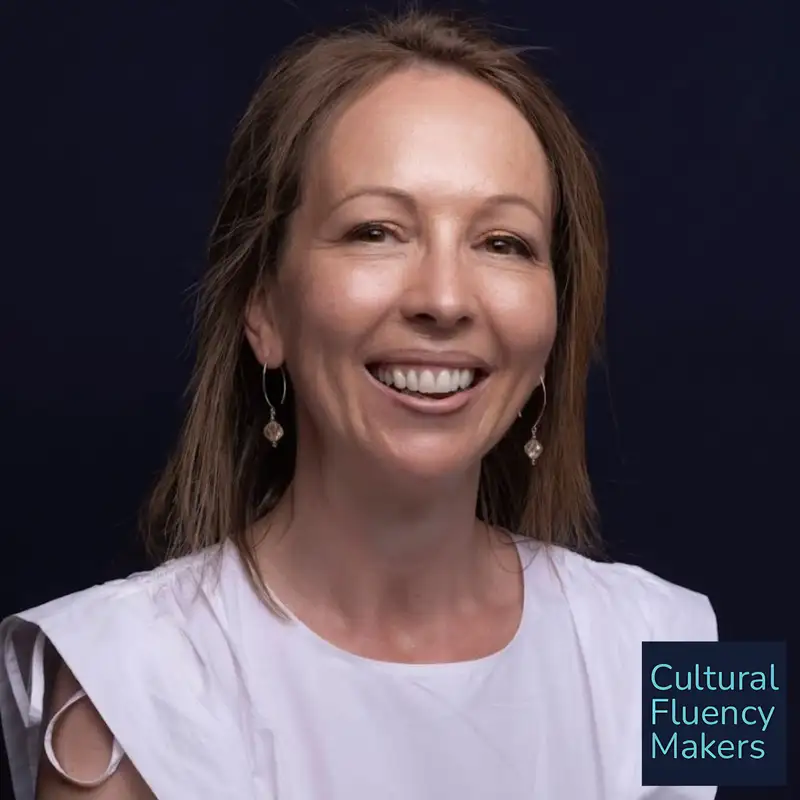
From Dollar General to Dill Pickle: How PepsiCo’s Ciara Dilley Reads Consumer Culture
CFM - Ciara Dilley
===
[00:00:00]
David Wellisch: What a great way to begin this Friday morning. I'm so excited for this episode and, and have been looking forward to it for the entire week. With me [00:01:00] today, a globally respected marketing and growth leader known for driving transformation across some of the world's most iconic consumer brands, including Kellogg's, Campbell, Diageo, and where she's at today, which we'll disclose in a second.
She's a purpose-led strategist and brand builder recognized for turning brand purpose into measurable business growth through powerful storytelling, innovation, and strategic marketing leadership across flagship brands and broader transformation portfolios. Her career spans senior global marketing and innovation leadership roles across major CPG organizations, where she has consistently delivered breakthrough innovation, transformation, and new-to-world product development at scale.
A recognized champion of sustainability initiatives, including pioneering packaging innovation in the snacks category, and a strong [00:02:00] advocate for diversity, female empowerment, and modern agile leadership practices that unlock entrepreneurial thinking inside large organizations.
Today, I'm so excited to have with me the senior vice president of growth portfolio at PepsiCo, Kira Dilley. Welcome to the show. It's so great to have you
Ciara Dilley: Thank you so much, David. Gosh, I need you as my warm-up act every time I show up. That was a most generous introduction.
David Wellisch: excited about this. So Kira, as, as you well know, this country has gone through a demographic landscape, I, I would say transformation in the last, you know, 10, 15 years. It, it, it, it didn't just start. And given all that, um, what, what do you see as the role for cultural intelligence or cultural insights for consumer companies such as PepsiCo?
Ciara Dilley: I couldn't agree more with you, David, in terms of the, the shift in this country [00:03:00] and globally as well, and I think it's going to only continue and only accelerate. I think, though, need to remember that the role of cultural relevancy has always been there, uh, and the understanding of consumers and deep consumer insight has always been important.
And, you know, you mentioned some of the companies I've worked with. was one of my first training modules with Diageo, was to really truly understand the why behind consumer behavior, because the belief is when you really understand that, you can show up in a more authentic way, which will help grow your brand and grow your, you know, your, your organization, et cetera.
So, and it's more relevant than ever today, and in some ways people get, like, scared and they think it's, it's more complex because of the data that we have, um, at our hands, the breadth of tools and materials, et cetera. But it still comes down to a deep and unwavering interest and curiosity in consumers, in what motivates them, in what their tensions are, what their needs are. But I think also the, the [00:04:00] complexity or the, the, the richness of their background is more important than ever, and you alluded to that. Because of immigration, migration, because of the media landscape, et cetera, we may be living in one place, but feel very, uh, close to and informed by other areas, et cetera.
So I say all of that to say it's a super exciting time. It has never been more important, particularly for our marketeers, to make sure that they are investing in a deep, deep understanding of consumers and motivations.
David Wellisch: So, uh, Kira so eloquently said, um, what, what's hard about this? Why, why is it hard? Is it hard? And what's hard?
Ciara Dilley: in theory, it shouldn't be hard, uh, David. Um, I think if I, if I, if I reflect on how we are trying to bring it to life for new generations of marketers, new generations of insights professionals, et cetera, I think one is just time pressure. It takes time outside, um, sometimes [00:05:00] outside the day job.
In theory, it should be part of it, to actually immerse yourself in consumers. And we'll talk, I'm sure, this morning about the many different ways you can do that, but that takes time, and it has to be cultivated. It is a skill. So you don't wake up in the morning and suddenly be an expert at how do I really understand cultural relevance, how do I understand consumer insights, which is very important on, d- that we are training, that we are educating our teams and our people around how do I find that.
Where do I go hunt? How do I know what is a true insight versus a, a data point, a fact point? So I think giving people time, giving them the right training, rewarding. I think it's really important, David, that people are rewarded for unlocking those insights. Some of the biggest growth's, uh, growth areas I've seen on brands, the biggest activations have been because we found one deep penetrating insight.
I remember many years ago on Guinness, it was really understanding some of the tensions around why people didn't drink Guinness. Not just that it's the taste, but there was more beneath [00:06:00] that. It was, it felt old-fashioned, it felt dull, et cetera. So that was, that area was one of the deepest insights that has unlocked what is now the fastest growing alcohol brand in the world, which is incredible. So I think giving people time, giving them training, and rewarding them are some of the things that are, we as m- uh, senior marketers should continue to, to exemplify and, and to lead by example
David Wellisch: agree with you more that, uh, when you see an ad, for example, and, uh, and it really resonates, there's usually an incredible kernel of insight that has been unearthed that just resonates magically and, and beautifully. Um, we, you know, I, I am honored to be doing these podcasts to moderate, um, many roundtables with CMOs and heads of insights and, and when I ask about how important is cultural relevance to win hearts and minds of consumers, everybody unanimously goes, you know, really important.
What-- how would you define it for you? What, what [00:07:00] is cultural relevance for you, and, and how does a brand become it?
Ciara Dilley: For me, it goes back to the, the definition that I remember learning in my day at, at Azure days. It is a deep and penetrating understanding of consumers' needs, wants, or behaviors that can be applied to your brand to drive growth. And there are, there are three really important factors there. There is this deep and penetrating, so it's not surface level. We're all really good at getting data points and quantitative data, which is very important in terms of absolutely. But it is the underneath that is the deep and penetrating what are the motivations, the tensions, what's going on in my life that to your point, I look at a brand and I go, "Oh my gosh, you get me.
How did you know that about me?" Dove is a
David Wellisch: Yes
Ciara Dilley: I think particularly their early breakthrough work where we look at it and we went, "Gosh, you do understand me," particularly as a woman, in the early work. I think also this idea though, that understanding then how do I take that deep and penetrating [00:08:00] understanding and apply it to my brand in a way that is relevant for my brand and what my brand stands for in order to drive growth. Because as business leaders, that's what we are, uh, compensated on. That is our KPI. That is our job is to drive growth for our shareholders, our employees, et cetera. And I think being able to say whilst the cultural relevance may be universal, the understanding of my brand's role in order to engage in a meaningful way and how I can
David Wellisch: Yeah
Ciara Dilley: that to make an impact is, I think those are the three steps we need to be thinking about as we consider the opportunity that being more culturally relevant represents.
David Wellisch: love that. So really starting with this consumer depth, the, the deep consumer understanding. Um, to, to that point, uh, Ciara, you're originally from Ireland, worked internationally across massive companies like Diageo, Kellogg, are now based in Texas leading PepsiCo, [00:09:00] uh, um, in your, in your growth role.
How, how has your own cross-cultural journey shaped how you look at the nuances of the American consumer today?
Ciara Dilley: Yes. I mean, it- I've been so fortunate, David, and much of this was not planned. It wasn't seen laid out from a certain age, but I have been so lucky to work in different markets, UK and Ireland, as you said. I traveled a lot as a, a young student. I spent summers in Germany 'cause I majored in German. I spent a year studying in Bavaria, law and German.
I studied law and German, so I'm not the n- normal business grad, et cetera. So I've traveled so much. I've always, um, had that curiosity, and I, I think we'll talk more about curiosity as we go through this. And then having the jo- I think Irish people are naturally a really... They're in- they're interested in other people.
We are a, we are a talkative bunch. We travel the world. We have had family [00:10:00] who have emigrated, you know, people who've come to live in Ireland. So we are just genuinely interested in other people. Um, we will tend to ask the questions because, not because we're nosy, because we just, we wanna hear about you. So I think that's been incredibly important for me. It's within my DNA. And then I gravitated towards, uh, these roles that were multi-market. So my first role in that regard was heading up innovation for Kellogg Europe, for the foods and breakfast side of the business. And I soon realized that whilst we may call this beautiful continent Europe, and there are many things that we are, are similar, where we're proud to be European, there are also some incredible nuances and differences. And I have spent many hours sitting with French, German, Dutch, Croatian consumers explaining to me why breakfast is very different for them and why they needed different approaches and offerings. And that is, that has always been fascinating. And then I think coming to the United States, it meant that I looked at this amazing country as [00:11:00] a beautiful kaleidoscope of, um, different cultures, different backgrounds, probably the best in the world, let's be honest, because of its history of, of immigration. it has been fascinating to look at what unites and brings consumers together in the US and what, uh, makes them different. And that can often be b- they live, East, West Coast, the middle of the country, but also where they come from, where their family or their parents come from as well. So I think, that sort of background has made me a s- so engaged and excited about the potential of cultural relevance and how that can, you bring that to life and how it can strengthen your brand relevance.
David Wellisch: I can see it in your DNA. Um,
Ciara Dilley: Ja, ein kleines bisschen. Es kommt,
David Wellisch: My, my parents came from Germany, uh, to, to Ecuador, uh, whereas where, where I grew up. So I've got a little bit of your global, uh, your global component. All right, [00:12:00] back, back to this. This is great. So the better-for-you snacking space is often marketed as a monolith. How, how does your team use cultural intelligence to understand how different communities define wellness or better choices differently?
Ciara Dilley: It's, I mean, it's, it's an area that I've worked in, uh, for probably 16 years now, David, between my time in Kellogg, because as we looked at the future of breakfast in Kellogg, we were looking at the massive impact of healthier options, both from a regulatory perspective, because there was a lot of pressure there, as well as consumer choices. And that, as well as when I moved to the US, really started to inform me that it isn't, it really isn't a one-size-fits-all. I remember when I first came to the, to the North America business, we were... In theory, my portfolio was the, the little kid on the block. It was 1, 1.2 billion, which for many
David Wellisch: Yeah
Ciara Dilley: but I was the little kid on the block, so we got to experiment quite a bit.
And what I realized very quickly was [00:13:00] there was tremendous growth potential, but it wasn't necessarily in where the noise in the system was. So there was a lot of noise in the US that it was a higher educated consumer, it was a h- more affluent consumer. It was a more, uh, certain type of consumer, certain background, et cetera. And what we, what we fast realized looking at the data first, just the hard quant data was, hang on a second, we're seeing huge growth in lower income consumers. We're seeing it in more rural areas. My fastest growing customer was Dollar General. And I remember thinking, "What is going on there?" So I took myself down on my little, um, uh, cultural relevance tour to, where Dollar General are headquarters, and I spent time with their incredible head of insights, a lady called Angela.
And Angela is like a true example of somebody who is absolutely immersed in her cust- her consumer, her shopper. she had a deep understanding [00:14:00] of what was driving that growth in, in healthier options, and it was very much her shoppers could not afford to be unwell. In the US, it is expensive to be unwell, and they were starting to make small choices, and it could've been just something with a little less sodium, something maybe with a veggie chip in there, something with a, a healthier snack but had a, a flavor the kids would love. it needed to be affordable. And that was a real aha to say, "Hang on a second, we have an opportunity to bring healthier foods to a massive group of Americans who are not being serviced by this industry at the moment." And I t- I tell you that story, David, because it is truly one of those moments in my career where I had to, I put aside all my preconceived notions and said, "Oh, hang on a second, this is what's going on." That insight, that understanding transformed our approach to the portfolio, to permissible snacking. It gave us a much bigger sense of the growth potential, and we expanded the [00:15:00] portfolio in ways we never would've because we knew we could now reach... There were different consumers who were interested in different areas of that
David Wellisch: fascinating. first the segments that cared about the, the better for you, but also the driver and the motivation is one that
Ciara Dilley: Yes.
David Wellisch: Not have been in the surface
Ciara Dilley: Not at all. Not at all. So it has been-- It was-- And now we're like 3
David Wellisch: Amazing.
Ciara Dilley: It's
David Wellisch: Am-
Ciara Dilley: huge. It's
David Wellisch: Amazing. Thank you for sharing such a tangible, tangible story. Um, let's talk about trends a little bit. Um, I think social media is creating hyper-fragmented subcultures and rapid viral food trends. H- how do you distinguish, and we had this conversation earlier, how do you distinguish between a fleeting fad and a lasting cultural shift worthy of product innovation?
Ciara Dilley: It's a great question. Sometimes I wish I had a crystal ball, David, but it's fun to try and work it out along the way. I think, you know, there are a few things I, I think about. One [00:16:00] is I think about, know, is it a spike? Is it a fad, as you say? Is it a spike? And, and that is something that is, can be very relevant, can enable you to be of the moment, you know, to talk to consumers in a, "Oh, gosh, they're on it, they get it," you know, "We're having some fun."
You can have a lot of fun with those. Or on the other side, is it more durational? Is it something that is going to, we think, last longer? And that's where you're starting to think more about a longer term investment, maybe even, you know, a, a product line that meets that, uh, that trend. Maybe it's a more investment in terms of, you know, production facilities, creative ideas, et cetera.
So I think understanding the difference, but also understanding that both can be optimized in different ways. I think the other thing for me, though, is back to some of the principles we talked about at the start is, is it meeting a really consumer need or solving a consumer tension? Because if you are solving a problem for me, that's quite a big...
You know, to be able to solve consumer problems, particularly more [00:17:00] meaningful ones, is then you go, "I'm onto something bigger here." I mean, if I can really make a difference in someone's life, I'm onto something bigger. So the, the answer to that question, I think, is it solving a, a deep need or a tension is, is very important in dif- dif- in differentiating. other piece that I think is interesting is, again, linked to what we talked about in terms of multi- multifaceted, multi, uh, market, uh, geographically spread is, do you think it can travel? So can it travel, whether that be across the US, across, know, the, the coasts? Can it travel across multiple consumer groups? Uh, that is also a great question to ask. many groups are big enough that, you know, if it, if it travels across, for example, all Asian Americans, that's huge. Um, but I think being able to see, to understand does it have a potential longer term across multiple groups, across multiple dimensions is another filter we will use.
And as I say, I, I think in summary, both are important. Both are necessary. I [00:18:00] think the spikes are actually something that large organizations have struggled more with, the short-term spikes, but they, they have a role to play, and you need to work out as a large organization, how do I harness those? How do I react in real time to those and not be afraid of them? And then how do I really lay down my long-term foundations for the durational ones?
easy is it easy to, um, understand, oh, early, that's the point, uh, that this is not a fad. This thing i- this thing is big. It's a wave. It's a... And by the way, it will potentially create portfolio opportunities from that significant shift
Yeah. I mean, I think, let me give you one or two ex- I think flavor for us is one of the areas that is, actually plays in this domain because there are so many new flavors, so many different, um, ideas that are coming in from multi markets. A celebrity might do something, a famous chef. Like food is
David Wellisch: Yeah
Ciara Dilley: [00:19:00] driver of cultural relevance at the moment, and I think it's a great example of where we are watching.
We have so many, uh, trend, uh, reports. We have trend data, we have foresights that are trying to predict using different models. what what are we seeing? What is spiking? What is spiking more long term? Where are there more, um, cohesive groups behind? Where does it move from being just a post to actually hang on, this thing is gaining momentum.
So there's, there are a lot of tools there. I mean, there's no magic in predicting the future, David,
David Wellisch: Sure
Ciara Dilley: you know. But we're using a lot of those tools. But with flavor, what's interesting, if I give you an example, is, you know, there are many things that are popping up that we will jump on and we will play with, and we will watch the responses, David.
We will watch to see who's engaging, how many people are engaging, what's the breadth of engagement on them, and that can be really interesting in, in terms of saying, "Well, should we launch a limited edition flavor? Should we, you know, test this out?" And oftentimes we will do it as a limited edition first to see actually, you know, lower risk, but, but getting in on it, [00:20:00] versus something like say dill pickle.
Dill pickle is a flavor that has just exploded in the last few years for many reasons. Um, but one of the really interesting points around dill pickle was, and I didn't fully understand this being Irish, is that, 'cause I'm not a big pickle fan, uh I, um, I-- Somebody said to me at the time, you know, the underlying elements of dill pickle, particularly the brininess
David Wellisch: Yeah
Ciara Dilley: type, um, uh, nuances, are actually something that is quite ingrained in American food culture. So that is a really interesting signal that, hang on a second, this isn't just a fad. It may be out there at the moment, different celebrities, et cetera, they're having fun, but actually that flavor type actually quite ingrained in American culture. And that I thought was a really interesting way to go, "Oh, I can see something deeper there. Maybe this is longer term." And it's been huge for us. We've launched the flavors across multiple products, brands, [00:21:00] et
David Wellisch: Fascinating. You know, I, I think of, um, protein as, as, you know, one of those. You know, we sit, we support so many brands and everybody's trying to , you know, to, to get into that. And the question is, um, what drove it? You know, what, what sparked all of a sudden this craze, uh, you know, towards it, which is, which is interesting
Ciara Dilley: And, and the thing just remember about protein though, David, is I remember, like, I don't know if you've ever been to Expo West, which is this incredible natural foods fair in Ca- yeah, in Anaheim every year. And I remember being there 14, 15 years ago, and protein was being talked about, and there was a lot of buzz around it.
But it
David Wellisch: Yes
Ciara Dilley: this amount of time for s- to sort of become, oh, this thing is here to stay. So oftentimes, you know, linked to the com- points we're just making, it is something that seems to suddenly explode. But actually, if you're in the industry, been watching, it has been growing, growing, growing over [00:22:00] a longer
David Wellisch: People forget that. That's a g- that's a, that's a, great point. That's a great point. So I'm glad that it took us, um, over 20 minutes to, um, have the AI conversation. and and, and yeah, you
Ciara Dilley: Yes,
David Wellisch: start there because that's what it should be. It's on- you know, ultimately it doesn't replace consumer behavior and motivation and all of that, so I, I think it's in the right sequence of things.
Um, so there, there's a, there's a risk in the emergence of AI that, you know, data-heavy, AI-driven marketing has the potential of stripping away brand soul. Uh, h- how do you balance this automated predictive analytics with real human empathy w- when creating a brand's narrative?
Ciara Dilley: So the first thing I'll say is you nee- you absolutely need both. And I think it's a super exciting time for us to have the combination of both and to have advanced analytics and data that can really accelerate [00:23:00] our, understanding, our basic understanding. But I think you have to remember that the analytics both for the now and the future are just that, and I think they're very good at predicting what's hap- what's, you know, data-driven, what's happening now and based on the models, what's happening in the future. the empathy to everything we've just spoken about is a beautiful partnership because the empathy brings the richness of w- human beings. At the end of the day, and we keep hearing this, the models are only as good as the information that is going in there, as the questions that we're asking, as the prompts that we're bringing.
And that is all based on our understanding of consumers. Um, and I think that's, that's exciting. I think, I don't think we've fully cracked yet how we can really optimize the two, but that's part of the journey. Uh, and the, the, uh, in my mind, the empathy is everything we've just spoken about, and that is why it's still so important to have that skill set and to be feeding the algorithm, feeding the machine with an understanding of the consumer, the consumer empathy as well, because that's the piece where I think consumers will [00:24:00] step back and, and do the, "Oh, you really get me.
Oh, you really understand me."
David Wellisch: We've been collecting, you know, cultural relevance, cultural intelligence data for years, and so for us, AI is really a very interesting innovation given that we've got the lifeblood of the data and seeing what the machine can or, you know, cannot do. But to this, to this, point, the other emerging, um, uh, space is synthetic audiences.
Uh, and I'm, I'm curious, what are your thoughts about its use, its accuracy? Clearly there's a benefit of speed and cost. Do you believe that we can-- that synthetic audiences can emulate the human insight?
Ciara Dilley: I, I think we're all on a learning journey here, David. I think it's really important that we have the humility, which is a huge part of consumer understanding, empathy, et cetera, to acknowledge what [00:25:00] we are, we, what we know, what we understand, and what is evolving. And I think the role of synthetic audiences is evolving. I, curer goes, I'm fascinated, I wanna find out more because I'm all about where the data can help us accelerate some of the basic knowledge that can take a lot of just groundwork and time, and help us actually get to more interesting outcomes, more interesting outputs with the marriage of, of the empathy side, et cetera.
So I think, yes, they can have a role to play. I think we are learning on the journey, and I think just like everything, I think we need to be about it taking over some of the, um, the foundational methodologies, principles that we have already. But I say that in a very balanced way because we need to be agile.
We need to be testing. I'm all about testing, David.
David Wellisch: Bye
Ciara Dilley: it's my
prototyping. You know, I love to prototype. I love to test. I l- So let's test, let's learn, l- but let's not be myopic in [00:26:00] jumping in and saying, "This is the be all and end all." 'Cause I, I don't think any one thing is the be all and end all
David Wellisch: mean, it seems like that's the thematic here, right? Ex- experimentation, agility, testing, data to prove. I- in this space, you know, similarly, we like the idea of an augmented synthetic, you know, which is
Ciara Dilley: Yes.
David Wellisch: we give a Hispanic synthetic audience the values, the passions, points, the occasions, everything that we know because of what we've collected, can, can we leverage for certain use cases, can we leverage speed and cost?
And for other use cases, we know that it's gotta be pure. So it's a, it is an interesting space. Last question in this sort of technology side is, is one about personalization at scale, and I think, um, you have spoken before about consumers demanding a higher degree of personalization. How can a massive company like PepsiCo deliver that sort of made [00:27:00] just for me feeling using modern marketing tech without alienating this sort of mass audience?
Another balancing act
Ciara Dilley: An absolute balancing act. I think, again, and, and you find some of this is because of my upbringing in the Diageo, Kelloggs of this world. The first thing I'll say, David, is that it's so important to be consistent to your brand and to know what your brand is and what it stands for. So before you jump into trying to be all things for all people and answering all the different nuances and variations, et cetera, because consumers are complex beings. we, you ... That I believe the brands that are most set up for success to optimize personalization and personalization skill are those who know themselves, and know themselves really well. And then you have the opportunity to show up in different ways and nuanced ways in different platforms to different audiences at different times, uh, harnessing, you know, the fads that we talked about, et cetera, because you are confident in who you are and you're consistent to your brand. I think two examples that I have, David, I think that bring this really [00:28:00] well to life. I think Nike do an incredible job. I think they are so brand They're so consistent in their message, yet they are able to access everyone around the world, from grandmothers to young kids, to superstar athletes across multiple sports, multiple, uh, events, opportunities, et cetera. And I, I believe that all of those consumers, when they put on their Nike, whether it's on their clothing, on their shoes, they feel like Nike knows them. They feel like a part of that brand, and that is, that's an incredible strength. Um, we did something, we've been playing with at PepsiCo for a while now and learning along the way.
I did something a few years ago, or two years ago. I've done a lot of work with Lays and soccer, and we might throw in a few World Cup examples before we finish. But I, um, we did a wonderful piece of work with the European Championships. Um, England, Wales, Scotland, all part of the United Kingdom, but very different cultural, [00:29:00] um, backgrounds, particularly when it comes to soccer. And we did some beautiful work around talking directly to the Scottish fans, the England fans, the Welsh fans for, um, Walker's Crisps. Still the Walker's brand, still the tonality and the little bit of cheekiness, but picking up on things that is, are important to those fans that made them think, "Oh my gosh, Walker's is with me here in the room.
Walker's is here watching the game with me." So I think when you're confident enough about your brand, what you then show, like we talked about, deep understanding of what's going on in their world, that's where the magic can happen per- with
David Wellisch: It's great. thank you for that. Um, uh, y- you, you have played such a great role, uh, in, in this, uh, notion of, uh, portfolio growth, which is such a hard thing to do in these multi-brand, you know, massive organizations. Um, so what, what has been the hardest part of scaling innovation in a system that is so large, um, [00:30:00] like a PepsiCo system, and, and how do you keep it from not slowing down?
Ciara Dilley: Uh, it's a great question and, and because I've done innovation, which was a little bit by chance initially. I, you know, I did six years in Kellogg and then another four-plus in pure innovation in Pepsi, and then obviously when you're in marketing you always touch innovation. So a few of my principles are, I think the first one is agility, agility, agility. You ha- uh, particularly for big organizations, and you have to work out how do you build agility into your system. So how do you build it into your context? Because yes, it is likely we may not be as fast on some things as smaller companies. Sometimes that's okay, David. I used to talk about it in Campbell Soup a lot, where we-- sometimes it's okay not to be
David Wellisch: Yeah
Ciara Dilley: out
there, because you can, if you can come in and you're quite big, you can scale.
So you may not be the first, but you're the one who brings it to scale. But I think having that agile mindset and understanding which of the parts of your organization or innovation process can you [00:31:00] bring it to life is really important. Linked to agility, though, is unless you have appetite for failure, unless you truly believe, and it's probably the most overused phrase oftentimes in our organizations, but this idea of failure is a learning, openness to failure, rewarding failure is, is so, so true, and yet large organizations really struggle with it. But it is those that are happy to fail because Unilever used to say, I think it's like 80% of innovations will not last
past three to five years. That's, that's fact.
David Wellisch: So hard in this environment, in this financial, short-term publicly trade. I mean, so difficult
Ciara Dilley: It is. It is. And yet I will say it still. I will still say it. I will always say it. There... And there are
David Wellisch: Yeah
Ciara Dilley: manage
failure. There are ways to manage risk, Dave. But one of the, the points I was gonna make is I'm a massive fan of innovation frameworks. I've lived and breathed Stage-Gate, which is probably one of the most well-known for years.
Stage-Gate is brilliant when it's used in the right way 'cause it asks the right questions at the [00:32:00] right time. It highlights the risks, so everybody's like, "Hey, I know what could happen here." Brings the right people on board. So I think, you know, sometimes people think, "Oh, Stage-Gate frameworks with agility." If you're smart enough and you bring those two together, that's when the magic happens. And then the other point I wanna make, I, I reference things like my work with startups, with entrepreneurs, with Expo West. is critical, particularly for large organizations, that you are talking to the outside world, that you are talking to startups and entrepreneurs.
I was one of the people that founded the Nutrition Greenhouse at PepsiCo, a fabulous model that was purely about supporting startups. There was no stake, there was no venturing. It was literally, how can we bring our expertise to you so that we can help you grow your business? And in reverse, we learned.
We learned so much about, oh, that's how they would do this. Oh, that's how they're so fast. Oh, that's the compromises they're willing to take, et cetera, et cetera. So I think that getting the external oxygen is, is a critical
David Wellisch: Fantastic.
This will be the last business question, and then [00:33:00] we have two more, just more personal, which is looking out over the next few years, what is the one cultural shift or emerging technology, Keir, that you think will completely redefine the consumer-brand relationship?
Ciara Dilley: This is the one I'm most excited about, David, and, and because of how I just described myself earlier, you're gonna get this. So I am really excited about what I'm seeing and hearing, where we're moving from individuals in virtual worlds to communities in real life. I, I love what I'm seeing in terms of we've had many years of people on individual devices, individual algorithms, individual, you know, at home, remote, remote learning, et cetera, et cetera.
And I truly believe that there is a yearning from people of all ages to start to get back into some of that community connection. Um, and I see it in so many ... I see it, I ... And this is where I'll throw in my FIFA World Cup example. I mean, it's [00:34:00] been heartwarming, uh, to see people come together, fans come together, embrace their own team, but embrace the, the joy.
I mean, I think it's probably w- been one of the most peaceful, kind tournaments we've ever seen. And I think as you've seen, like some of the examples, the Norwegian fans and their rowing, the s- the
David Wellisch: Yeah
Ciara Dilley: and their
singing, the Japanese and their politeness, and their tidying up and their etiquette. I mean, to me, David, that's what you and your team do brilliantly, is like, that is the most ... That case study. I can't wait to see the case studies that are gonna be written about the World Cup for all industries, but
David Wellisch: particularly for
marketers,
Ciara Dilley: because I hope, that is a turning point in how we embrace in real life communities.
And we have to remember, like, David, like it doesn't take a tournament for this to happen. Many brands, most brands have opportunities to be with their consumers every day, but there are brands, like in the
David Wellisch: service industry
Ciara Dilley: in the
restaurant industry, in the airline industry, in the apparel and [00:35:00] retail, they're, with their consumers each and every day in real life.
And I hope we see, David, a reawakening of a sense of responsibility and opportunity, that as I show up in the restaurant or as I service a passenger who comes on board my plane, that is a in real life opportunity for a brand to show up in a really meaningful way. And I hope we start to see a reawakening of that and, the brand being able to, you know, really excite consumers and be there
David Wellisch: at every touchpoint I love that. It, and, and, and I could not agree with you more, and it's, it's what the world needs. . So, um, we'll move into more of a personal side of things really quick, which is, and I think I might be able even to guess, uh, given this great conversation, what motivates you?
What inspires you every day to do what you do?
Ciara Dilley: You know, I, I've been doing a lot of thinking about this recently because I am, you can see it in me I think. I just, [00:36:00] I get up every day and I give it my all. There's no half on with Ciara. It's I'm fully in because I love what I do, and I, and I want to make outsized impact no matter what. I, I'm more hungry than ever.
Linked a little bit, I think, to what you just said, the world needs it now. But the area that I think I bring an awful lot of added value to is the area of im- how I bring out the, the best in others. truly believe that my role is there to help and support my teams and my people, and the teams that I collaborate with, to show up every day and bring their very best.
Because there's nothing more rewarding than a, as an individual, if you feel you're doing your best every day. So my job is to support that because I believe that's what will deliver transformational business turnaround, and, and that's, that's what gets me up every day is
David Wellisch: Fantastic. I love this question because I, I think that the younger audience is needed, uh, in this complex world of ours. If you could travel back in time and give your 20-year-old self advice with such an incredible trajectory that you have had, what would that [00:37:00] be?
Ciara Dilley: I would definitely say take more risks. I think my early career, I was very, um, I was very organized. I was very planful. I was very respectful of what I thought the perfect career trajectory needed to be and what I thought I needed to do. And a lot of the time, I was very fortunate in the roles I got and took, but I will reflect a lot of the time I did them because it was the right thing to do.
I was being told like, "This is the experience you need. This is the right thing to do next. Don't, don't deviate. Don't go off the path." Uh, so I think I would've taken more risks earlier on in my career. I might have moved, uh, sooner than I did. on the other side, I'll go, I think what, in reflection, what it's now awakened is an absolute unleashing of, "Okay, well, I didn't take them now, then, but I'm gonna take them now." And maybe actually I'm better off taking them now because I have a bit more experience. So somebody said to me recently, "Always make sure when you're making a decision, your head, your heart, and your gut [00:38:00] are aligned." And that also
David Wellisch: Yes
Ciara Dilley: experience. So I think now is, is a great time for me to start to unleash a
bit and take a few more risks.
David Wellisch: I can't wait to see the unleash. Uh, and just to finish this episode, Argentina, Spain.
Ciara Dilley: Ooh, Spain all the way. I have very good friends from Sevilla, David, so I would not be popular if I didn't say, uh, if I didn't give that
answer. So let's go just be careful with the last 10 minutes of the game.
David Wellisch: I I it's been like three games in a row, I'm, the the last 10 da- the last 10
Ciara Dilley: I'll, I will be, I'll
be hiding under
the
David Wellisch: minutes. E- exactly.
Exactly. Exactly. Well, uh, Kira, it's been so fun to have this conversation. So, so appreciate, um, your wisdom, sharing with, with everybody in the audience, and, and, and major congrats on an incredible trajectory.
So thank you very much. In much gratitude.
Ciara Dilley: Thanks so much for
having me, David [00:39:00] And this has been another exciting episode of Cultural Fluency Makers. See you next time
Creators and Guests