Customer Data vs. Consumer Understanding: The Difference That Drives Growth | Catherine Berger
CFM - Catherine Berger
===
[00:00:00]
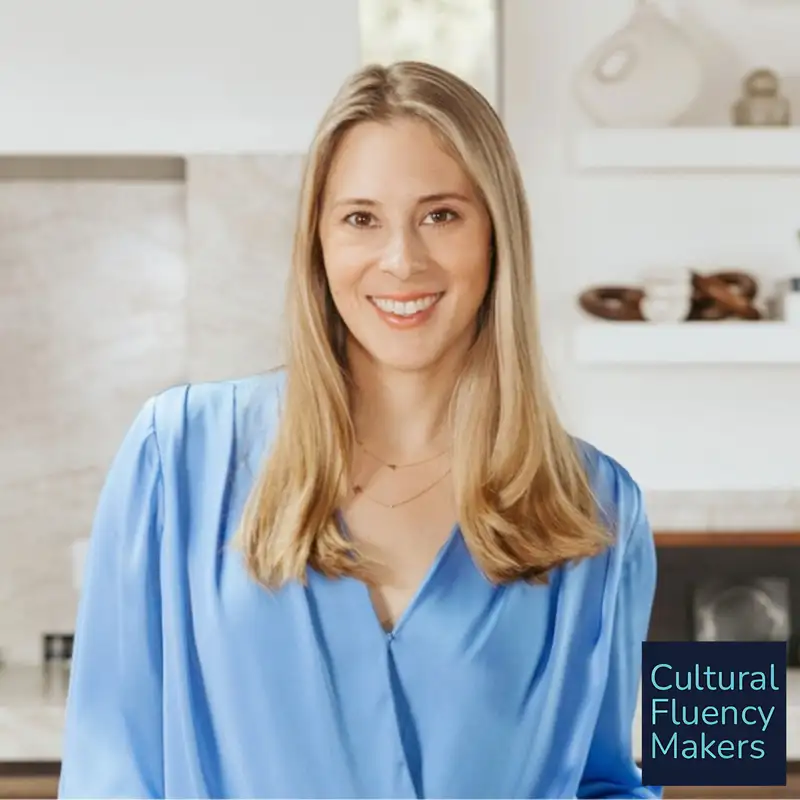
David Wellisch: So I'm very excited about the episode that is about to take place. With me today She's a transformational marketing [00:01:00] leader who has built a career helping iconic consumer brands evolve, innovate, and stay culturally relevant in rapidly changing markets. Throughout her career, she's led major marketing transformation and in- innovation initiatives across the food and consumer packaged goods industry, helping or- organizations rethink brand strategy, portfolio growth, and how marketing teams operate at scale.
Not an easy thing to do these days. Her background spans innovation, leadership, international expansion, portfolio strategy, and cross-functional brand transformation, giving her a unique perspective on how legacy brands can continue to grow in a fast-moving consumer landscape. Beyond her corporate leadership work, she's also passionate about mentoring the next generation of innovators and serves as a food tech mentor with [00:02:00] 1871, helping support emerging talent and innovation in the food technology space.
Today, she's focused on driving innovation and modernizing marketing ecosystems for some of the most recognizable household brands. She's the VP of Marketing Transformation and Services at Grupo Bimbo. Catherine Berger, so great to have you on the show today
Catherine Berger: Thank you for having me. You are hired. That was such a flattering introduction.
David Wellisch: You know, we, we've had some initial discussions, so I know this is gonna be incredibly useful for our audience, and you've got such an amazing really set of experiences, trajectory, and you're in a, uh, i- in a very compelling role given the evolution of marketing. And so with that, uh, Catherine, let's get, let's get started.
Catherine Berger: Let's do it
David Wellisch: that, that has taken place in this country in the last 10, 15 years, what do you see as the [00:03:00] role for cultural intelligence or cul- cultural insights for consumer companies like, uh, like Bimbo?
Catherine Berger: I mean, I think it's essential, um, and it's something that we continue to try to sharpen. I think that if we are blind to culture and to cultural evolution, um, which is happening, uh, you know, at such a rapid pace at this juncture, um, then, you know, our, our, our brands don't evolve. Our brands don't have staying power, um, anymore.
I think, know, brands need to deliver more to consumers than a product. It is really a true value proposition. Um, and so if you can understand where consumers are coming from and what their and, and psychological needs are above their, you know, functional need for nutrition, um, which of course [00:04:00] important as well, um, that's how, you know, that's how, that's how brands like ours will survive
David Wellisch: And, and Catherine, um, um, it, it seems like that ought to be such a basic part of marketing, right? Like deep consumer understanding and what... Is it hard? E- like, is it hard and or not? And if it's hard, why? What is it hard? What's, what's about it?
Catherine Berger: I mean, I think you're right. It seems, it seems so rudimentary, and I think we say it so often that sometimes it gets canned. Like, "Oh, we're consumer-centric." And, um, you know, sometimes the consumer centricity hits us right in the face before we realize, um, that it's in the room. I think that, I think we get in our own way a lot as marketers because we're so focused on our dollars and cents and our internal initiatives.
I think unfortunately, um, especially in larger organizations, [00:05:00] um, you know, it, it can be tough to stay grounded in some of those fundamentals. and I, I, I also think that it takes a lot of stepping back and sort of re-grounding in the human component of what we're doing, and that, is difficult to do.
it's difficult to say, "Hmm, something here doesn't feel right," or, you know, have we thought about putting this into a, quick test and better understanding a perspective here? it's tough to kind of stop that big ball once it starts rolling down a hill on any one thing. And I think that, we owe that to ourselves and to our consumers, in order to kind of continue to recenter consumers' needs
David Wellisch: S- as you're speaking, what come- what's coming to my mind is just the need for [00:06:00] commercial outcome, the ongoing need for short-term commercial outcome. That's what I'm... Y- you
Catherine Berger: Yes.
David Wellisch: is, and, and it happens in big companies and small companies, you just gotta execute and,
Catherine Berger: Yes
David Wellisch: can you take shortcuts?
Can you do-- Who, you know, do you really need to go the extra mile? You know, when I, I, I am, uh, blessed and honored to be, uh, having these conversations. I al- I also moderate many roundtables with marketing and insights leaders, and we get to the topic of cultural relevance, and I always ask the question, "So, so how important is it, uh, cultural
Catherine Berger: Mm-hmm.
David Wellisch: To win, you know, consumers' hearts and minds?"
Which everybody wants to do.
Catherine Berger: Yeah.
David Wellisch: What-- Can you define it for y- for yourself? Like, what is cultural relevance and, and how does a brand become it?
Catherine Berger: Yeah. I mean, it's hard, right? I think I would say that cultural relevance is, is mattering. Um, you know, [00:07:00] it's funny because at Bimbo we've got, a slew of incredibly powerful brands, so much equity. Um, we've got brands that have tremendous, uh, awareness and, um, not particularly competitive purchase funnels.
Everyone knows them, but no one buys them. And I think, you know, that's that cultural relevance piece, right? And it's not just considerations. Sure, that's part of it, but it's really about being part of a conversation today, um, whether that's a direct conversation or an indirect conversation. Um, but you know, I think about, you know, one of my alma maters, um, sent Nutella to the moon.
I mean, a relevant brand, but now it's a very relevant brand, right? It's in a conversation that the world is having at a time where we kind of need to have a, know, motivating, rallying conversation. So, [00:08:00] um, I think, you know, e- every time I think of an example of a legacy brand that's turned itself around or, you know, a brand that's having a, a, you know, really nice run or has great momentum right now, that cultural relevance piece like mattering to people for more than just and chocolate,
David Wellisch: Yeah
Catherine Berger: is, is that kind of missing piece that I think is, is, is so elusive because it, it really, it, it evolves so quickly.
I mean, you started by s- the conversation by talking about how this generation has-- a- and the sort of makeup of the United States has changed so much in the last 20 years. Um, it's true that that evolution of culture and cl- therefore cultural relevance is, very demanding. Um, and so, you know, it's just, uh, it, it-- again, it's tough to sort of step back and say, "Does this make sense?
Are we just [00:09:00] making ads to make ads, or are we really putting our brands at the center of something that means a little bit more than, um, bread?"
David Wellisch: Which at the end of the day is what brand is all about, right? It's the personality. It's, I mean, it's all-- That is the whole concept behind branding and a brand. You know,
Catherine Berger: Yeah
David Wellisch: you were, as you were sharing, um, Catherine, um, I was thinking about the Gap as an example in the last, right, 12 months. I, I mean, j- right?
It's, it's mattering being in the commerce. I mean, they're, they're doing a really nice job.
Catherine Berger: We That's an interesting example. I think, you know, something The Gap has been pretty public on is hiring for leadership roles that understand cultural relevance and really putting people at the helm that are willing to take those risks. Um, you know, kind of committing, I'm sure to [00:10:00] shareholders as much as the, you know, consumer that that's what they're going to focus on.
Um, but yeah, they've had a, a slew of really wonderful, um, culturally relevant campaigns that are really getting them in the conversation. And yeah, I mean, you know, it really does, it really does work
David Wellisch: Yes. Yes. So you, you've called listening a superpower in marketing, and I love that. A-- at, at a global giant company like, like Bimbo, h-how do you scale listening so it's not just more data points, but in fact true what we call cultural fluency?
Catherine Berger: very difficult, I would say. Um, we've got a couple of programs that I think, um, are sort of codifying what you're talking about. Um, one of the things that for me, I just, I, I appreciate so much is actually hearing consumers, and I don't [00:11:00] mean, you know, looking at a bunch of data. I mean, literally sitting, you know, mirrored wall or, you know, being out on shopping ethnographies or in homes.
Um, I, I love listening to consumers. I think it can tell you so much, and I think you learn so much. I, know it's expensive and time-consuming, but one of the programs that we are starting is really around getting a lot more of our marketers and a lot more of our, communications professionals the room with consumers.
and certainly, there are ways to do that, but, I think that, especially when people who are not typically in those rooms are able to be in there, it really dimensionalizes, what they're doing, and it really drives to deep, deep insights and inspires to activate against them.
[00:12:00] Um, you know, I, I've mentioned Sara Lee in sort of a veiled context, but Sara Lee is an incredible brand with really high quality, portfolio and, people absolutely love it. And when you hear people talk about the meaning it has in their lives and some of the memories and some of the nostalgia, but also, you know, the role that it plays, it's so much deeper than just sandwich bread.
And so I think it, it really is inspiring to bring that to life and to kind of codify the role that that plays in people's lives. So, um, that voice of the consumer program is one that we're really excited to, to bring to life. Um, and I think, know, we, we do a lot of, um, of category type of listening, and we're starting to shift into a little bit more, um, forward, [00:13:00] um, thinking more about trends, thinking more about where people are going and, um, know, focusing a little bit less on what are people buying, um, a little bit more on how are people's needs shifting.
And I think that that is also another way to, to listen and to build that sort of cultural fluency.
David Wellisch: I, I, I love that. And congrats on the getting closer to customers 'cause in, in the world of AI, you
Catherine Berger: Yeah.
David Wellisch: gonna be in tension. We're gonna be,
Catherine Berger: Yeah, it
David Wellisch: we're in tension
Catherine Berger: Both are important. You know what I mean? But it, it is easier now to not
David Wellisch: It, it, that's exactly.
Catherine Berger: With consumers
David Wellisch: and yet, um, exactly like you shared, for us and even for Collage, um, the go- understanding our customers is just gold. You know, and A, A, for, for us, um, and then B, um, we've [00:14:00] always started the company with a clear definition on the why behind anything. And so that's what we do.
You know, we begin there, and there-- and then you, you begin to strategize, but understand consumers, um, and where they are today and how they're changing. A lot of answers come, come from that. So we, we began, um, uh, mentioning and, and, and talking about AI, and we're gonna get into it a little bit more now.
You know, it's, it's so interesting. I, I think when you, depending on what articles and what day you open the paper, um, that most leaders talk about AI right now, there's a lot of cost-cutting linkage to AI. Um, you, you focus on marketing transformation, which is-- it's, it's like, wow, what a, what a great time of really having that role because I think that roles like that are gonna become more important over time, you know, in the corporate context.
How, [00:15:00] how, um, how is Bimbo currently using AI to deepen the emotional connection between a consumer and a snack cake or a loaf of bread?
Catherine Berger: It's a great question. I think it's a, a pretty multifaceted answer. Um, I think we're doing a lot of the, you know, uh, productivity and work, um, efficiency types of initiatives, and I think those are very important. one of the things, um, that we've continued to build is really the ability to let artificial intelligence tools do a lot of the processing and enable our people to do a lot of the critical thinking.
And you said ask, you know, the, about asking why. I had a, um, a former boss and mentor who always used to say, "Ask why five times before you say anything." You know what I mean? Like, just really contemplate, okay, why [00:16:00] is that true? Why is that true? Why is that true? And I think, um, you know, w- we've got some agentic capabilities as it relates to reviewing, you know, massive quantitative, um, uh, studies and kind of pulling nuggets out of them and things like that. Um, a- and I think we continue to push on that critical thinking and okay, you, you can lev- lev... We absolutely wanna leverage machine learning, but we wanna build on top of that and be very curious. We don't want the machines to replace curiosity.
David Wellisch: Real soon
Catherine Berger: and so, you know, we've been kind of building that way.
We've also been able to leverage AI, um, I don't wanna tip our cards, but we've got some really cool, um, you know, very, I think, relevant consumer-centric, um, campaigns and, and, and platforms launching over the next few months that are AI-driven or [00:17:00] AI-enabled. Um, and it really does... You know, we've got 40 brands, and it's very difficult to really bring 40 brands to life and do them justice.
But through AI, we are able to do some really cool types of activations, um, and, you know, do that at scale in a way that we couldn't before. So we're definitely experimenting in that way too. and, uh, you know, hope to continue to do that in a way that is, uh, relevant to our consumer and relevant, um, uh, for our brands
David Wellisch: That's fantastic. It, it seems like, um, innovation and experimentation must be the name of the game. And w- and
Catherine Berger: takeaway.
David Wellisch: And what we-
Catherine Berger: we can't be afraid to just try something and see how it goes. Absolutely.
David Wellisch: And fail. If we're not failing, if we're not failing, we're not trying hard enough. Um,
Catherine Berger: absolutely. Yeah
David Wellisch: Catherine, you, you've stated that creative is the most important [00:18:00] driver of effective marketing. As, as AI begins to generate more and more content, h- how do you ensure that the human soul, the emotional resonance of storytelling doesn't get lost in this super efficient machine that we're building?
Catherine Berger: Yeah. I mean, it's a tough one. I've seen some really cool use cases from other brands, um, that are so far along in their journey with AI and, you know, literally have created entire worlds with AI. And I, I think there is a time and a place. Um, I think ultimately understanding what that story is before you're turning to AI is super critical.
Um, what value are you bringing to the consumer, um, and how do you wanna present that value? And then I think, um, you know, if used properly, I think AI can unlock how that story is told. Um, there, there's a really wonderful case study, I don't wanna get the brand name wrong, but [00:19:00] it's a cat food, um, brand, I had no idea how many rules and regulations there were around, um, using felines in advertising, but there are apparently a lot. And, um, uh, it was an Omnicom case study. They, they-- AI enabled them to dress up the cats i-in a way that they wouldn't have been able to. Um, so you're talking about, you know, very low risk because you're not manipulating product, of course. You, you know, you wouldn't wanna do that. It enabled the story to really come to life.
The campaign was all about the treat gap and, um, dogs getting more treats than cats and cats getting, you know, sort of equal treats. And, um, it was-- it's really cute and really well done, but it, it, to me, was such a great example of like the story's there, and they're leveraging the technology to tell the story.
And I think as long as we can continue to be really clear on the story that we're telling and the value that we're bringing, we [00:20:00] should bring it to life, you know. And sometimes, in some cases, you can bring it to life much more beautifully and holistically. Um, but then I've also seen examples where it's like just AI generation, change the background, change the color, change this, dynamic creative it, see how well it can perform.
And, and there's certainly a time and a place for, you know, of straight performance marketing. Um, but I feel like if you're not really thinking about building equity and, um, bringing your brand to life in a way that, um, that resonates with consumers, then that performance marketing is sort of, um, a, a dead end.
David Wellisch: It, um, I, I am seeing-- It seems like the pendulum is beginning to swing a little back to branding.
Catherine Berger: I think so
David Wellisch: Yeah, that's what it, that's what it seems like. And, uh, I mean, it's interesting, obviously, [00:21:00] what we're gonna see in the next six months and, and year in terms of experimentation, I think will be fascinating.
Um, with, with AI-driven insights, we can see trends faster than ever. I mean, we, as you know, we're using AI, uh, on top of our own, uh, proprietary data. H-how do you balance, again, the, the speed of AI insights with the slow nature of the sup- of the food supply chain and, and, uh, physical retail?
Catherine Berger: Yeah. It's, it's, it's super interesting 'cause there is like quite a stark juxtaposition between, you know, the speed of technology today and then s- some of the legacy, um, some of the legacy sort of components to our business. Um, we have been really thinking about our ecosystem as a series of partnerships.
And so, you know, speaking specifically about, [00:22:00] for instance, our retail partners, um, or, you know, the partners that are helping us with fulfillment and really approaching it as a, you know, rising tide lifts all boats. We really wanna work together to get to solutions. Um, and, you know, I would say that the, the...
specifically a lot of our retail partners have really taken us along on the journey and vice versa as they're developing, um, you know, the way that they talk to consumers, the way that they compel, um, shopping decisions and those sorts of things. Um, so, you know, I think that w- I think that we just have to continue to, to continue to sort of push, um, for adoption, but also productive adoption of a lot of the tools
David Wellisch: Across the ecosystem Exactly because you can't just-- I mean, it's all, it's all dependent on one another
Catherine Berger: Absolutely. Yeah, and [00:23:00] I mean, are some things that technology will not speed up, right? Like, it's probably still going to take us five to six weeks to get plates made to make packaging, right? Like I-- There's probably not a world where that moves faster in the near future. So there are elements like that that, are still very analog and, and as far as I can tell, will stay like that for a little while
David Wellisch: Last question in the AI section, which is, uh, synthetic audiences.
Catherine Berger: Mm-hmm.
David Wellisch: You know, it's the, the-- I think the acceptance level is beginning to increase. Uh, we were at a conference, I was at Possible a couple weeks ago in Miami. Uh, were you there?
Catherine Berger: Uh, briefly,
David Wellisch: We-we're, we're... Okay. Well, you know, it was very interesting, the CMO of US Bank,
Catherine Berger: Mm-hmm.
David Wellisch: Did a demo on their use of synthetic audiences, and you think
Catherine Berger: Interesting
David Wellisch: regulated industry, [00:24:00] right?
Um, you, you don't think of banks as the most innovative, and they're all in. What's, what's, what's your take?
Catherine Berger: You know, maybe I'm a doubter. I, uh, I-- we haven't really run like full t- scale tests. I've done some playing around and, and some folks on my team have done some playing around, and I think that it still feels pretty shaky. Uh, it-- I've seen a lot of hallucinations i-
David Wellisch: Yeah
Catherine Berger: very basic questions. Um, you know, I, I think there's probably a viable use case if you're consistently feeding a model with real consumer feedback over a very elongated period of time. Um, so I, I think it will evolve, but I, I'm not super trusting of it right now. And I, I, I worry about the nuance because it-- uh, I really do believe that human to [00:25:00] human hearing and understanding what people say, maybe not directly from their mouths all the time, but there is an element of nuance that is of the beauty of what we do.
And machines can, can erase that entirely. Um, and that's the part that probably scares me the most and feels like it's going to take a lot longer for us to get sharp on.
David Wellisch: You know, it's, um, it, it is fascinating. Obviously we, we're all based on today the, the human, the real data.
Catherine Berger: Yeah
David Wellisch: and, and, and, and I, you know, we will experiment with augmented, right? And combi- and combining it and again, ex- experimentation. But it seems like it's, um, it is moving pretty fast in the market, and maybe it's because of the, the impact on speed and cost that will be a trade-off, right, on, on, on [00:26:00] other things.
Um, you, you have been, Catherine, deeply involved in building breakthrough innovation functions, and as we talked about reshaping marketing ecosystems, what, what do you think separates companies that are able to successfully transform their organizations to the ones that get stuck and struggle to actually evolve?
What are the secrets?
Catherine Berger: ~Uh,~ I love this question, um, because it's something I think about a lot and something I really, you know, kind of live every day. Um, I think that the, companies that I've been a part of, um, that have really succeeded in transforming, um, ingenuity. So I think there's an element of, um, enabling a-and even incentivizing people to think differently. I, I-- unfortunately, I think most corporate environments heavily incentivize Um, a-and [00:27:00] that's important. Um, but it is very difficult to go from point A to point B without a level of, you know, doing things differently and thinking differently. And, um, I also think there's an element of, um, great ownership. Um, so you know E- early on in my tenure here, um, I was talking to a, a colleague and they said, "I don't know who has the decision rights. I would have to think about what, you know, who, who in the racy would be the one to
David Wellisch: Win the race.
Catherine Berger: And I'm like, we don't know, if it's, if it's you and I thinking it's the right move and, you know, more or less we own three quarters of the, you know, functions that would touch it, just assume it's our decision and, and the decision's been made."
And they were like, "Ah, I might need to ask someone." And I'm like, "I'm gonna assume that I'm the decision maker [00:28:00] until someone comes over and tells me I'm not." So I think there's an element of just kind of going and running and really, um, what needs to be done and doing it. And then, you know, organizations that reward that, not to a fault, but, um, y- you know, kind of enabling those independent operators to, to break things a little bit. Um, you talked about failing earlier, and I think that's another one. Um, it has to be okay to say, "We tried this and it didn't work. Um, but now we're trying that." Um, you know, it's not just this, a one and done failure. It's, you know, a constant failure. And I think has to come from the top. It h- uh...
we have to be comfortable saying, "Well, we thought this was the best path forward. Now we know it's not. We're gonna move in this direction." And I think as a leader, it's something that, you know, uh, it, it's something that I've constantly been working on saying, "Here's what I thought made sense. Now I don't think that makes sense."
Or, you know, giving other folks the opportunity to correct you. "Hey, have you [00:29:00] thought about this? I'm not sure." Um, um, Adam Grant has a think like a scientist that I think is really nice, um, because it separates people into, um, uh... uh... people, according to Adam Grant, think like a prosecutor.
David Wellisch: Hmm
Catherine Berger: Um- Mm.
So they're kind of, you know, constantly saying why their ideas are right and other people's ideas are wrong, or like a preacher, which, you know, he, uh, lovingly classifies most marketers into, right? I'm just gonna tell you all about these great ideas and, you know, get you to come along with me on this journey. Um, but instead he, uh, talks about thinking like a scientist and goes back to asking why, and it goes to, um, sort of having a hypothesis and proving it out. And I think that that is a pretty different mentality for most corporate leaders, um, a- and one that I talk about a lot with my team is... And I try to use to reframe my thinking too.
[00:30:00] Um, you know, what's the hypothesis here? How are we going to, um, you know, get our that it works and, and move forward?
David Wellisch: Catherine, I- I'm, I'm sensing a strong enterprising spirit. That- that's what I'm sensing, and as an entrepreneur,
Catherine Berger: Yeah
David Wellisch: I love that. I mean, it, it is what makes the world go around. really,
Catherine Berger: fun.
David Wellisch: it really is
Catherine Berger: there's nothing more fun than seeing an opportunity and bringing it to
David Wellisch: and going for it. Exactly
Catherine Berger: and you know, it's funny, there's a few things in my career that just didn't come to fruition that I still think were just awesome ideas, but there's also a handful of things that have come to fruition, and by the way, are also awesome ideas, and things that came to fruition that weren't.
But there's nothing more rewarding, I think, than saying, "Hey, I-- this could be really cool. Let's go figure out how to make it happen." Um, that's certainly what [00:31:00] gets me out of the bed in, out of bed in the morning.
David Wellisch: I can, I can... It's coming, it's coming through. It's coming through. I, I can sense it. Um, last question on the business side of things. Um, as consumer expectations continue to change, where, where do you see the biggest opportunities for brands to create meaningful connection and long-term loyalty? There, there's so much noise out there
Catherine Berger: so you know, even personally when I think about life, uh, as a consumer, there's a few sort of maybe technical breakthroughs that I have found to be, um, really enticing. But the reason they're enticing is because they give me some type of value, whether that's time, or, um, you know, connection.
And I think s- I think the brands that understand what they're selling, and elevate themselves in order to do that better. Um, so, so, you know, one example is I used to make a protein shake every morning [00:32:00] for myself. Um, anymore I buy the ready-made Fairlife protein. It's the ultra-filtered milk. I didn't even realize what that was until I started looking into it more, and it's super convenient. I eat that with a piece of fruit, and it saves me 15 or 20 minutes, and I'm off on my day. And I think things like that feel like they make a, a big difference. Um, and what I understand about that brand and, and, and that team is that they understand what they're selling, they understand what value they're giving to people. Um, and I just think that that is, you know, kind of the unlock is what are we actually giving? I recognize that we're selling bread or we're selling snack cakes or we're selling donuts, but actually we're selling, you know, um, an act of love or a shared connection, nostalgia, memories. Um, so I think brands that really understand that are gonna be very successful.
And brands that don't, I think unfortunately will [00:33:00] become or, you know, disrupted.
David Wellisch: It goes back to intelligence. It goes back to insight.
Catherine Berger: It does. Yeah, absolutely
David Wellisch: that's fantastic. Well, we got-- we're gonna shift, uh, for two questions that are much more personal in nature. The, the first one is what, what motivates you, Catherine, to do what you do every day? What inspires you? What motivates you?
Catherine Berger: I love working with people and I've-- I'm very motivated by shared missions, and I just have found-- I've been very lucky over the course of my career in all directions to have really wonderful working relationships built on trust. Um, and there's something pretty special about accomplishing something together and, you know, trusting that someone is, is holding up their end of the bargain and, and making discoveries together.
I really just love that sort of shared human experience. Um, and I really like building. I really like, you know, [00:34:00] there's some things that I'll see in market and I'll be like, "I remember I was in the room when we came up with that idea," or when we said, "I wonder if we could do X, Y, or Z," or, "How hard would it be to do Y?" Um, and so I just feel like that, like tingling of possibility is, is, is super motivating and exciting and, um, I, I, I feel very lucky 'cause I get to be in a position where I see that little twinkle of possibility almost every single day. Um, and
David Wellisch: Wow.
Catherine Berger: That gets me very
David Wellisch: Wow, that's amazing. I mean, that, that's, that's, that's remarkable.
Catherine Berger: Yeah, I feel v- I feel very fortunate
David Wellisch: Yeah. Well, we're gonna end the show. I always end the show with this one question, which is geared towards our younger audience that I think is in need of, of wisdom these days, which is, if you could travel back in time and give your 20-year-old self advice, what would that be?
Catherine Berger: You know, you told me you were gonna ask this question, and I still [00:35:00] feel like it's such a big, heavy question. Um, you know, I think, I think that my 20-year-old self would be really proud. Oh, geez, I didn't mean to get emotional. I think I, I was just in my, um, in my first office. Um, it was-- I had an internship at PhD, and it's in the news building in New York.
And I remember walking in that first day and thinking, "I have made it. This is..." I had an official badge. It had my name on it. It had like a, you know, marble entrance and elevators, and I just felt like, you know, I, I, I figured it all out. Um, and was in that building, and I was thinking back, like the feeling, it, it, it, it hasn't left.
Like that feeling just standing there, I was like, "Oh my goodness, I still sort of feel like it's my first day." Um, you know, I think that that [00:36:00] wonder is very special, and if you can hold onto that feeling and find something that gives you that sense of like, "Wow, I get to do this," that I think is something that, you know, I don't know that I could've predicted that my career would go the way it's gone.
But I've been so lucky because I've been able to continually find and gravitate towards and let myself, you know, say, "That seems so interesting. I have to go do it." And so every time I've gotten an opportunity or something, you know, um, so and so's starting a tech consultancy, I'm like, "Oh, that sounds so interesting.
I've gotta go be a part of that." Um, and so I think, you know, if, if you can continue that renewed spirit of like curiosity and excitement, um, y- your career will just take you where it's meant to take you
David Wellisch: so beautifully said. [00:37:00] Thank you. And
Catherine Berger: Yeah
David Wellisch: and thanks for sharing. I, um, I, we-- I've got three kids between 20 and, um, 20s and 30s. I'm, I'm going to my last college graduation this coming weekend.
Catherine Berger: That's so exciting.
David Wellisch: So we talk a lot about careers and, uh, um, you know, your point about curiosity, I think about it as energy.
Follow that energy, whether it's curiosity or wonder. So anyways, um, we have arrived at the end of the show, Catherine. I, I, I
Catherine Berger: Thank you
David Wellisch: wanna thank you so much for, um, indulging us, indulging the, the audience, sharing candidly about your journey. And, and I also wanna congratulate you on an incredible, uh, journey.
Catherine Berger: thank you. That's so kind. This was super fun. Thanks for, you know, such thoughtful questions and, uh, the journey's still underway, so
David Wellisch: Yes. Yes. Well, thank you again, and this has been
Catherine Berger: Yeah. Thank you
David Wellisch: another exciting episode of Cultural Fluency Makers. See you [00:38:00] next time
Creators and Guests