Cultural Relevance Is Authenticity in Action | Koley Corte
[00:00:00]
David Wellisch: I am so excited about this episode. With me today is someone who is a force in modern marketing, someone who knows how to cut through [00:01:00] complexity, move fast, and turn big ideas into real impact. I have been especially excited for this conversation because she brings in a rare mix of strategic depth, digital fluency, and transformational leadership, along with the energy and humor that makes hard work feel human.
She's known for getting things done, building trust quickly, and leading teams through change with clarity and confidence. She's a marketing and growth leader shaping the future of financial services. She's a strategist with deep expertise across investment, retirement, insurance, data, and digital transformation.
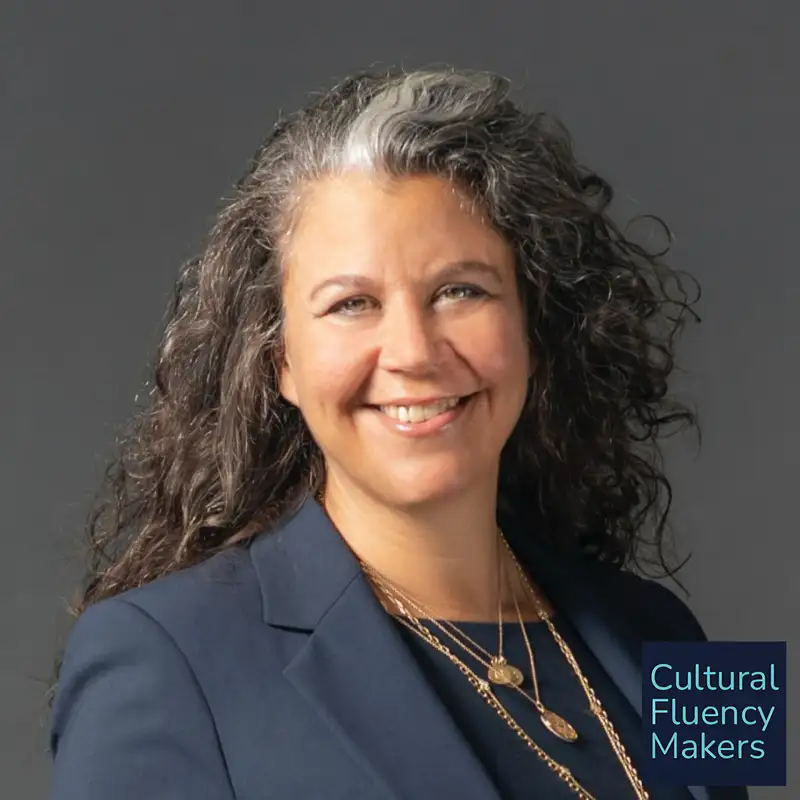
With me is the Senior Vice President and Chief Marketing Officer of the Investment Management and Retirement at MetLife, Coleen Korte, Welcome to the show. It's great to have you.
Koley Corte: Thank you. I'm excited for our conversation today, and I'm happy to be here.
David Wellisch: I always start, um, the [00:02:00] show with a similar question, Corte, which is, given the demographic landscape change that this country has gone through in the last, you know, 10, 15, 20 years, uh, and as the consumer gets more and more complex, what, what do you see as the role for cultural intelligence or cultural insights for organizations such as MetLife?
Koley Corte: Yeah. I mean, I think that's a great question. I think the thing that we have to think about is how do we be relevant and how do we do that with authenticity, right? So how do we understand the customer, um, the different customers we face within the country or globally and their different, um, needs. And, uh, the way we do that is that we are uni-united around the world by our purpose.
We have a singular purpose for MetLife, um, which is always with you for a more confident future, and that is a relevant Um, purpose for all our employees and [00:03:00] for all our customers. It allows us to be globally connected, and we start by listening to the customer and understanding where that customer is in their journey. Um, and by doing that, we found consistent global territories across markets, geographies, and demographics, types of customers that allow us to create consistent brand promises and customer experience principles. From there, then we can create very locally relevant, customer relevant solutions, um, united around these similar promises and principles. But, um, so we're coherent and-- but not necessarily consistent for the sake of consistency, which allows us to be much more, I think, true, authentic and relevant to the customer.
David Wellisch: So you begin with deep customer understanding. And, and, and clearly when we talk about, uh, relevance, uh, that deep understanding is so core. And, you know, we, uh, at Collage, we think [00:04:00] about cultural intelligence because it, it allows you to go deep and, and, and really understand what, what, what's the makeup of, uh, of, of consumers.
Um, what, what's hard about this stuff? Is it hard? Like, or, or is it pretty basic? Or is it marketing 101? Like it's been there forever, this is what marketing is.
Koley Corte: Yeah, I think it's a little bit of both, right? It is basic, right? And sometimes, you know, we have to just make things simple. And simp- and part of being simple is listening to the customer. I think what makes it complex is that the world has become increasingly interconnected and more complex, right? Um, and our business is interconnected and complex and yet distinct in different markets, right?
Different customer types, different audiences, different needs, different regulatory environments. That's what makes it complicated. But if you cut down to what you just said, the simplicity lays at the heart of it, which is, know, understanding the human, understanding the customer at the [00:05:00] point that you need to understand them, right?
David Wellisch: And, and every time we talk about cultural relevance, which is such a north star, and, and when I ask, "So how, how important is it to be-" culturally relevant to win hearts and minds of consumers, the answer is always, "Oh my, g- it's North Star.
We gotta be culturally relevant." What is cultural relevance for you? What-- How do you define it? And, and how do organizations or even better brands become it?
Koley Corte: So I think cultural relevance is about authenticity and action, right? Because if, um, no one trusts you, then it's impossible to want to do business with you. It's impossible to be relevant to them, right? So it's not saying the right things, it's actually them. And that's why I go back to our purpose so frequently, right?
Because it is, uh, in our values, it is in our relationships, and that's how we get to consistency in what we deliver. Um, because we believe in helping our customers and helping [00:06:00] our employees and helping all of our, um, communities to, um, live more confident futures. And we do that from the MetLife Foundation, we do that from how we onboard employees, and we do that in how we work with customers. And that is like a leadership principle that we really, um, deliver consistently. We have four key audiences. We don't value any of those audiences over the other. As I said, it's communities, it's employees, it's customers, and it's shareholders. And, um, we deliver to all of them, and that's a core part of our strategy. Um, and therefore, understanding all of them and where they are is really important. Um, so back to your question, cultural relevance is about authenticity and action and how we create authentic relationships, um, and, and provide value audiences.
David Wellisch: It's great. Thank you. Um, so MetLife is 150-plus-year-old brand built on a culture of care. In a world obsessed with automation, [00:07:00] how do you ensure that cultural relevance or fluency doesn't get lost in spreadsheets?
Koley Corte: I mean, some of it is just in the fundamentals of always having a human in the loop, right? At the end of the day, you have a human customer, you have a human either sales, service, claims person, um, and you have a human-to-human relationship. The same for our other audiences. So keeping that human involved while you're still using a data-driven scientific approach is how you ba-- I think how you balance those two things. And our purpose, you know, is the glue that makes that happen.
David Wellisch: gonna be tension over time there. When, when is the human needed? When is the machine leading? And how do we become, I guess, both efficient and effective? Um, is it-- Do you feel the tension today or- Not yet. We haven't gotten to that point yet.
Koley Corte: I mean, look, as a, [00:08:00] as a global business, there's always a degree of tension, right? You are, um-- we are a for-profit organization. We are looking at ways to be increasingly efficient and effective to drive value to those four audiences, right? By us being more efficient, it's better pricing for customers, it's better value for shareholders. It enables us to continue to be strong employees and do things for our community, right? So those things have to, have to fit together. Um, and, um, but also we believe in, um, in the people side of things, right? So, um, I think it, I think it is a healthy friction in how do you, um, drive growth, how do you, um, stay efficient, and then how do you, um, provide value.
David Wellisch: Not an easy set of trade-offs for, for anybody, you've said that marketing is about connecting with people, which is what you're saying now, not just ubiquitous customers. How, how, how does your team distinguish between a segment, [00:09:00] an audience, and a cultural identity when building global strategies?
Koley Corte: I mean, I think it comes down to where we started, which is understanding the customer, right? Going out, talking to customers, doing research, um, listening, um, watching behaviors, watching
engagements, um,
looking at the data and bringing those things together, right? So it is,
um, understanding third-party data, right?
Like what is going on globally, what is going on with customers in a sort of macro sense, as you said, right? Understanding individually, talking to individual customers and seeing what's going on, and then understanding, um, where, where you can play, right? Um, but bringing that context into it. So you have this first-party perspective from talking to customers, watching how they're engaging with you, um, and bringing that together with trends and other things you can see
David Wellisch: Do you think we've got the right tools to do all this?
Koley Corte: I think the tools are [00:10:00] getting better every day, right? And some of it's tools and some of it's approaches, right? So we, um, in doing our, our client research, um, both on our MetLife brand and as well as on our MetLife Investment Management brand, we took a, a neuropsychology-based approach where we could really understand the intrinsic motivations, not just what people tell you, but what really drives instinctual behavior, and how are they really making decisions so that we can bring that together, um, and, and really bring that humanity into, um, what we understand about the customer.
David Wellisch: that's meaning you're not trusting what they say they do And so how, how do you capture the intrinsic?
Koley Corte: So we worked with a, a third party that has a, a, a specialty in understanding the, um, associations, right? And what's really driving the behavior, not just what you say. So I think there's three things. There's what you say, there's what you do, and then there's what's underlying all that. And we like to bring all three of those things [00:11:00] together. Um, and they extract those insights in a variety of ways by having people, um, draw their associations, um, and spending time with, um, different types of, uh, tools to extract the, um, what's really driving a decision. Because often when you ask people, there's a variety of biases that come into play, right?
Recency bias, um, the, the desire to sound smart, right? So I could give you a very rational reason why I made a decision. For example, in my investment management business, you might say, "Oh, it was performance. Um, it was, uh, cost, it was track record," right? But the reality is there are other things that go into play, like watching the dynamic of the team in the room, how you connect with them, um, how, how you've seen them over time, right?
Not just the performance, but how you trust them, right? Um, so-- And that becomes a really important factor in understanding.
David Wellisch: In the world of research, getting to the right answer seems so critical. And, [00:12:00] and you're, you're absolutely right. It's, uh, it's, it's many times it's not what people say because we, um, we oversample for race and ethnicity, He- you know, Hispanic, and there is this bias of favorability wanting to, you know, the, the agreeable, uh, uh, bias.
So we see it, we see that, and we-- and you need to, uh, correct, uh, for it in order to, in order to do good research. Um, great. What we- w- we've discussed on this show how legacy brands can lose their soul when, when they try to be cool. H- how do you keep Midlife relevant to the, you know, younger audiences, the millennial audience?
I'm sure as you think about future-proofing the brand, uh, y- you know, that I'm sure comes up without alienating the core demographic that has trusted you for decades
Koley Corte: Yeah. And I, I always think it's never about being cool. By the way, I work for a legacy [00:13:00] 156-plus-year-old insurance company, right? Um, I'm not sure we'd ever say we were cool. Um, but it is really about adding value, right? And, and living our purpose. But we do find ways to connect to future generations, right?
And one example is, um, our current relationship with the FIFA, um, Global Citizens Education Fund, right? And we are looking at, um, ways to create relevance with, with new audiences. Again, it's a way that we live our purpose by educating, uh, educating people who don't have access to different kinds of education by engaging, uh, younger generations in sport.
~Um, ~you may have seen, um, recently we have,~ um, ~launched a soccer juggling, uh, series of videos, right? And it's, it's a fundraiser, so if you record yourself maybe after the, this, you'll go do that, we will donate money, um, to the education fund, right? And that is providing for a different way of providing for more confident futures, confidence through sport, confidence through education, and then we have [00:14:00] confidence in our solution.
So again, connecting to younger generations, current generation, previous generations, right? And, and that's what's one of the things that's really neat about our 100 and, you know, 50-plus year history, is that we have a history of innovation. We have found ways to continue to be relevant, and it's not by providing the same solutions that we always provided, but it is provide, providing ways that, um, we can help you secure your future.
David Wellisch: That, that's-- It was such a, such an important, such an important and relevant topic, especially on the, on the younger generation. And what do we say? If we don't innovate these days, we die. Uh, um, y- you know, I-- on the FIFA topic, I'm so excited. Um, I'm originally from Ecuador, and I'm gonna be at MetLife watching the Ecuador-Germany game.
Uh, so that's gonna be super fun. All right. Um, um, you describe yourself as outcome-oriented. I mean, I think it's a theme that emerges, and I can, I can also feel the why as [00:15:00] we, as we chat. Can you share a time when a purely cultural insight, something that you did not-- something that did not show up in a standard data set completely changed a business outcome for you?
Koley Corte: I read about an insurance company that was trying to launch, it's not our company, so this is another company, was trying to launch a product in India. They didn't do the research that I was talking about. They didn't really spend time doing field research. They didn't necessarily look at the market environment. They thought they had a good idea, and they went out to build it. And so they spent a fair amount of money and over two years building this product.
And when they went to launch it, they realized that the product, the-- this target product, already the market was fully saturated. They were at a ninety-five percent saturation rate, and they didn't really understand the audience. They were looking at a sort of, oh, like they homogenized the audience. So they looked at an average as opposed to understanding the different segments and where their solution would play. [00:16:00] think it's really important to get nuanced and not just look at averages, but really to understand the, the, the specifics. An example I'll use is from recent Some recent experience. We recently completed the acquisition of, um, PineBridge Investment Management, and we're integrating that into MetLife Investment Management. And PineBridge expands, um, in a variety of ways, expands the footprint of MetLife Investment Management. It expands our solution set, it, um, into products that we didn't have that are, um, in demand by customers. It expands our geographic footprint into markets we didn't play, particularly in Asia, and it expands our distribution footprint into what we call an intermediated business or intermediary. And so when we started, like I understood intermediary from my past from being at, um, other companies. I had a very clear understanding of intermediary. And but yet, when you look at our legacy MIM business in the US, our intermediary business is largely, [00:17:00] um, sub-advised. So our brand doesn't show up to the end customer.
We sell to a third party, they rebrand it. It's like a white label, like you sell a jacket to
Macy's and they sell it
David Wellisch: Yeah
Koley Corte: you know, the Macy's brand. Um, and we actually have many flavors of intermediary from in Taiwan, where we are a retail business and where we need to then sell to both, uh, home office fund selector. We sell to an advisor, and ultimately we're reducing friction in that advisor's sale to the end customer. We also sell direct, um, to some extent to those end customers on our, on our website. We have an e-commerce solution. But all the way to that sub-advised solution that I was talking about in the US, and then we have different flavors of that around the world.
So understanding how marketing supports that and what those customer needs is very different on which point you're selling to and which point the customer is. So, you know, that was like very real, and by going out into the field, I started to be able to dissect the different definition of what an intermediary was and then help us design [00:18:00] the right series of marketing solutions and platforms for them.
David Wellisch: That's a great, that's a great example. And, and, um, it shows the importance of starting with customer first. I mean, that's sort of where the truth lies. I always think of, you know, when, when you've got a bad day and you're like strategically unclear about things, just talk to your customer. The, the answer at least somewhat lies there.
Uh, it's a good, it's a, it's a good place to begin. So let's move into a little bit of, um, uh, the big bad AI. Um, how could we not talk about AI? So I'm gonna start with, um, you, you often use sports analogies to explain data. If, if data is the moneyball of marketing, what is the home run for cultural relevance that AI is finally making possible?
Koley Corte: Well, I mean, for years, I guess maybe most of my career, we've talked about the idea of personalization, right? [00:19:00] and being able to personalize, solutions and the way you touch customers. And I'd say that the home run for AI is making possible how quickly we understand that customer, and then how quickly we can convert that understanding to action. So how we can deliver relevant, customized solutions, relevant customized outreach, relevant customized engagement. that's one of the things that I think we've really strengthened is, to be able to better get signals, act on those signals, and be relevant to the customer in our solutions.
David Wellisch: Is there a, is there a tension on the other side of that? Um, in a world where, and I think you, you mentioned this, Coleen, trust is such at the front and center of, of your industry. I- is there a trade-off somewhere or not necessarily?
Koley Corte: I mean, I think we have to make sure [00:20:00] that we are, um, being helpful, right? So like, we also have to make sure we-- going back to your question about how do you, um, like avoid being cool or, or avoid, you know, avoid being cool at the expense of being relevant, right? The idea isn't to personalize for the sake of personalizing.
It's in a way that adds value. Um, and years ago at a, a previous company, someone on my team, we were talking to the, the executive team, and someone on my team said to them, they said, "What do you mean personalization matters?" And the person said, "Well, if you don't... If you collect all this data from me, and yet you don't know who I am when you talk to me, so you send me a generic note, 'Dear customer,' you know, I'm not even gonna read it."
And the executive team was completely stunned, right? And there's this trade-off. If you are gonna collect information,
we should be then applying that in a way that is creating more value for the customer. Um, but again, it has to be that right balance of where is it valuable and not just where does it interesting, right?
Or look cool [00:21:00] to do it. It really has to be around creating value. So customizing things in terms of what's interesting to you, sharing insights that are relevant to you, um, being there at the moments that matter for you, that's like what I think is the personalized, relevant way for us to reach prospects and customers across the life cycle.
David Wellisch: where, where, where do you think y- y- either we as an industry, you guys as a company are in the AI journey? Like, are, are we in chapter one? Are we at the very beginning? Are we middle? Like where, where, where are we?
Koley Corte: I think we understand both as a company and as a, as a technology, we understand much more of what's possible. Um, and we have to remember that we've been using AI for years. We just haven't been using it at scale, right? Because we had to be... It used to be that you had to be able to code, right? And coding was how you got to this, and now with generative AI and agentic AI, it's much more accessible to everyone, but it's not necessarily brand new, right?
Um, and but [00:22:00] I think we see much more of what's possible, but we don't fully know everything that is, right? And we need to experiment more. I'm a big advocate of putting, you know, tools in everyone's hands, and I, I had two personal examples this weekend. They're not, um, they're not business examples at all, uh, but on where the potential is.
So I have, uh, two boys. They're seventeen and twenty, and they had an opportunity to coach, um, a, a four-and-a-half-year-old in soccer this weekend. And they both are athletes, right? And they're good at what they do, but they were trying to think about remembering back when they were four and a half, and what would-- how would they engage this, this boy who may or may not want to do this. Father definitely thought this was a great idea. Did the, did the kid think it was a great idea? And so I suggested that they ask Claude, right? And Claude helped them develop a, a training program, helped them think about what objections the child might have, what were-- And then it, it helped them frame stories, right?
And they actually created a lesson plan for the session, [00:23:00] um, using AI, right? And that's something they couldn't have done before because they could have probably done a Google search. They could have gotten some ideas, watched some YouTube videos, right? But like, if you think about that leapfrog that they were able to walk in with a full game plan in, in fifteen minutes.
And I did something similar for myself this weekend. I created an agent for myself to be my personal trainer, and I gave him some objectives I had. And this morning, my personal training agent reached out to me and reminded me to get up and, like, go do these things and, and checked in with me on what I completed.
So like, those are things that like, again, we're able to do today that we weren't a... you could do that. I could have created a regime for myself. I would have woken up, right? But the accountability piece and the fact that it's acting on my behalf and checking in with me, those are all new things, uh, that are skills that are available to me that I didn't have before. The same way there are more things in the workplace, right? Um, and some of it's unlocking who has access to those tools, how do we use those tools the right way, and how do we use them to create the most value? But, [00:24:00] you know, I think, I think we're still... There's much to come that we don't know yet, but, um, but it's really exciting
David Wellisch: Oh, that's amazing. That's amazing. I can't wait to hear. Uh, that, that, that's great. All right. Our last question on the business front and the AI front is There's so much talk about synthetic audiences in the insights world. Um, what's your-- do you have a point of view? Are you using-- are you guys using them?
What's your perspective on it?
Koley Corte: So we're, we're testing the use of them. I think they can definitely be a useful tool. Like I'm trying to figure out how we can accelerate learning, how can we supplement audiences to scale things. But I am also concerned about this reversion to the mean, right? Which is, um, if you are asking, um, a synthetic audience at some point, how are you just not, um, getting to
the average, right? Um, and you're losing some of the nuances and some of the long tail of what is [00:25:00] the art of the possible. Um, but I am trying to figure out how can we speed up, um, insights work,
right? How can we better understand customers faster? And I think there are other use cases than just synthetic data. I think we are exploring using AI in the survey process, using it to better screen audiences, using it to create more engaging surveys,
David Wellisch: Yeah.
Koley Corte: And then using it also to, to synthesize, um, faster.
And again, I think similarly though, you have to be careful. I read something, um, week that someone gave, um, a tool, uh, two audience samples of fifteen hundred each, and it said that one set of samples was a US sample, and one set of samples was a UK sample, and it asked to tell the difference, um, share insights between these two samples. And the tool gave back a very, um, reasonable explanation that the US was more [00:26:00] direct, they had more clear feedback, a bunch of other things, and that the UK audience had these different behaviors. Except it turned out that they gave it-- gave the tool the two samples were exactly the same.
And so the tool introduced its own bias around what it knew from other things about cultural-- uh, um,
David Wellisch: SAML
Koley Corte: insights, but it wasn't true. And so I think in each of these steps, whether it's a synthetic audience, it's using AI to better synthesize, it's, um, how you're vetting your audience, I think we always have to go back and verify, right? because just like humans introduce bias, tools can introduce bias too. So, um, it was just something I...
But I think there are lots of ways that we can speed up the insights and, and then be able to take action in ways that are, are meaningful.
David Wellisch: thank you for that. You know, we, we are experimenting with augmented synthetic, which is we're sitting in, in an enormous, uh, universe of data, actual human data that we've [00:27:00] collected over, you know, the last 10 years. And so with that, we're excited to experiment and see how you can actually get to accuracy faster, but we do believe that you gotta start with that.
Gotta start with, you know, actual data. Well, great. Um, thank you for that. Um, we, we, uh, we're gonna finish the, uh, show with two personal questions. Uh, one is, what inspires you? What motivates you to do what you do every day?
Koley Corte: So I think there's two main things. One is learning.
So I'm curious, like I always want to be learning, like seeing what's coming new, seeing what the art of the possible is, sort of really being able to take advantage of these new things is super exciting to me. So learning is on one side. And then the other is like really having an impact. And having an impact and adding value could be in a variety of ways. It can be on people and teams, could be on the business, could be on my kids' future, right? So [00:28:00] learning and adding value in ways that have an impact are the things that really make me excited, um, and keep me motivated every day on, on all fronts, right? My workout front, my work front, my home life, um, sort of across the board.
David Wellisch: great. Do, do you think we, given how fast the world is changing, we could get to the value impact without the curiosity?
Koley Corte: I don't think so. I
think, I think in order to add value, you have to be pretty curious. It's the-- my biggest piece of advice for everyone is how do you remain curious, right? Um, so I, I think being curious and wanting to continually learn is, is part of evolving and growing, um, for all of us
David Wellisch: Great. And then the last question is, if you could travel back in time and give your 20-year-old self advice, what would that be?
Koley Corte: so I think it's similar to what we just said. I think it's, um, stay curious. Um, I also think stay true to yourself, right? Like no one else can be you. [00:29:00] So know what you bring uniquely to an equation, know your value, know your skills, and have confidence in that. and the last thing I'd say is you don't have to have all the answers, but you probably need to know how to ask the questions, right?
So always-- which I think tie to that curiosity, but always ask the questions, right?
David Wellisch: Could not agree with you more. So powerful to ask the right questions even when we don't know the answer. Maybe even more powerful to ask the right questions. Um, Coleen, thank you so much for your time this morning. This has been, uh, amazing. Congrats on your own, uh, professional journey and, uh, I can even see the curiosity in your personal training, uh, you know, side of things.
So again, really appreciate your candor and, uh, and your giving us kernels of golden and wisdom.
Koley Corte: Thank you. It was a great conversation.
David Wellisch: This has been another exciting episode of Cultural Fluency Makers. See you next time.
[00:30:00]
Creators and Guests