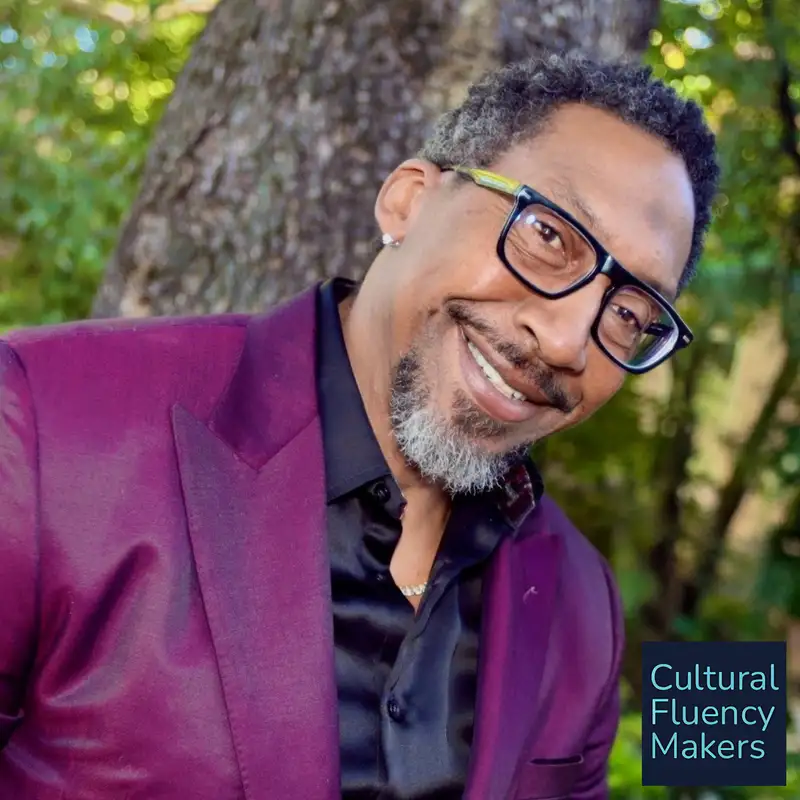
Closing the Proximity: How Google Connects Brands to Consumer Passions with Daryl Butler
CFM - Daryl Butler
===
[00:00:00] Welcome to Cultural Fluency Makers. I'm your host, David Weis. Each week we welcome leaders to share how they stay ahead of the ever-changing consumer landscape with today's cultural transformation. Top brands need to understand diverse consumer segments from. Gen Z, Hispanic and LGBTQ plus to gamers, wine enthusiasts, and basketball fanatics in Iowa.
Their marketing strategies require them to keep the pulse on their consumers, but also their brand in the category to continue to grow. Revenue for the long term cultural fluency Makers is sponsored by Collage Group, the only cultural intelligence engine that provides brand and consumer insights on the why.
That drives consumer behavior and purchase decisions. Let's get started.
david-wellisch_39_05-05-2026_161824: So I am especially excited for this episode today. I just came back from the Possible conference, and there was one session [00:01:00] where they said, uh, "In the world of AI, this company would be the winner of them all." We'll be talking about this company, uh, quite a bit during the session. But with me today is a culture-obsessed marketing leader known for helping brands show up in ways that feel relevant, timely, and genuinely connected to the audiences they serve.
He's built his career across some of the most influential consumer brands, including leadership roles at Nike Jordan, Beats by Dr. Dre, and HP, focusing on bringing brands closer to communities through storytelling, experience, and cultural insight. Today, he leads global marketing and partnerships efforts that sit at the intersection of technology, creativity, and consumer understanding, shaping how people engage with brands in [00:02:00] a ever-evolving landscape.
He's the VP of Marketing, Global Brands and Partnerships at Google. Daryl Butler, welcome to the show. It's great to have you.
Daryl Butler: Thanks, David. Appreciate you, uh, inviting me to participate.
david-wellisch_39_05-05-2026_161824: Let's do this. So we'll, we'll start with a big broad question, Daryl, which is, you know, given the demographic landscape changes that have taken place in this country in the last 10, 15, 20 years, what, what do you see as the role and the need for cultural intelligence and cultural insights for consumer companies and tech companies like Google?
Daryl Butler: Well, I think any company that wants to have its finger on the pulse of what the consumers want and need have to first answer the question, who are the consumers? And as you mentioned, over the course of the last two decades, we've seen quite a shift, and we will continue to see quite a shift in the makeup, um, across the United States, let alone around the world. [00:03:00] And the access that consumers have to information has exploded to the point where there's too much. Um, but brands that are sitting in the center of the zeitgeist are the brands that understand who their consumers are, where they are, how they're consuming media, how they're actually engaging with products and brands, and can really, um, hone their stories, their products that meet the consumers where the need really exists.
And I think Google does a phenomenal job of that. And the short list of brands that do that really well are pretty obvious. I would say, Nike's another one Um, they understand their consumer a-and they've really made it clear that, you know, if you are-- If, if you have a body, you're an athlete. And they deliver on their promise with their product integration, with where their products are sold, what the access points are, and how they're showcased across the, um, the sports landscape.
david-wellisch_39_05-05-2026_161824: Darryl, n-no one [00:04:00] can debate the importance of it. What's hard about that? Wh-why is it so hard?
Daryl Butler: I think what makes it hard is the fact that even when you have the right consumer demographic, psychographics, and the like, um, we aren't monoliths. As a matter of fact, we're quite multi-hyphenate, and that's become even more apparent today. You know, young kids are just as interested in hip hop as they are rock, as they are country, as they are classical music, right?
So music doesn't have a single lane of access to its consumer. and, and I think I can use that example and apply it a mult-multitude of ways. have, um, friends who have young kids, and their kids are doing everything. They're artists, they're creating, they are playing soccer, they're playing basketball, they're playing [00:05:00] cello.
They're, they're, they're into so many different things, which means that all of those, all of those represent access points when you think about consumers' interests, um, what they gravitate towards, and that kind of thing. So brands have to adapt to the fact that the consumer has become and outwardly multi-hyphenate, and that is very difficult.
david-wellisch_39_05-05-2026_161824: Complexity rising.
Daryl Butler: Absolutely.
david-wellisch_39_05-05-2026_161824: I love what you have said, uh, Darryl. You often talk about this balance, which is re- it really relates to what you just shared, between Picasso, which is marketing from the gut and from the heart, and Einstein, marketing from the mind and data. I mean, it's hard to do this. In the high-stakes world of Google's hardware, which artist is winning the battle for cultural fluency right now?
Is it [00:06:00] Picasso or is it Einstein?
Daryl Butler: depends on the timeframe you're talking about, right? If, you know, if we go back five, 10, 15 years, those two letters called AI weren't prevalent as they are today. Um, and even if you look at the makeup of Google, we're quite a complex, um, entity in that we have multiple businesses with multiple interests. If I s-stick with and focus on devices, specifically Pixel as a, as a smartphone, c- we're a challenger brand, you know, going up against the Samsungs and Apples of the world. And, you know, there is a lot of artistry that has to come to the forefront you present a differentiated point of view to a consumer who has already, um, has given that real estate to a competitor and, and, [00:07:00] and has for some time. do I convince that consumer that I have a product that is different? Now, there is, there is still some, some, some Einstein, some data work that has to be identified that says, "Well, who's the right consumer for the product that we're building and that we're bringing to market?" So there's still always some type of, some balance between the two, but the, the art of storytelling and putting yourself in the, um, in the lanes where the consumers are that you think you want to attract, is an art form, right?
Are we gonna be relevant in the creator space because our product is great for creating? Are we gonna be relevant in the photography pla- space because we have arguably the best com-com- camera computation modeling of any smartphone in the world, right? Um, and that helps us identify what stories to tell. If I go back to [00:08:00] 2021, we introduced something called Real Tone, was, uh, a model within our camia- camera computation that allows for our cameras to pick up multiple skin tones. we got a chance to, to take that technology, Einstein, and apply a veneer of artistry, Picasso, to the way that we put that, that technology out in the marketplace.
And it, you know, it, it speaks for itself, and it has spoken for itself, um, since 2020, 2021. Um, if you look at where we are today with AI, it-it's, it's far more of a science, right? You're talking about an innovation that is quite complex in a lot of ways, in, in the way that it's used and how it can be adapted to everybody's individual lives as well as, its proliferation into the B2B world, and so forth and so on. Um, so [00:09:00] there is a, there is a, a, a, an abundance of time spent making sure people understand what an AI model is and what it's capable of doing. Then there is something to be said about, okay, where does the art come in and how, how we differentiate ourselves from The competitive landscape that's out there, right?
Because you have Claude and OpenAI and ChatGPT and, you know, the list goes on, and a number of different initiatives that are popping up all over the place daily. So there's a point of differentiation that basically says that we've invested in the infrastructure
david-wellisch_39_05-05-2026_161824: Yeah.
Daryl Butler: To tell the story the right way, um, and folks can understand how our models work and what they're, what they're capable of doing, how big and robust they can be. And then the, the marketers are, are about, now how do we position that in the right way? If you look at what we're doing with the NBA right now during the playoffs, the story of AI is, is coming forward [00:10:00] contextually based on a kid who wants to learn how to be a better shooter, and he's tapping into Gemini to help him understand what does it take to be a good, a good shooter, player.
david-wellisch_39_05-05-2026_161824: at the end of the day, Darryl, I mean, first I, I-- that's what I love about marketing, that it... And I love your analogy of Einstein and Picasso, right? It's, it's both together mo- you know, more than ever. But ultimately, it's still us in the consumer space, the end consumer, and we are emotional beings,
Daryl Butler: 100%.
david-wellisch_39_05-05-2026_161824: And so how to win my heart and mind seems like r- that's, that continues to be the battle.
Daryl Butler: I think it's really interesting, I say this to my team all the time. We have an opportunity to look at our brand as a consumer. When you look at the brand as a consumer, as opposed to as a marketer, as a product developer as that kind of thing, the lens [00:11:00] changes and the approach changes because now you can ask yourself the question, "What would be appealing to me? What would I be attracted to? Would I invite this brand into my life because of what they have to offer?" when you can answer those questions, you almost can engineer the story that is appealing to the consumer because you've thought about it like a consumer.
david-wellisch_39_05-05-2026_161824: Darryl, you, you've had such a fantastic, diverse set of experiences and, and trajectory. You've marketed everything, you know, from sneakers at, at Jordan to high tech, uh, AI at Google. What, what would you say is the one cultural constant that remains true across luxury apparel and consumer electronics?
Daryl Butler: it has to matter to the consumer, right? can build whatever you want to build. If, if who you want to have your product in hand appreciate the value that it brings, [00:12:00] the product doesn't go anywhere. I always talk about the idea of A brand has to sit at the in between the consumer, the person, and what they're passionate about. And it has to add value in closing that prox-proximity, right? I, if you, if you create something that puts me closer to the thing that I love, am going to invest in that thing. It could be a set of headphones. think about what Beats did with Hear What You Want, with noise-canceling and using it as a, an, you know, analogous to getting ready to get on stage, on court, on field, on pitch, to what we're doing with AI here at Google or even with HP in the laptop world.
If you wanna be a creator, think like what real creators do. That is, if you think about, you know, movie studios, they're producing using HP products, uh, and com- and, um, and Windows-based products, because of their power, because of their capability. [00:13:00] When you can demonstrate that in your storytelling, you are now contextual to what a consumer loves, and the proximity closes between the person and their passion.
david-wellisch_39_05-05-2026_161824: consumer intelligence at the center.
Daryl Butler: 100%.
david-wellisch_39_05-05-2026_161824: Consumer human intelligence. Um, let's go a little personal. A-as a prominent Black executive, how do you ensure that cultural fluency inside Google reflects the actual diversity of the global audience that you guys are serving?
Daryl Butler: It's interesting. First of all, I have to show up as my authentic self. Um, but I think it... You, you, you play part educator as much as you play part, um, student, right? Big brands, y-any, any big brand, um, gonna be shaped by a set of beliefs and behaviors from, from its inception. Disney has been around for 100 years. You know, HP has been around for 100 years. [00:14:00] Nike's been around for 60 years, right? So there are, there are things that are ingrained in their behaviors and beliefs that just are a function of time. Google's no different, albe- albeit 28, 25, 28 years. Um, but as, um, as an organization, as a brand really understands that they need to be a reflection of the communities they serve, part of that reflection means making sure that there's diverse representation in the organization that can bring about, um, the knowledge and the understanding of what that com- what those communities are, right? Um, that doesn't mean that you have to cater to every one of them, but you have to have a sensibility and an appreciation for. that'll go into everything from who are doing coding to the folks that are storytelling to the folks that are actually developing the products that we bring to market.
And that again, that's, that's, that's, um, transcendent from [00:15:00] brand to brand, product to product. So I think what I try to do is make sure that folks who are appreciating what, what does the African American community, what do marginalized communities think about when they're inviting brands into their lives?
david-wellisch_39_05-05-2026_161824: Yeah.
Daryl Butler: And are you mindful of that when you're storytelling? And the more mindful you are, greater the likelihood that there is going to at least be some appreciation, and again, that proximal relationship that you have with your consumer closes.
david-wellisch_39_05-05-2026_161824: How hard is that? How hard is it inside corporates? Yeah
Daryl Butler: it is difficult. I mean, especially in this era, right? I mean, without becoming too political, we live in a world right now that, uh, can present itself as quite divisive, whether that be here in the States or, or internationally. And that is, um, another hurdle to clear, right? On our best day, we still [00:16:00] have, um, nuances that make us unique.
Well, and when you-- if you walk all the way back, right, you know, you take an organization that's made up of 180,000 people. are 180,000 individuals with 180,000 walks in life, with 180,000 behaviors and beliefs, To actually, you know, corral that into a singular thought is impossible, right? But what you can do is at least have an appreciation for, and an ap- and an, um, um, an appetite for understanding that level of diversity. when that is infused into the folks that are building products, creating products, and marketing products, the likelihood that you're gonna come to market with something that, um, has resonance is a lot greater. And that means having the rooms and being present in the rooms and having a voice in those rooms, at every chance I get. And, you know, what we would hope for is there's an outcome that is, uh, [00:17:00] on the, on the right side of things, let's just say it that way.
david-wellisch_39_05-05-2026_161824: Um, Dara, I, I, I, I love how you talked about the appetite or, or, uh, curiosity, right? Like it all begins there. And are we becoming more curious or less curious? And, uh, um, and that's gonna have an impact in, in, you know, across the board, uh, even starting with belonging and, and, and then that leads to marketing and product and, and so forth.
Daryl Butler: Yeah.
david-wellisch_39_05-05-2026_161824: As a cultural intelligence enterprise, um, I, I-- and, you know, we work with so many different brands and so many categories, so we see, we see the pendulum, we, we see the spectrum. Um, so Google's master brand is about being helpful.
Daryl Butler: Mm-hmm.
david-wellisch_39_05-05-2026_161824: H-how do you translate helpfulness into a cultural movement rather than just a utility, especially as [00:18:00] AI becomes more integrated into our daily lives?
Daryl Butler: Well, I think you start with idea that, you know, cultural resonance and cultural relevance is about how is it helpful to the individual? The analogy I often use is, um, online banking, broadly speaking, right? If we go back, you know, 20, 30 years, uh, maybe even more, you, you, you walked into a bank and there were a row of tellers, and you did your banking between 10 and 5, Monday through Friday. And then they said, "Okay, let's do weekends." And then they said, "Let's introduce ATMs." And then they said, "Let's introduce online banking." So there was a progressive approach towards answering and solving a fundamental human problem. That is, I need the versatility and the, um, and the agility to bank whenever I want. Right? That's helpful, and that's more than [00:19:00] utility. Now I have-- I've, I've, uh... There, there is thought leadership. There is someone who is leading me into something that can be truly beneficial in my life. Define it as helpful as how-however you want. I think about it in the context of Google, from Search to mobility to where we are today, these are all, um, changes in the way that consumers have access to one another, how they have access to information, how they can share information, how they can express themselves personally. That's not necessarily just a utility.
david-wellisch_39_05-05-2026_161824: Yeah.
Daryl Butler: It is, it is a, it is a partnership, a collaboration that exists, um, where I can utilize these tools, but, in a way that they're, um, more than just a tool itself, right? actually can help me unlock thoughts and, uh, provide a-additional clarity when I'm, [00:20:00] when I'm working or thinking about something. was actually sitting writing with a, a, a partner of mine, um, a couple of days ago, and we were wrestling with how to say something, and so we tapped in and said, "Google, here's what we're trying to do." He had a point of view, I had a point of view, and Google came back and said, "This is maybe the way to think about this.
How else can I be of assistance?" Right? That is not a utility. That is a thought partner. And I think the closer we get to appreciating where technology is truly in, in a, a collaborative partner, the less we look at it as just a simple utility, like turning on lights or, you know, activating a heater.
david-wellisch_39_05-05-2026_161824: I love that. What a great example.
you, You've noted that, uh, passionate communities hold the power. Um, h-how do you think one can foster [00:21:00] fandom rather than just usage?
Daryl Butler: Well, I'm, I'm, I'm a sports guy, so that becomes a little easy for me. You think about the, the range of fandom, right? There's, you know, casual to consummate, right? The consummate fan is, wants to know everything there is to know about the thing that they love. If it's about global football, not only do they know all the players, all the teams, the clubs, you know, their national, um, uh, relationship, you know, how, how everything works together, and they're loyal to it because that's how invested they are. If you're a brand that wants to be part of that fandom, again, you have to be able to close that proximity. You have to give them something that they already don't have access to, right? You have to provide a, a, another lens through which to look. Consummate fan. you go down to the casual fan, [00:22:00] yeah, they, they're, they're familiar with it.
They, they maybe look at a couple of games here and there. Uh, they're not deep into it or anything like that until it becomes, you know, meaningful. This is an opportunity. I'm gonna get you closer to the sport so you can understand why does Shai, uh, Gilgeous-Alexander perform like he does? A 41-year-old LeBron James playing at the same level that he played at 21 years ago.
How is that possible? Let me help you understand that. And I can... And it doesn't necessarily have to mean that it's between the 94 by 50 court. Now we can talk about his training regimen. Now we can talk about, you know, what makes Steph Curry an incredible shooter is not just what he does on the court, it's all the stuff he does off the court.
His, his nutrition, uh, his regimen. And those are translatable to an individual. Well, I might not be able to shoot or perform like Steph, but I'm gonna take some of these training tips. I'm gonna take some of these nutritional tips. I might think about my sleep a little [00:23:00] differently because of what it means to someone that operates at an elite level. Now this c- this casual fan becomes a little bit more closer to a consummate fan. And again, brands that can assert themselves in those spaces, in those ways, um, help b-build that, that, that community. Um, and those communities grow as a result.
david-wellisch_39_05-05-2026_161824: Thank you. So eloquently said. There are two questions on AI. We've touched on AI. H-how will the marketing and insights function, you think, change as AI continues to accelerate? I know it's a very broad question,
Daryl Butler: Well, so I-I-I'll, I'll, I'll make it very tangible. Um, I spend a lot of time at high schools and on college campuses just because I'm, I'm naturally curious about how young people think, right? And I like to compare how they think and how they act and what they love you know, to what I do when I think about cultural marketing. Um, [00:24:00] there's something to be said about trying to, gather that, operationalize it, synthesize it in a way that can be shared, right? We just talked a bit earlier about part educator in, in, in corporate environments. I did just that. Earlier this year, I had an opportunity to present on cultural marketing, and I had spent some time with young kids over the holidays asking them who they were listening to, what their favorite sports were, and all those types of things. But I took that information, I loaded it into Gemini and into NotebookLM and asked it to say, "Now, for the audience I'm gonna be presenting to, do I take all of this information, anecdotes, um, verbatims, and the like, and turn it into something in a synthesized format for an hour presentation?" And the tool a great partner to, to synthesize all of this information, right? So when you talk about insights and those types of things, the, [00:25:00] the human interaction can't be replaced, in my, in my humble opinion. Human ingenuity, human creativity can be replicated, but it can't be replaced. It can be complemented by being able to do and synthesize thoughts and ideas maybe more quickly or more broadly,
david-wellisch_39_05-05-2026_161824: Yeah.
Daryl Butler: um, in a way that, um, affords you an opportunity with confidence to still take that output, validate it, and, and bring it to an audience in a synthesized state. That, to me, is where it's gonna be of value. And then in my opinion, that's-- at least that's how I've been thinking about it.
david-wellisch_39_05-05-2026_161824: It's great. Do you, uh, do you have an opinion on, um, the validity of synthetic audiences as a way to understand consumers faster and more cost-efficient?
Daryl Butler: Uh, it gets a little, it gets a little
david-wellisch_39_05-05-2026_161824: Thaisey?
Daryl Butler: interesting, dicey because, um, a synthesized audience still is [00:26:00] manufactured.
david-wellisch_39_05-05-2026_161824: Yeah.
Daryl Butler: Now, it may be manufactured based on a, on, on a wealth of input,
I mean, I think we can-- we know the difference between something that we have in our lives that's manufactured and it's something that's real. I mean, it's, it's, it's just different, and you, and you know that. And that there may be a place for it to a degree, but not where it becomes, um, the predominant source, right? There's nothing like I, I, I, and I keep saying this, Skyline High School is not, you know, it's a stone's throw away. and I'll go up there, you know, during a basketball game or during football season, and I just sit and watch, absorbing.
I'm seeing how kids are interacting. you know, I just did a, um, a career day at Bishop O'Dowd High School about a week ago, and, you know, had an au- a auditorium full of high school kids, right? That interaction, one to [00:27:00] many, and even one-on-one, and in some of the breakout groups is invaluable, right? Now, sure, it's microcosmic relative to a, a, a broad audience size, but it still is a great reference point, right? Because what I heard at Skyline what I heard at Bishop O'Dowd is the same thing that I hear from my kids from when they were teenagers. So there are themes that you can pick up if you're paying attention, if you're listening. can you do that synthetically? Yeah, maybe.
david-wellisch_39_05-05-2026_161824: Yeah.
Daryl Butler: is it going to-- Are you gonna feel the pulse?
Are you gonna feel the heartbeat? Are you gonna have the eye-to-eye contact and the true appreciation of what the excitement is when a kid talks about Playboi Carti, right? I mean, yeah, you might get that, um, again, synthetically through systems, but it's nothing like being in the room full of young men, 16, 17 year old, talking about this person is better than Jay-Z, and this person is better than...
you know. And [00:28:00] obviously I'm a, I'm a, you know, I come from a different era. So there's a debate that happens right there, time, the excitement and enthusiasm can't be replicated, right? That's the difference between human interaction and, using a system.
david-wellisch_39_05-05-2026_161824: Man, I love-- Well, first, um, clearly you're spending time in high schools, you know, which is so great, but I love your energy about the interaction. I mean, I can feel it. You know, I can feel the energy that you derive from being in the room,
Daryl Butler: Being in the
david-wellisch_39_05-05-2026_161824: right? Like being in the room. And I'm sure that the nuance, I don't know how we replace the nuance.
Maybe the information and the insight might even be the same, but, you know, life and energy from that nuanced interaction, it's hard to replace. All right. I, I'm gonna go through just a couple of super quick lightning round questions, Darryl, to make it,
Daryl Butler: right.
david-wellisch_39_05-05-2026_161824: And landing, [00:29:00] and landing the show.
So, um Uh, when has your Picasso gut told you something that the Einstein data completely missed?
Daryl Butler: I'll go back. so when I was at Beats by Dre, um, Jimmy Iovine challenged us to figure out a relevant position for Beats the movie was being produced, Straight Outta Compton, right? Now, obviously, Straight Outta Compton chronicles the of NWA, the rap group. Um, Beats didn't exist, right? But by way of association, obviously Dre, and, and Jimmy were, were instrumental in how, you know, that, that evolved. So, you know, the, the logical would say, "Well, just think about it in the context of current day." That is what Dre has evolved [00:30:00] into, this mogul, this individual who has, you know, pioneered some incredible things, post his rap career. Well, mm, that didn't really make sense to us. Um, so we spent time, uh, myself and a few others with, um, with Dre and with Ice Cube, asked the question, right?
What, what was kind of your point of origin? What's your origin story? And they referenced something that Eazy-E said in the studio when they were still, um, um, finishing up the movie, and that is, "We didn't start group to become rap stars. We started this group 'cause we wanted to put Camp Compton on the map.
david-wellisch_39_05-05-2026_161824: Oh,
Daryl Butler: tired of people claiming to be somewhere other than Compton." So that's where everybody should be proud of where they're from, thus Straight Outta
data would've said, "Don't go there." you know, the heart, the gut says,
david-wellisch_39_05-05-2026_161824: Yeah.
Daryl Butler: Here's a [00:31:00] real insight here
david-wellisch_39_05-05-2026_161824: Gold.
Daryl Butler: From an authentic position.
david-wellisch_39_05-05-2026_161824: Yeah.
Daryl Butler: Build around that."
david-wellisch_39_05-05-2026_161824: I lo-love that. Oh,
Daryl Butler: what birthed Straight Outta.
david-wellisch_39_05-05-2026_161824: that is fan-- that's fantastic. All right. And then you, you say that, you know, we talked about curiosity and staying connected to culture is about curiosity. What's the last thing that you were curious about that led to a marketing breakthrough?
Daryl Butler: Last thing that I was curious about that led to a marketing breakthrough.
david-wellisch_39_05-05-2026_161824: It's a hard one.
Daryl Butler: Well, you know, I, I can't really take all the credit, um, because there's a, a coworker, Adrienne Lofton, who has really brought it to the forefront, that is operate like a challenger brand.
As we were, you know, looking at how we were trying to drive this trajectory for Pixel, you know, we were looking at what does Samsung do?
What does Apple do? Well, these guys are established.
david-wellisch_39_05-05-2026_161824: I like that. These guys are established.
Daryl Butler: to do what Apple does y- y- without the same resource, without the same momentum is, is, is not gonna land, [00:32:00] uh, with the same results. So we really started toying around with this idea of a challenger brand probably about two or three years ago, years ago. And we started testing the idea that what does it mean when you're a challenger? How do you show up? What do you say? What do you do? And those curiosities were really tension-filled because you have, you know, you got a bottom line you gotta deliver, right? You got a business objective that you still have to deliver, but as a marketer, you're also trying to build a, a strong enough funnel that, that has some longevity to it, natural tension. And, you know, you fast-forward to where we are today, and again, I have to give credit where credit is due, Adrienne really doubled down. Adrienne Lofton doubled down on this idea that if you're gonna operate as a challenger brand, you gotta, you gotta poke at that a bit. And that means, um, you know, doing and saying things a little differently than where everybody else is going.
And, you know, the, the [00:33:00] brand is, is
david-wellisch_39_05-05-2026_161824: That's fantastic.
Daryl Butler: In on that. And
david-wellisch_39_05-05-2026_161824: So we're gonna end this show, uh, Darrell, with two personal questions, uh, and we'll, we'll, uh, we'll end this. The first one is what, what inspires you? What motivates you to do what you do every day?
Daryl Butler: Man, I, you know, I, I love culture, and it's not just because I'm a marketer. You know, I, I can think about when I was still in finance, um, you know- I s- I went to-- I spent times in the mall going in and out of stores, the Foot Lockers and, and, Finish Lines of the world, just looking at what's on the shelf, and always asking myself: Why is that product there?[00:34:00]
What, what, what's the connection? Where's the story there? Um, know, in the music space, just understanding what makes people go crazy over a certain album or a certain artist and all those types of things. And that's car- I've carried that all my life, man. I, you know, it's just something that I've always gravitated towards. So when I think about, you know, o-operating as a marketer, obviously I have to be thoughtful and mindful about our investment strategies and things that, that, that need to deliver to the bottom line. But it always goes back to a curiosity for what moves the needle in the hearts and minds of the consumer, right? You got up this morning, you decided to put that jacket on. went to the optometrist and chose those frames. Why? What was the attraction? Did you see them out in the wild? Um, was it something that the optometrist said? You know, that-- those are the things that I'm als-always asking myself, you know, daily when it comes to... It could be sneakers, [00:35:00] headphones, you know, apparel, fashion, art, you name it. I'm always gonna be the person that's wanting to understand the why
david-wellisch_39_05-05-2026_161824: love that. That makes you the perfect guest.
this is gonna go for our younger audience, which I think is in so much need of wisdom like this. So if you could travel back in time and give your 20-year-old self advice, Darrell, what would that be?
Daryl Butler: Think about your, um, what I would call liberated mindset versus your conditioned mindset, right? If you have my 20-year-old self is living a life in college that is primarily based on family upbringing, community and neighborhood, friendship groups, and so forth, conditioning a, conditioning a mindset. Obviously, not gonna do the math, but the older me has seen the world. I've traveled [00:36:00] internationally. I understand different cultures and different religions and different perspectives and um, you know, stations and classes. Um, lies a liberated mindset. You're not confined to a certain set of beliefs and behaviors.
You have a bit of a different aperture, right? And I would tell my 20-year-old self, "If you can travel, travel." If you can explore, explore. Um, if you have the opportunity to expand your, your, your breadth of experiences, expand those breadths of experiences. You will be much, much more
david-wellisch_39_05-05-2026_161824: Yeah.
Daryl Butler: Um, in your latter years.
david-wellisch_39_05-05-2026_161824: Love that. It's so hard to distinguish the shoulds from the, um, innate wants. It's-- it takes, it takes, it takes wisdom.
Daryl Butler: Mm-hmm.
david-wellisch_39_05-05-2026_161824: this has been amazing. So, [00:37:00] so much gratitude to you for your wisdom, for your time, and, uh, congrats on an incredible career and, and trajectory.
Daryl Butler: Thank you, David. This has been incredible. This is coming from the heart,
david-wellisch_39_05-05-2026_161824: Thank you. And this has been another exciting episode of "Cultural Fluency Makers." See you next time.
That's a wrap on another episode of Cultural Fluency Makers. Thank you for joining us. Please share your comments and what you would like to hear more about. Be as specific as possible. For show notes and more, please visit cultural fluency makers.com. This show is proudly sponsored by Collage Group, unleashing the power of cultural intelligence to fuel brand growth.
Please follow Collage Group on LinkedIn and we'll see you next week.
Creators and Guests