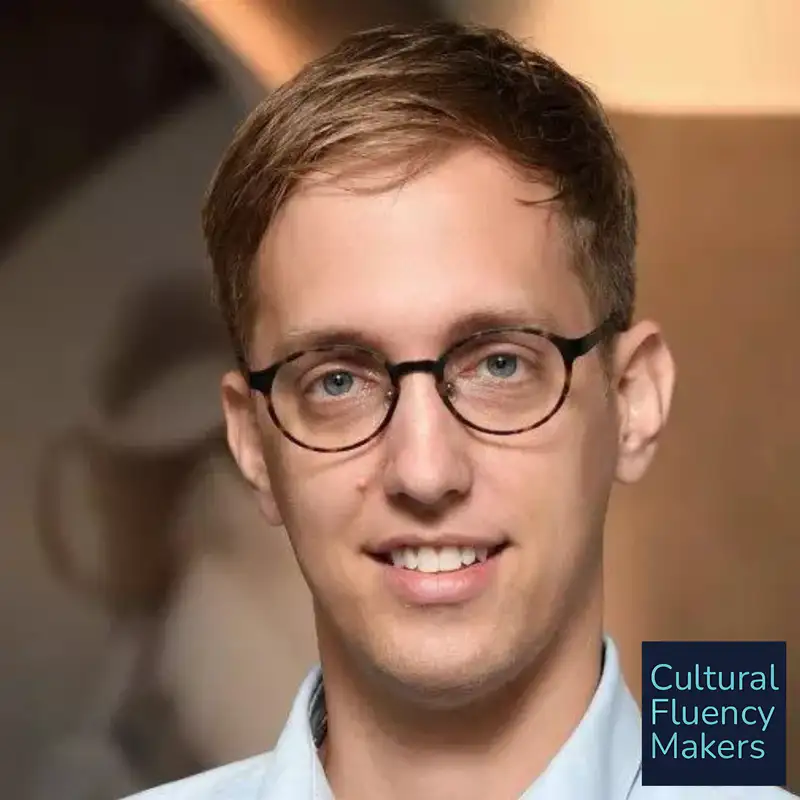
Beyond the Buyer: The Power of Cultural Intelligence in Marketing with Tobias Puehse
CFM - Tobias Puehse
===
[00:00:00]
David Wellisch: So
I am particularly excited about this episode 'cause I think we could do this in German.
Tobias Puehse: That's right,
David Wellisch: I won't.
So with me today is [00:01:00] a true authority
in
insights and strategic planning. Someone who has built a career helping some of the world's most influential brands, better understand people behaviors.
the forces shaping modern commerce with a deep foundation, innovation and research. He's known for turning insight into action and helping organizations make smarter and more human centered decisions. He has led large scale insight and consulting efforts
ac across across global markets, including extensive work throughout Asia Pacific, and brings a rare combination of analytical rigor.
Tobias Puehse: And
David Wellisch: Strategic Vision. His work consistently centers on creating meaningful, secure, and efficient interactions between businesses and consumers at scale.
Today, he serves as Senior Vice President of Insights and Intelligence at [00:02:00] MasterCard in the Americas Tobias Puehse, welcome to the show. It's great to have you.
Tobias Puehse: you. Thank you. Thanks so much for having me. And, uh. Wow. I'm excited to speak about all of those factors.
David Wellisch: We're gonna have fun here, so, um, why don't we get started, uh, very high level Tobias, which is in the Americas. This country has really gone through a demographic transformation in the last, You know, 10, 15 years.
Um, And so given that and, and starting here, what, what do you think is the. Role for cultural insights and cultural intelligence given that transformation as a consumer driven organization? Yeah, I think it's a, is a great, um, and a very important aspect because, uh, often actually, and I think about the mission that I'm on, we actually say we are here to elevate the voices, values and experience of people.
Tobias Puehse: [00:03:00] So you may actually hear me say that a few times today. But actually there's a couple of pieces around this. We don't talk about customers, we don't talk about buyers, but we talk about people, and I think that's the key distinction because when you talk about customers and when you talk about buyers, you actually already create a sense of distance with them, right?
No, but we are the people and we listen not just to. Their experiences or their behaviors, but also their voices and values. And I think that's where it really comes from. A mission statement for me, as my team kind of looks at it as a key critical element that then gets combined with analytics on how do people spend, for example, and our spending polls, analytics, or.
Thinking about technology, how does technology impact the world and what is all the possibilities? So when you think about those three pillars, you understand technology and the foresight. And I know we'll talk a lot about technology [00:04:00] is today as well. But then we also focus on their behavior observed, but also the cultural elements, the things that influence them and def, and the reasons why they make certain choices.
That's when really the magic happens. And that's what I get so excited about to really say that. I'm the voice of the people. That gives me purpose. That gives me passion. That's why I show up in the, in the office, because I feel like I'm on a mission to make the voice is heard.
David Wellisch: Tobias
that feels like you can run for president next, the voice of the people.
I, I, uh, I, I I love that. But You know, it's, it's interesting, this idea of technology and people, I think is gonna be a theme. That we will delve into more here, but it's gonna be with all of us in the commercial ecosystem and the brand ecosystem ecosystem for a long time. So MasterCard's recent research suggests that consumers, people,
Tobias Puehse: mm-hmm.
David Wellisch: Are moving away from mindless consumption [00:05:00] toward intentional living.
Tobias Puehse: Yeah.
David Wellisch: H How are you seeing this manifesting across regions? And how does
a
global
brand
take that into account? In your, generally, in your approach, but also whatever differences you make as you're thinking about global
Tobias Puehse: manifestations?
Yeah, absolutely. And I think we do see that real shift from more to meaning, right? People are spending with intention. And that intention can look different. Um, in the America specifically, what I focus on, we always talk about this balance between values and value. And when I talk about values, it's like things you believe and causes you fi fight for.
Versus value is just, can I afford it? Is it, is it accessible to me from a resource perspective? And so there is this kind of constant tension culturally and within each individual around [00:06:00] discipline, budgeting, transparency, um, and often that also then leans itself into the experiences, right? To say like, I wanna experience things that I value and, and I have that dialogue with myself.
And so we see people kind of purposefully saying, I wanna spend time with my friends. I wanna explore the world. I wanna go dining. I wanna go like be sensorial about. Where I am. Right. I wanna be part of something. I don't, and I think there's also a little bit of that element of, it's not, I guess now it's already like five plus years ago when we were all locked in a box, right?
And, and I, that culture and kind of like really having those dialogues to say what I'm, I'm really interested in doing this, really important. And people are buying from brands that align with values. And we see also increased interest in shopping with local businesses to support the local. Economy. So maybe I introduce you to two common intentional modes, right?
And one is kind of financial wellness, but clarity from a cultural tension standpoint where people want [00:07:00] simplicity and transparency. But then on the other end, we also see purpose and growth. It really aligns to goals, entrepreneurship, and value. And so when we, when again, we look at those purposes to say like, I want wellness and clarity versus purpose and growth, like what does that translate to for me?
From a brand standpoint or financial services standpoint. Right. And, and, and, and when we think about like how we've activated against that, like to kind of give people that consistent cultural moment and experience and clarity and purpose is that we turn moments into movements. Again, I'm just picking from kind of what we do within our organization here in the Americas where we have a partnership.
They stand up for cancer, which is something that I can personally believe in. Like my sure everybody knows someone or probably has, uh, someone that they care about that [00:08:00] has had a challenge or battle with cancer. Um, and, and we took, we kind of look at that longstanding partnership that is going on for many, many, many years already.
And then we connect that to culture moment, like the All Star game. That really intersects with a deeply emotional and personal moment, right? And so when you think about the All-Star game and everybody stands up with a placard when everybody's just kind of there and thinks about something they deeply care about, creates community, creates culture, and then we unlock donations with everyday spend.
So we kind of have mechanisms that kind of like deeply personally connect to what you care for, the experiences, the intention connected to something you're passionate about. Which is the sport and the kind of community that you belong to, and give you that sense of belonging. But then still link it to say like, and if you by the way use our product, you equal, you can be even a greater part of that movement and, and that's being kind of tuned in with like what [00:09:00] people care for, their values, their experience, their voices, and then let their voices be heard because everybody has something to say about these causes.
Everybody has some story to share. So we encourage that sharing. We encourage. Um, that kind of message. And so it's really kind of global promise for us to kind of give that people the choice and the peace of mind, but then expressing that in a local nuance, because obviously baseball may not be as interesting to someone in Germany, like where I'm from originally.
So they may be a soccer event. Um. It may not always be the cause around an illness or finding a cure, but it may be another cause that the culture really cares about and supports and, and, but it's really kind of bringing these cultural ingredients together to become part of a movement and a bigger purpose that people can lean into
David Wellisch: to Tobi, as, uh, so, so many kernels here.
Values,
Tobias Puehse: yeah.
David Wellisch: And value, [00:10:00] uh, uh, moments into movements. Um, clearly MasterCard has focused on, I think, passion points like big right, big thematics, um, like music or how, how does that, how how do those choices or your moments and movements intersect with segments? Um, You know, and, and in the America, so for example, do you think about the world in a, um, core segments of sorts, like personas or.
Race and ethnicity or generational or, or are they so big that it just, it's it's
Tobias Puehse: above that? Yeah, it's, uh, it's, it's definitely multidimensional. So we as an organization have moved away from kind of traditional segments of background or heritage or, um, affluence, et cetera. But it's really the multidimensional and it's, it's much more culturally based [00:11:00] and maybe.
Goals and values based in many ways. Um, and, and, and yes, we look into how do these moments, these 10 pole moments, may resonate with those groups. So again, we take a few different lenses. I think the first lens is to say, let's make sure that we're not tone deaf culturally with the audience we're speaking to.
'cause in a K shaped economy that we're kind of facing in the Americas right now. And you look at values versus value, the key differentiator is actually affluency. Because at some points you may make to May, I may have to make choices where you're saying like, I would like to eat that healthy loaf of bread from Whole Foods, but maybe that's not in my budget right now.
Right. And so like even though you have that value to be healthy and like. Not saying that everything at Whole Foods is healthy. I'm not promoting any brands here, the, um, idea is really kind of like, can you afford your values? That's, I create [00:12:00] a question that we often ask ourself culturally, right.
In this, in this type of environment. And so that's really important when you think about multidimensional segments to say, when you speak to them and you're tod aspirations or things that they may not be able to attain right now. Yeah, that means you're not in tune with, with what's happening with the current events, culture, et cetera.
And so that's really important for us to kind of make sure, like, can we connect, does it resonate, does it have a certain impact? Then we actually look at it from a business perspective as well, because obviously we're still opera co corporations operating in a, in a business environment. And there the, the idea really comes to say like, what do these passions drive?
So we have passions that are more high spend. We have passions that are potentially more about commitment. Like a sports team, you're really committed to that. Generally multi, multi-year commitments as a fan. Um, or things that are really high reach. And so that's another lens we take. So when we think about like, do we want to reach as [00:13:00] many people as possible, we may lean into things like music more.
If we want to do something that really builds a community, et cetera, we may lean more into. Cultural moments around sports and because it kind of drives that community sense. And then do we want to potentially influence spend? We may lean more into travel and dining. Things that are a little bit more elastic that can activate when you're sparked and when you make, when things are being made possible for you.
And then the last dimension, and this is again culturally, is, and we look at the people life cycle as well to say like there there's different passion. Elements in terms of passion, pausing. Passion lapsing, right? And so it's also like saying like, just like being kind of like a dull knife, You know?
Like you need to kinda understand where everybody is. And I always look at myself where I have little children at home and I used to play tennis once or twice a week. And I haven't played tennis since my children have been born. But I still passionate [00:14:00] about it. But it is, it's back to being kind of like.
Being aware of what's happening. And I think that's where I always kind of say cultural fluency is kind of like the awareness of what's, what's driving people, what, what they're feeling, how they're interacting with each other, what values they share. And so all of these pieces, when you look at why we use 10 poles, they continue.
Then also because it's not just like there's a sport one time sports event, but you have the preparation before the event, the post event. Celebration if you're home team won, et cetera. And so there's many moments that kind of connect. So there's a kind of ongoing beat.
David Wellisch: it seems like a very sophisticated model, uh, You know, to the, to this multi multidimensional approach. By, by the way, we're in different shifts in life.
Tobias Puehse: Yes.
David Wellisch: so we became an empty nester and tennis
came back. So there's hope.
Tobias Puehse: right..
David Wellisch: So let, let's move into, You know, at collage
Tobias Puehse: we
David Wellisch: we study, [00:15:00] uh, people and study values and choices, and we have seen how trust has just decreased significantly over time in American consumers. And so
Let, let's take for example, You know, if 42% of people globally trust social media for news as consumers retreating to their own, uh, uh,
circles,
intimate circles,
h how,
h how, how does a brand like MasterCard enter the sort of pri more private cultural spaces? Um.
Tobias Puehse: I think the way into private intimate spaces is an intrusion, but it's by invitation. And I think that's where we really focus on not, um, kind of entering people's circles in an uninvited way, but, but earn the right to be shared there and, and that, um.
It means that we are useful, respectful to the [00:16:00] movement, to the culture, being transparent of who we are. We're not trying tohin hide behind any faces or any particular agenda. So no brand force, brand voice, no surveillance, like in that sense. Yeah, and I think really it, uh, maybe when I, when you think about it, it's really about two principles that matter.
The first is opt-in, so we show up through experiences or content that people choose to engage with. And I, I. Personally think about like super fun, uh, work that we did last year with Lady Gaga, where we tapped into the cultural moment of her releasing new music, we basically told people like, Hey, You know, this is great. Like why don't you dance? Can you do the dance? And so that becomes the invitation, right?
Like let's do a contest around dancing. So people dance a lot and social media channels and submitted their entries. We had people dancing in the office because we had some employee engagement program as well. So who is the best dancer in MasterCard? And, And so once you kind of like [00:17:00] have that. Yeah, invitation. You participate, they're having fun with it. I think that's when you really start becoming invited, and that really then builds trust and integrity. And so we're also then obviously very strict about using approved channels, not conducting MasterCard business.
It's always on a public channel and a public environment, very transparent. And, and I think that ultimately then it's also translating and respecting privacy, right? And so this is back to permission. We ask them and we like, like what they have. Can we amplified, can we engage with it?
And people, but because they're so excited about the content, the moment. They're happy if we amplify their content or they even amplify themselves. So there's a big earned component here as well from a marketing perspective
David Wellisch: I mean, it's, yeah. It's interesting to hear the thematic, right? As I'm consuming and listening to you, You know, the, the,
Tobias Puehse: the,
David Wellisch: there's so much about, You know, the thematic and You know, of passion. And the, because that's a [00:18:00] great entry point, as long as it's opt-in, as long as it's not transactional, but you, you really, you're investing behind what people deeply care about and then you are protecting, You know, the transparency and protecting, uh, not to be the big brother of sorts.
Um, that's what I'm hearing.
Tobias Puehse: I think, and I, and people may ask like, okay, so from a brand perspective, like how does that link then link back to your core business? Because maybe some listeners are focused like, I have a product I need to sell, Like, how do I tap into a cultural moment?
But I think that's by experience as such an in interesting concept that we started with, right? Things over, like experiences over things and then experiential purchasing or interactions that's actually easier to be linked into passions most of the time. And so we're, since we're not a single [00:19:00] category promoter of something, we're promot.
Kind of like commerce as a whole, like it becomes, um, an easier brand association for us. Yes. We may have that luxury because obviously everything you do, like booking your flight,~ going to right restaurant, ~buying your tickets to the concert, et cetera, those econom, like, those are all elements where payments matter and we're we're kind of like, you can be relevant, right?
David Wellisch: I, I think it's such a brilliant marketing approach to, to really bridge the gap of the sort of. You know, what's more complex as a, as a credit card institution to, to the things that people really, You know, deeply care about. Let's, let's, uh, move on, uh, Tobias and talk about this fascinating, crazy time of hours, which is the intersection of AI and marketing.
You know, I, I don't know that we've talked about this. I was at a OL many, many, many years ago. I spent about seven, eight years there, and I remember that. You know, that was when [00:20:00] digital was emerging at the time. And um, I remember even people saying, gosh, I wonder whether advertisers will want to advertise on content that is user generated.
that That was the debate, right? And, uh, and things move and they change and they accelerate. We're living through a, uh, such an enormous, enormous, um, time of innovation. Um, And so here, here's a question. Uh, for you, if, if, um,
You know, if digital purchases are soon to be initiated by AI agents, how does cultural fluency change?
Do we have to start marketing
to
the machine's values?
Tobias Puehse: Yeah.
David Wellisch: Or does the human user's culture still dictate the AI
model's
choice or the agent's choice? It's a very provocative
Tobias Puehse: question. culture fluency does not go [00:21:00] away, I believe. Right. And when you really think about like, it's, it's a bit of a democratization of access of information in my perspective.
Because when you look, when you think the last 10 years, merchants used a lot of algorithms and a lot of technology to present. Content, present products to consumers, So when I go to a website, it's different for me than you. That's personalization.
That's what we call it, right? At the end of the day. Now, the democratization of these agent really means to say like, well, the consumer now has maybe more equal access to a technology where we have more limited computing power to represent us. As people to say, I have these values, I have these objectives.
How do, can you find me these things? And now when we give demonstrations today, obviously it's early stages. We have early implementations on nagen commerce capabilities. The level of intent and [00:22:00] instruction is still a little bit buy me movie tickets or something. I mean, it's, it's not very complex today.
But where I'm really excited about is that soon people really have the ability to, first of all, express their wishes and, and learn together with the system. And I always give this example that many times narratives around technology in this space will be like, well, like then every, like the, the agent would just always find you the best possible price everywhere.
But actually that's, that may be just one motive that people have, but people may not only care about always having the lowest possible price. That's a very simplistic view of the world. Sure. That's not consumer behavior. Yeah. Correct. Because like you may wanna have something that's particularly healthy, or you wanna have something that's particularly sustainable, or you wanna have something that.
Com celebrates your community, right? Or your small business, [00:23:00] right, et cetera. And so it's not just like go, go out there, find me and negotiate best possible deal. But it's more like I care about small businesses. Go find me some small business products. I care about sustainability. I care about my health, I care about.
The people around me. I wanna make sure like I care about my financial wellbeing, right? Like, I mean, there's all the things I care about. So we have so many characteristics and that's back to our multidimensional approach to P people like that. We wanna kind of reflect that. And where I see the opportunity, and you see that a little bit in our research industry because we talk about synthetic clones.
In many ways, I actually feel like that's a really good chassis to kind of start thinking about like how consumer agents may behave. 'cause if we train these synthetic versions of people, like that becomes multi-dimensional. It's no longer like this agent will just go out there and find the lowest price and make things very easy for you.
But they will [00:24:00] start looking at all of your different personality traits and objectives. Yeah, and that's where cultural training and. Co, um, complexity comes into, into mind. Now the, the democratization of information is super interesting to me because when we look at cognitive load theory for people, we can retain about four to seven pieces of information.
Yes. And not for very long. And then often we then start abstracting later on, oh yeah, I think I remember. Or I think this is what I've heard before. and the models don't really forget.
David Wellisch: forget.
Tobias Puehse: the models have a much higher cognitive load.
Obviously you can give them thousands of pieces of information. Yeah. And again, there's, there's examples of like new applications coming out where you can scan the barcode, it tells you if it's healthy or not, et cetera. Think that you cognitively would not have been able to do previously. Now we're making it accessible, so, so I'm pretty optimistic that like. It will not. It will [00:25:00] actually democratize information and it will make humans reflect their values. And then it's taking away activity that maybe was not something they either could do or wanted to do or had time to do. Right. And so this is. Were in some ways elevates the human right. ~And I mean, that gives them more power in this conversation because~ it's no longer about a brand just giving you like three benefits and, and it's like, I hope they will buy it now.
Um, but now you gotta deliver on a really good product because. They will read all the reviews, they will read all of the, like return policy. They will read all the fine print, right? And so in many things there is a little bit of this, uh, excitement for me to go into this agent commerce space because of these human elements of things that I'm like, wow, I feel so powerful
now.
David Wellisch: It's very, very interesting. Um, you, you are such a champion of, uh, the culture of experimentation. Um, I, is there an example.
uh, [00:26:00]
in an instance where AI has already helped your team uncover a consumer insight that you think a human
Tobias Puehse: researcher might have missed?
when I think about humans. We have cognitive load problems, and it's not a, and I don't want, I never wanted research or inflammation or intelligence to feel like a PhD exercise because ultimately where the competitive advantage is, one is that those micro decisions that you.
It's not about sitting down with your team once a quarter and maybe thinking about like, Hey, You know, like here's all segmentation and here's like five personas and all the trays and all the multi-dimensions people walk out of those meetings and then keep making decisions like what should be value proposition, what campaign should we run, et cetera.
And so what I've recognized and observed is to say like, everybody feels good about these workflows. But they don't really have better [00:27:00] outcomes because the effective cognitive load is not there. Mm-hmm. And so where I see AI helping us is to say we can be maybe more present in micro decisions day to day, where AI represents us as a copilot to people making choices.
So instead of me spending time trying, going around, doing roadshows with lots of data and information to business teams. I give them a tool that they can query, um, day to day, that has been trained on my proprietary data that has been validated by me to give accurate and strong reflection of the research observation that we made with real humans.
Like it's not about like creating fake humans, right? Like real human observations, but then when they make these small decisions, that that's when we, that's what we kind of coined as the moment of need. Right. And so the moment of need is when AI can deliver insights now better than ever, targeted at the exact question context [00:28:00] that the person is struggling with day to day to drive better business outcomes.
And that's where I see the power, where it's not about replacing existing processes with ai, but it's actually much more about what can AI enable us to do that we were never able to do because we were just a small team or we have limited resource and time. And so it's similar to the consumer stuff we just talked about.
AI just has more infinite, not truly infinite 'cause there's tokens behind everything, right? But much more, um, capacity to kind of support the business intelligence day to day and really making it the per, like, making the AI persona sit with the people every single day. Like that's my goal. Like that they will refer back to.
This persona every single day is part of their decision making. So the customer and the people, not the customer, the people are always present.
David Wellisch: , You know, it's so interesting. I, I just, um, did a [00:29:00] post this week earlier on LinkedIn and I talked about, um, grounded synthetic data.
You
know, that there's so much about synthetic personas and data that You know is in the marketplace.
And at collage we begin with 15 years of data, You know, actual data from actual consumers that become the seed, or you can then model and, You know, you can, you can go from there. And I call it grounded, grounded synthetic data versus, You know, synthetic data that you can model based on, um, not, not much, not much depth.
How, how are you thinking about that?
Tobias Puehse: That's really where I, where where people say like, yeah, like maybe let's say cynic could say like, yeah, but I could just go into one of the tools to one of the large language models and just have them create personas and journey maps, et cetera.
They know so much. But what I basically [00:30:00] then retort is to say. They do potentially At the same time though, everyone else has the same access to the same tool. Correct. And they may tell you something that may be telling someone else something else. And so there is, there is this, there is this, uh, level of confidence.
Um, question. Yes. And so what I really believe in is what I call a hybrid system, right? And so we do a hybrid. So when I talk back to the synthetic personas, we train them on like 500 to a thousand observed characteristics of behaviors. And when we, the, the technology and the tool we're using, basically we will.
100% reflect those characteristics back when put on pressure, right? Because it kind of refers to that to saying, this is who I am, this is how I would make choices or trade offs based on observations. But then it would fill in the, the, the other elements that may not be [00:31:00] part of the characteristics. So like it may fill in, um, what, how do you onboard a credit card to this particular merchant app?
'cause that's something that you can source. Open source. So you cannot kind of open source the journey or like what people talk or where are pain points in the ecosystem. But you overlay that with grounded data, as you called it, um, of the characteristics that You know and feel confident about. Yes. And then it becomes that interplay between open source data and close source data that drives competitive advantage because that becomes unique to who you are to uniquely what You know.
Uh, but at the same time, you're not like completely closed off to the world. Right? And so this is back to, to a hybrid, uh, system versus, uh, like I have my data only and I don't look at anything else. I think that's wrong, but it's equally wrong to just look at everything else and not look at anything you in-house in a [00:32:00] proprietary fashion.
David Wellisch: Fantastic. Very insightful to be as. Let's, let's move on. Um. Two fun questions and then we'll get to a little more personal. Yep. Um, for the next generation of cultural fluency makers, what do you think is most important? Being a data scientist who understands culture
or
a cultural anthropologist who understands data?
Tobias Puehse: Yeah, I think the, I mean, that's a, an optout answer. It's like bilingual talent, right? We said we are gonna do in German, right? So in English, we gotta speak both, right? Uh, and my kids speak Chinese and the kids, that's against me.
But again, it's, uh, what I think about is like translating between human meaning and machine measurement, right? And I think. And this is, this is where I sometimes have organization insights, functions fail because they focus so much on the machine measurement part, which is like, I do a survey, I post it in a dashboard and the dashboard is [00:33:00] available to everybody.
You know, like there's lots of data everywhere and the system, but they outsource that human meaning to others potentially as a function or even like, don't spend much time thinking about the meaning, right? It's just like. KPI driven or data driven, and, but then kind of forget like why did it happen? And again, that goes back to the pillars.
I said, like you have technology influences, you have beha, like observational influences, like spend data in our case and you have the why, the people, voices, experiences and value. And so it's really bringing those languages together that kind of unlocks new, new capabilities. Um, and yeah, I mean.
I think it's like maybe the other thing that I always tell people is like the new skill in the world is asking questions. Because everything in generative AI is a prompt, and I don't know why they called it a prompt, because a prompt is for me, is just another. Word for question in many [00:34:00] ways. and it's, an instruction.
Yes, I get it. but, in many ways a prompt is like in a combination, often of instruction and question. so that is the skill that I see is super important. it's not so much about writing code anymore, but being the instructor, the questioner of the code. And I think that's a recent article that I read was about like, how it's becoming really weird.
Like where it's like, where it's like. Coders when they work with the large language models, actually would kind of say, write this code. But then equally have to question, we'll be like, but don't forget, or did you check or don't skip? You know, so there's this kind of weird like cultural element to it to say like, it's not very, it's bilingual in many ways because it is not just like giving instruction, but it's also then asking questions confirming reconfirming, which is much more human in nature and cultural nature.
Uh, so, sure.
David Wellisch: Fantastic. All right. Let's move on to two personal questions to wrap this [00:35:00] up. One is Tobias, what
inspires you? You've had a great trajectory.
What motivates you every day?
Tobias Puehse: I think it's making the small things happen. That could have big, meaningful impact. Right. I don't get too tied up with strategy to be honest. Like this is maybe the part that makes me the innovator if you focus on problems, if you focus on opportunity, it's many times it's about actually just getting things done. And that's what's inspiring me, the ability and the flexibility to get things done.
But I also get inspired by things around me. So I kind of was imagining walking down the street of a busy city. I was in New York City yesterday. The sounds, the smell, how people interact, how time is perceived. And when I look at all of these little things, like, it just inspires me to think about like, well, how do these things come to be?
And when we think about technology and how it could enhance experiences, et cetera. Like could, how could. How could this become cleaner [00:36:00] or healthier or less congested or safer? How could we help people in, in distress? Right? And so in many ways, those are the things that like continue to pump my motivation because again, I feel a true advocate for people, voices, values and experiences, and bringing those conversations and cultural moments into play to make the world slightly better.
But it's not about like me fixing everything, it's about. Everyone doing it a little bit. And I think then that's when you start having a culture of innovation. So it's another culture piece, but it also then becomes a culture of, of intent. Right. And purpose. Right. And I think we see that a lot with gen alpha when just when see where, and millennials, I guess a few years ago we would've talked about millennials.
They're They're all on purpose, right? Right. But it goes back to that question, to say like, what, what? What footprint do we want to leave as humans on this planet, as a generation, as people? And [00:37:00] that's what's inspired me. So I try to just do my best I can to represent everybody. And that doesn't always include voices by the way that I agree with.
And that's particularly important to me in this world as well, to say it's a holistic view of the world, not a bias view.
David Wellisch: It's so interesting to be, as you're, we're back, we're back to curiosity as an inspiration source and asking questions for you. Yeah. Uh, which is wonderful. And the, the last question to wrap this thing up for our younger audience, which is
at a, at a moment where I, You know, I think that younger audiences need this type of advice.
Um, if you could travel back in time mm-hmm. And give your 20-year-old self advice. What would that be?
Tobias Puehse: Go out and explore. Back to curiosity. But uh, no, I think the real advice I would give, and this is maybe sometimes harder to hear or harder to deploy, but I must say I think the [00:38:00] hardest moments were always the ones that ultimately created the biggest opportunities.
Um, and there's many such episodes in my life where I say it was raining pretty hard. Like, 'cause I had a goal, I had a life post and I'm like, this is what I'm gonna do, et cetera. And then boom, something happened and it was completely changed, or relationships fell apart, or families were torn away, or jobs were changed drastically.
Right? And so these are. These, I think what younger generation, and we see this in our data too, is facing, right? Like, what am I gonna do about my career? I just went to university for four years and then now AI is doing all this work. Like, yes, and, but, but see it not maybe so much as a see it as an opportunity to reinvent or think about what, what you, how you can learn something new and maybe change your plan.
Because I always then end up saying like, when it rains. It's, it feels bad and it may not be always [00:39:00] the right, uh, right excitement, but the sun always comes after the rain.
David Wellisch: What a great way to, uh, to end this episode. Tobiaz. Uh, so much gratitude. Thank you for sharing of yourself with our audience, with me.
Uh, beautiful trajectory and you clearly have thought so much about. This entire thematic that is so important as we continue to move in this, what I think is a, is an exciting, scary, but an exciting time, uh, in, in our lives. So really appreciate it. No problem. Thank you so much. And, uh, let's have more conversation because the more we talk to each other, the more we learn.
Fantastic. And this been another
episode of
Cultural Fluency Makers. See you next
next
time.
I.
[00:40:00]
Creators and Guests